Three Lakes and a Reservoir
Although we often get requests asking us send send examples of whatever tour itineraries we have to offer, most people don’t really want an “off the peg” option but want something tailored to fit their particular interests, timetable and so forth.
A few years ago we received a request that said a small group of friends had three weeks to spare, but what with traveling time needed to get here and home again, basically they were looking for suggestions for just over two weeks in Kyrgyzstan which would let the see, say, three or four different regions of the country spending a two or three days in each place, walking or horse riding, or (at the end of the trip) simply relaxing. They wanted to see as much of the country and experience the local culture, cuisine and lifestyle as possible in the limited time available.
What could we offer?
Faced with that as a challenge, we put together the Three Lakes and a Reservoir itinerary.

Scenes from the tour
As it happens, Kyrgyzstan has thousands of lakes – each of which has their own, individual, character. Three of the largest are are Issyk Kul, Son Kul and Sary Chelek. There are also a number of reservoirs created either for irrigation purposes or by hydroelectric power stations, including the massive Toktogul Reservoir.
The itinerary gives experience the wide variety of all that Kyrgyzstan has to offer; as well as seeing three very different lakes and landscapes, it offers opportunities for trekking, horse riding, and even simply relaxing, sunning oneself on a beach, accommodation in hotels, guesthouses, home stays, yurts and even camping.
Although this is slightly different than the tour we arranged for them, it is based on the same idea:
Day 1 – Arrive in Bishkek. Accommodation in a hotel.
Basically an easy day because they arrived in the early hours of the morning and was intended to give them a chance to recover from the journey and start to acclimatize.
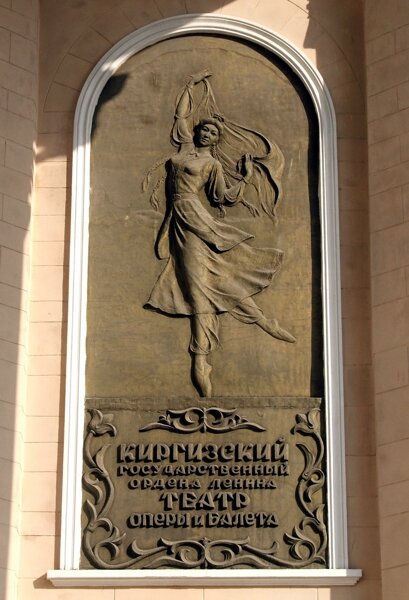
Bishkek cannot claim to be one of the major cities of the world, like London, Paris or New York. It is, however, the capital city of Kyrgyzstan and does have a number of important and interesting buildings, monuments, parks, museums, galleries, theaters and other places worth seeing or visiting. City tour of Bishkek.
Day 2 – Day trip in Ala Archa. Overnight in Bishkek.
The Ala Archa National park, created in 1976 and occupying about 120,000 hectares, is just 40 km away from the city. It is a favourite spot amongst the citizens of Bishkek. Within an hour of leaving the city center, you will be in an alpine gorge through which the fast flowing Ala-Archa River runs, flanked by tall, snow-covered, peaks with steep-sided, forested, mountain slopes.
Day 3 – To Sary Chelek. Arrive to Arkyt village. Homestay.
Basically a full day’s traveling to arrive at what some consider as the most beautiful of Kyrgyzstan’s lakes, created by a landfall blocking a river valley. The area surrounding the lake is now a National Park.
Some 500 km from Bishkek and 300 km from Osh is the Sary Chelek biosphere reserve, which lies in the Arkit Gorge, a relatively small mountain hollow in the Chatkal Mountains. It was founded in 1959 to protect and research the pristine natural landscapes – lowland steppes and ridges with snow-capped peaks; rapid rivers and mountain lakes; blossoming valleys and alpine meadows (lying between 1200 m and 4274m) – with their varied flora and fauna. More than 1000 species of plants, 160 species of birds and 34 species of mammals (such as deer, bear, lynx, wolves, foxes, badgers, porcupine … even snow leopards) can be found in this relatively small, unspoiled national park.
There are also some other small lakes to the south–east (such as Kyla Kol, Iyri Kol, Aram Kol, Cherek Kol, and Bakaly Kol), but Sary Chelek is regarded as the “gem” – the “Jewel in the Crown”.
Day 4 – In Sary Chelek, horse riding (or trekking) around the lakes for two days. Overnight in tents.
The lake itself is situated some 1873 meters above sea level, it stretches for some 7.5 kilometers, varying in width from 350 m. to 1500 m. and it at its deepest point reaches a depth of 234 m – it is the second deepest lake in Kyrgyzstan. The shoreline is deeply indented and lined by steep forested slopes – which descend into the depths of the lake. Shallow areas have developed only in the larger of the bays.
The name “Sary Chelek” means “Yellow Bucket”. There is a legend that a bee keeper attending his hives somewhere on the lake shore, was pouring honey into a bucket and was so taken by the colour of the honey that he decided to call the lake “Yellow Bucket”. There are people who think that the lake derives its name from the fact that in the autumn, when all the leaves of the trees turn colour, the whole basin reminds the visitor of a “yellow bucket”.

Scenes from the tour
Day 5 – In Sary Chelek. Overnight in a wooden house near the lake.
The Lake’s picturesque shores are thought by many of the local population to be the most beautiful in Kyrgyzstan. The steep slopes, (in places sheer), are covered with pine, silver fir and archa (juniper) trees. A deontological park (tree garden or Arboretum) has been established in the reserve, and although this is not highlighted as a visitor attraction, offers the opportunity to encounter the trees and bushes of the region, with living examples to complement the dried specimens found in museums.
Day 6 – Transfer to Chichkan via the Toktogul reservoir. Overnight in a guest house .
Toktogul : A small town located on the Northern shore of the Toktogul Reservoir – named for it’s famous son – the akyn(a local bard) Toktogul Satilganov (1884-1933).
The reservoir was created in 1974 – after 14 years construction work on the Toktogul Dam was completed – when the Ketmentube valley was flooded. Some 26 communities were displaced and relocated along the main road which was forced to swing round the Eastern end of the reservoir when the valley was flooded, and archaeologists completed several excavations of barrows dating from the 8th and 9th centuries.
Day 7 – Transfer to Lake Son Kul – via Suusamyr and the Kekemeren valley – overnight in a yurt.
Suusamyr – One traveler at the beginning of 20th century wrote of Suusamyr: “It is night. Pressing closely around a yurt, sheep are deep in slumber, breathing evenly… The moon glides across the sky stumbling over clouds, and the peaks of the mountains, resembling enormous blocks of blue marble, are illuminated by mysterious inner light. Slowly the darkness is pushed back as, morning light rises from behind the rim of the mountains… morning in the meadows, in Suusamyr”
Day 8 – In Son Kul – walking (or horse riding) – overnight in a yurt.
Son Kul: a remote mountain lake situated on a treeless, high mountain plateau (3016 m) where shepherds bring the livestock in the summertime, establish a camp where they will live – setting up their yurts. Yurts, round felt tents over a wooden frame are the typical nomadic dwelling found throughout Central Asia, you will see several scattered throughout the plain. Many shepherds will be happy to welcome tourists and serve a cup of Kumyz – fermented mare’s milk – and even to let visitors sleep overnight. It is a perfect place for being alone with the nature and easygoing shepherds’ families.
Day 9 – Transfer to Bokonbaeva on the southern shore of Lake Issyk Kul, via Kochkor. Overnight in a homestay.
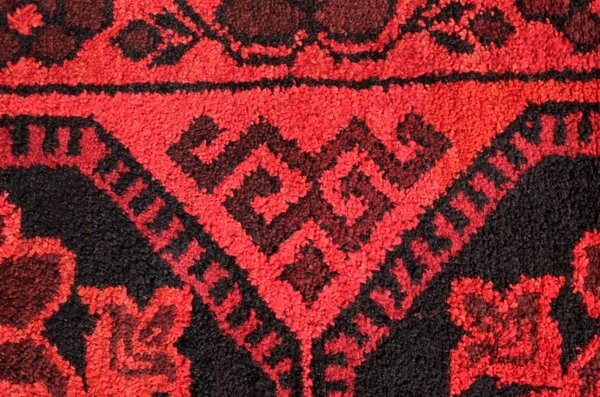
In Kochkor, visit a small private museum and see a demonstration of the traditional crafts of making felt carpets, Shyrdaks and Ala Kiyiz .
People call Issyk-Kul Lake “The Pearl of the Tian Shan”. Issyk-Kul Lake ( in Kyrgyz it means “warm lake” ), is about 180 km long, 70 km across, considered to be the second largest mountainous lake in the world after Titikaka in Peru. The lake sits 1600 meters above the sea level and reaches a depth of 668 meters, folded between the Kungey ( Sunny ) Alatau to the north and the Terskey ( Dark ) Alatau to the south. Both ranges rise straight away to over 4000m.
In Bokonbaeva, see a demonstration of Hunting with Eagles - an ancient tradition that dates back to the Mongol conquest of Central Asia around the 12th and 13th centuries, when a fine eagle and good horse cost the same price and both lent prestige to their owner.
Day 10 – Travel to Karakol via several of the sights of the Southern shore: Manzhily Ata, Skazka and Djety Oguz . Overnight in a homestay.
Manzhily Ata was a sacred site from the days before the arrival of Islam, and is still regarded with reverence – for the healing qualities associated with its various mineral water springs.
The dramatic landscapes of Skazka, (“Fairtytale” in Kyrgyz) conjure up images of dragons and other mythical beasts as well of ancient fortifications.
Djety Oguz, with the legendary rock formations of the Broken Heart and the Seven Bulls, (from which the valley derives its name), is considered by many to be one of the most beautiful in the country.
Day 11 – In Karakol … to Cholpon Ata via the Grigorievka and Semyenovka gorges … Overnight in a Home stay.
The atmosphere of Karakol town will bring you hundred years back and give you an impression of Tsarist Russia. You will see Old Russian style houses, Russian Orthodox Church that was made out of wood without nails.
The two gorges, Grigiorievka and Semyenovka A combination of extreme depth, thermal activity and mild salinity means the lake never freezes; it is moderating effect on the climate, plus abundant rainfall, have made it something of an oasis down through the centuries.
Day 12 – in Chalpon Ata – free time by the lake to simply relax on the beach … an ideal opportunity to wind down. Overnight in the Homestay.
Day 13 – Return to Bishkek. Accommodation in a hotel.
When leaving Cholpon Ata, visit the remarkable open-air art “gallery” of petroglyphs, (stone inscriptions), said to date from 500 BC – 100 AD, depicting wolves, long-horned ibex, goats, horses, snow leopards, sacrifices and some hunting scenes.





 Bishkek