Manzhyly Ata
A few weeks ago, I had a visitor from Issyk Kul in my office who has a guest house near Cholpon Ata, the largest town about half way along the northern chore of the lake. As often happens here we exchanged details about where we came from; she had never heard of Malvern, (no surprise there), but at least I had heard of Issyk Kul.
She hailed from the Northern shore of the lake and looked at my map of Kyrgyzstan, where I have coloured pins showing where in Kyrgyzstan I have visited. There were almost as many pins on the Southern shore and she admitted that, apart from Karakol and Djety Oguz, she hadn’t been to any of the others. I admitted that, although I enjoyed my stays on the Northern shore, I tended to prefer the Southern one. Apart from being less developed, it undulates more; the mountains seem closer and it appears to be wilder.
We started talking about some of the sites on the the Southern shore which we offer to clients. One of these was Mazhyly Ata.
Manzhyly Ata, (or Manjyly Ata), is on the Southern shore of Lake Issyk Kul, not far from the village of Bokonbaevo. The site rises into the foothills of the Terskey Ala Too, and overlooks the lake.
It is named for a man called Mazhyly who lived here long ago. He was a moldo, a wise man who could tell the future and was also healer, a sort of doctor. Over the course of years people would come to him with illnesses and he learned how to diagnose their problems and prescribe a course of treatment. There were no medicines so he would tell what herbs to use, sometimes they would be poisonous but taken in the right dose would fight the illness.
When he died, he was buried here and a number of springs began to flow in the valley, where the water emerged from the ground only to be reabsorbed a short distance further on. Each of the springs has been assigned its own name, has a distinct and different taste and is supposed to be efficacious in the treatment of a particular type of illness. People would come to the place where Father Manzhyly, (Manzhyly Ata), was buried in order to to read the Koran, to pray and to drink from the springs.
It is also a place where, traditionally, childless couples would come to receive help in conceiving a child. There was a saying that if you wanted sheep, (wealth or riches), then you should go to pray at Cholpon Ata, but if you wanted children then you should go to Manzhyly Ata.
Some of the springs are quite close together nut others are set a little apart. It is fairly easy to locate them however, as they are visible from afar for the simple reason that there individual trees growing nearby in the midst of the barren landscape.
I was once told that there nine springs but there seems to be some conflicting accounts … this list, for example, lists eleven, but I can’t find the names for all of them:
- “Маnzhyly-Atа“, from which the site gets its name. It is supposeed to be good for the treatment of blood diseases and the cardiovascular system; to break down gall-stones from the kidneys and liver and, in addition, to rejuvenate and extend life.
- is useful for the treatment of the endocrine system.
- “Ylym”, which is Kyrgyz for knowledgeand is alleged to give inspiration.
- “Bala” which means Child. Helps prevent infertility, well influences conception and childbirth.
- “Health” – sorry, but although I was told when I visited what this was good for, I have forgotten – and lost my notes.
- There are two springs called “Bagu Ene” – “Mother deer”, recently I wrote a postcard about legends of origin. This first one treats liver diseases
- This is also called “Bagu Ene” and is used to treat eye diseases.
- “Aziz Bulagy” – the Spring of Snakes. This is supposed to help eliminate diseases of the nervous system and headaches. There is “healing mud” nearby which is said to be efficacious in curing joint pains.
- “Family“- which helps in the creation of a family and its well-being.
- cures stomach diseases.
- cures skin diseases.
As well as being a centre for pilgrims, with its medical properties, many tourists also visit the site.
There are a number of other old gravesites here, and a small mosque. The graves are thought to be particularly photogenic and are often features in pictures
The area is sometimes used to host festivals such as the annual Birds of Prey Festival in August.
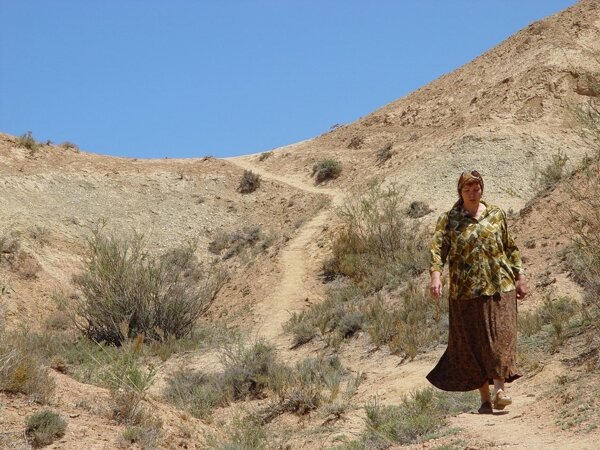
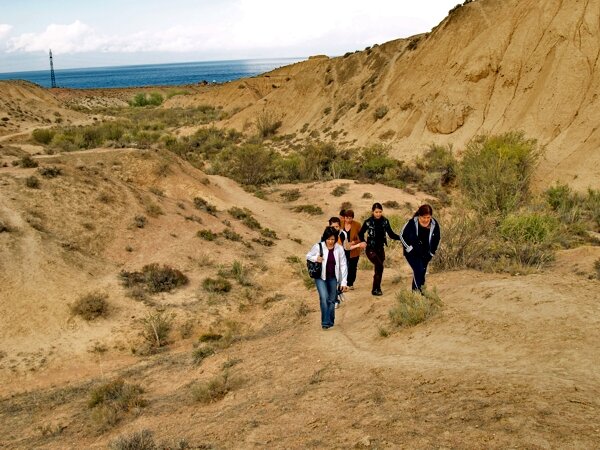
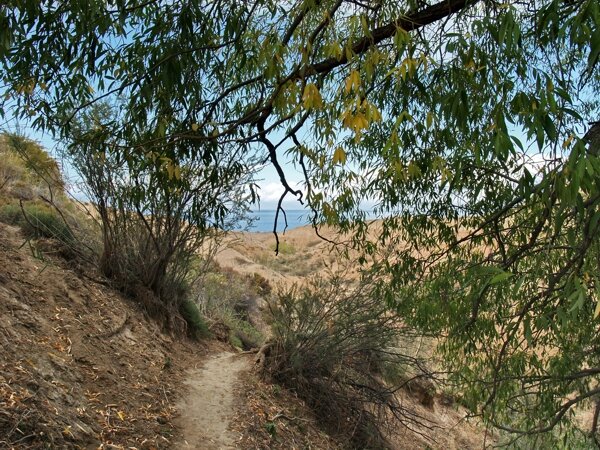
Here are some photos taken in Manzhyly Ata:





 Bishkek