Bishkek
Bishkek cannot claim to be one of the major cities of the world, like London, Paris or New York. It is, however, the capital city of Kyrgyzstan and does have a number of important and interesting buildings, monuments, parks, museums, galleries, theatres and other places worth seeing or visiting.
 A young city, (it was incorporated as a city in 1878), it has many advantages and facilities of a modern city – hotels, restaurants, nightlife (bars, nightclubs and casinos), shops, internet cafes, banks and hospitals.
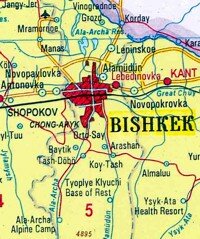
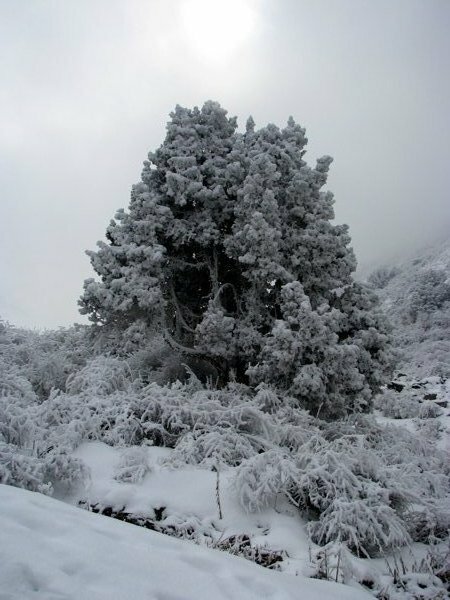
The city lies in the central Chui valley, on an inclined plain (rising from 700m to 900 meters above sea level) at the foot of the Kyrgyz range of the Ala-Too Mountains, (the famous Ala Archa National Park is less than an hour away). The mountains dominate the southern skyline rising to almost 5,000 m and covered with juniper, pine, blue spruce, birch, poplar, elm and willow. Tulips, (including some rare varieties), irises and poppies grow on the foothills giving a colourful hue in spring. (Even Cannabis indica grows wild in various parts). Wildlife to be found in the mountains include deer, wild boar, ibex, snow leopard, wolves, pheasant, hawks and eagles. To the North are the Jalanash hills in Kazakhstan.
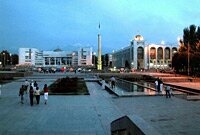
Ala Too Square in Central Bishkek
Originally planned by Russian engineers, the city center is easy to navigate. Most of the streets run on a grid system, east-west and north-south (or as the locals refer to it “verk” and “vneze” – up and down ). The number of trees, which were planted in the downtown area in the early days of the settlement, provide shade and make it the “greenest city” in Central Asia – with more trees per head of population than any other.
Although a large city – it covers an are of about 124 square kilometers – it is possible to walk around the city centre, where most of the important sights are to be found.
Bishkek is a rapidly growing city. About 10 years ago the population was about 700,000, at the turn of the century – about a million, but at the end of 2004 it was announced that the population had reached 2 million. As such, the city is the most densely populated part of this mountainous country – but usually it doesn’t feel like that as there are plenty of open spaces and spacious parks. There are a wide variety of nationalities represented (about 130 in the last census), and the major ones include: – Kyrgyz, Russians, Dungans, Chinese, Tartars, Ukrainians, Uighurs, Uzbeks, and Germans.
Like Kyrgyzstan generally, the climate is Continental – which means hot summers and cold winters. The average annual temperature is -1 ° C. The atmosphere is generally dry with the rainfall occurring mostly in April. There is an average of 322 days of sunshine per year. The mountains protect the city from extreme heat in summer and cold in winter.
It is also manufacturing centre, although this is not always so obvious. It’s factories produce about half of Kyrgyzstan’s output, and specialize in textiles, footwear, and heavy engineering (a particular legacy of WWII when a number of factories were transferred from European Russia to escape the approaching German Armies – The most famous being the Lenin works on Prospect Mira).






 Bishkek