Two sides of the coin …
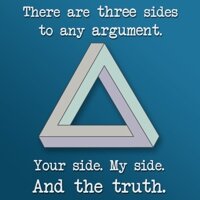
I came across this the other day – the caption speaks for itself!
Back in 1926, according to the official census data, there was one Chechen living in Kyrgyzstan. They say that every picture tells a story, and that’s true for every statistic as well … we just have to know what questions to ask and wehre to look to try and discover the answers. It would be interesting to learn a little bit more about him. It was a “him” … and he was apparently living in one of the urban settlements at the time, but that’s all I can discover.
By the time of the next census, in 1939, he had been joined by six others – but when the third census was held in 1959, the number had risen to 25,208 amd comprised 1.2% of the population of just over two million.
A question that obviously jumps into the mind is “Why so many?”. What happened in the intervening period that led to such a dramatic increase?
The answers lie in Operation Lentil … when Beria, on the orders of Josef Stalin, ordered the expulsion of the entire Chechen and Ingush populations, (about half a million people), from the North Caucasus to new homes in Siberia and Central Asia, (including Kyrgyzstan), as part of a forced settlement programme in retaliation for what was seen as collaboration with the Germans. As a result, 23rd February has been seen by Chechens as a “black day”.
In much of the former Soviet Union, however, it is a National holiday … not one commemorating Operation Lentil, however, but the first mass draft into the Red Army in 1918, during the Russian Civil War. As such, it is considered as the “birthday” of the Red Army and is known as the Defenders of the Fatherland Day.
So, a day of celebration on one hand is a day of mourning on the other. That’s an example of how, as the saying goes, there are two sides to every story.
As a schoolteacher, there were several occasions when I had to venture out into the playground to break up a fight between two youths intent on beating each other up in order to avenge some slight or correct an wrong. Having pushed them apart and stepped between them, the question, “What’s all this about?” was usually followed by claims of “He started it …” from both of them. In actual fact, it was very rare when you could say that the blame for the fracas lay firmly on the shoulders of one of the participants … there were usually – but not always – contributing factors on both sides. The
As the saying goes, “there are two sides to every story” … but the other day I came across an interesting graphic on the internet which suggested a new variant on this old adage, and the caption spoke for itself: “There are three sides to any argument. Your side. My side. And the truth.”
That is, that, we shouldn’t forget that “the truth“; which all too often lies somewhere in between, and is connected to, the other two.
There is a saying, for example, that “One man’s terrorist is another man’s freedom fighter …” – to the British Menachim Begin was a terrorist who ordered the bombing of the British administrative and military headquarters at the King David Hotel in Jerusalem, in 1946 … but to Israelis he was a freedom fighter and as Prime Minister negotiated an historic peace treaty with Egypt’s Anwar Saddat … whereas the Israelis considered Yasser Arafat a terrorist but who was “revered” by Palestinians and many Arabs even though many had significant differences with him.
There have been several examples this week which underline the truth behind this caption – as, having already heard one side of a story, we began to hear how the story unfolded as seen from another point of view.
The first concerned the ongoing trial of the soldiers on duty at the White House on April 7th, 2010, during the Revolution which led to the downfall of the Bakiev regime. Because more than 80 died on that day, the snipers of the roof have had a bad press but, now, some of them have had their day in court and been able to tell their side of the story. The evidence they give suggest that there were indeed people firing at the White House and not just from the White House. Some were in the building whilst the crowds were attempting to storm the fences whilst others say that they arrived arrived only later in the day. One even says that he didn’t even draw his firearm, yet alone fire a shot. There were stories of soldiers who were caught by the protesters being beaten – as if they had been captives of the Nazis not their own countrymen.
The most interesting in all this was their complaint that no-0ne seemed to want to listen to them and hear their side of the story … especially the soldier who said he arrived at the White House late in the day – after the victims of the shooting had been shot – and whose gun had never been fired … why was he trial?.
The second story is the continuing saga of the Kumtor Gold Mine. Parliament has now approved a resolution accepting the findings of the commission of inquiry and instructing the government to take appropriate action. Whilst we’ve heard much from the politicians and opponents complaining about the inequitable agreement, Kumtor have now issued detailed rebuttals of the commissions conclusions they describe as selective, taken out of context, not accounting for all the facts, exaggerated and untrue, not supported by facts or based on hearsay and not on the results of research and analysis.
Meanwhile, counterblasts have been coming from the opponents of the company – especially when iot comes to environmental issues. One report stated that the company uses two and a half times as much cyanide than comparable mines when processing the ore it extracts. Another suggested that it had virtually destroyed the Davydov Glacier in order to get at the ore under the ice cover. Indeed, in a separate story which ostensibly had nothing to do with Kumtor the Director of the Environmental Agency suggested that by the end of the century there would be no glaciers left in the country … with all that might mean for the future for water supply and hydroelectric generation.
Incidentally, Gold has been in the news for another reason as well … it’s been claimed that lots of ore bearing rock has been exported rather than being processed here in Kyrgyzstan … which, as the ore is not worth as much as the finished product, means that Kyrgyzstan does not get the benefit of additional revenues which go elsewhere instead – particularly Kazakhstan and China … leading to the suspension of at least one license.
Interestingly, another report suggested that Kyrgyzstan’s has almost 12 million tons of oil and gas reserves and that at the moment there are some 15 oil and gas deposits being developed.
One of the controversial issues, which has been the subject of much adverse commentary, is the fact that the 2009 Kumtor agreement was ratified by the parliament. The argument goes that because Kuntor was a private company and not another country, (or recognized international agency), the agreement was a straight forward contract and not an international agreement that needed to be ratified. Even if that is correct, (which I think is), that seems to imply nothing more than the whole thing was, (as one controversial deputy has put it), that the whole agreement was poorly drafted and badly scrutinized. However, it also means it underwent additional scrutiny and I am not sure that the “illegality” of the process is sufficient grounds for renouncing the agreement – but I’ll leave that for the experts, courts, to decide. It would be interesting to see, however, how many, (if any), of the existing deputies took part in the process and how they voted at the time.
Such an apparent change of heart was brought clearly into focus this week when the President vetoed a bill, (on the activity of bookmakers), and sent it back to the parliament and, as one commentator put it, the members of one of the parties supported the President’s actions even though when it was originally debated in the parliament only one of them had voted against the measure.
I couldn’t help noticing, by the way, the reports that decided to lay the blame for the “losses” from the Kumtor project fairly and squarely on the shoulders of Maxim Bakiev. He had led the re-negotiations that led to the disputed 2009 agreement.
Talking of the Bakievs … it was reported from Minsk that the Belorus authorities say that they have not received any more extradition requests for brothers Kurmanbek and Janish. The parliament have agreed, however, to table the question once more and called on members of the Eurasian Economic Community for assistance in resolving the issue of the arrest and extradition of “state criminals”.
Forgeries have been in the news this week. There was someone arrested trying to pass off forged som bank notes … and another person was apprehended with some forged dollar bulls which had been printed on a colour photocopier. Perhaps the most worrying story, however, concerned the Head of Department at the Medical Academy for issuing fake diplomas.
Corruption has also been a hot topic this week with yet more arrests on charges of corruption … the head of the detention Center of the National Security Committee was dismissed amid reports of alleged extortion in the facility … allegations of “pressure” on officials at one of the city’s theaters and one of the high profile politicians being held on remand SIZO – the main remand center – claimed that he was being denied medical attention whilst he didn’t pay a bribe,
One of incidents turned into a fiasco as the person suspected of accepting a bribe went to the toilet / bathroom / washroom and stared to flush banknotes down the toilet. The investigators were faced with a real dilemma. “Who are you going to call?” – instead of Ghostbusters, (or a plumber), they decided to call the Ministry of Emergency Situations … but, credit where credit is due, the inspectors who arrived managed to retrieve the evidence.
Knowing how I love statistics, there were some interesting ones that turned up this week … each of them, as usual, raising more questions:
- last year there were 35 children who died “from HIV and AIDS”;
- 15% of children in Kyrgyzstan smoke;
- Every sixth citizen in Bishkek has a vehicle – and one in eight of Osh … foreign vehicles made outside the CIS prevail, accounting for some three quarters of all the vehicles in the country;
- There are some 500,000 Kyrgyz citizens in Russia as migrant workers and 200,000 in Kazakhstan;
- eight state officials have been dismissed for breaking secrecy rules – and 26 others disciplined;
- Kyrgyzstan is on “the gray list, the FATF (Financial Action to combat money laundering)” – now, just what on earth does that mean?;
A couple of headlines caught my attention during the week which brought home to me the need for reporters and subeditors to be particularly careful in scrutinizing their copy:
First there was another “statistic”, the fact that: “Kyrgyzstan is among the countries of Central Asia, with the highest rates of infant and maternal mortality“.
That struck me as really odd and not telling us much – especially as the report contained no concrete data. It seemed to me as like saying the the United States is among the largest countries of North America … technically there are only three countries in North America: Canada, the States and Mexico, (Yes, Mexico is in North America and not Central America). In order of size – Canada is the largest of the three, the US is in the middle and Mexico the smallest. Hence America is definitely among the largest countries – but, then, I suppose that it could also be argued that it was among the smallest countries in North America. Sophistry!
For the record: There is no real agreement as to what constitutes Central Asia, but the Soviet Union used to define the region as comprising the constituent republics of Kyrgyzstan, Tajikistan, Turkmenistan and Uzbekistan. After the dissolution of the USSR, a meeting of these Central Asian states decided to include Kazakhstan as well and these five “Stans” now seem to be generally accepted as the core of Central Asia. So, to declare that that Kyrgyzstan is among the countries of the region with the highest rates seems meaningless.
To be fair, however, the UNESCO general history of Central Asia, (written just before the collapse of the USSR), defined the region based on climate and defined the region using far larger borders – including Mongolia and parts of Afghanistan, China, Northern India, Iran, Pakistan, and Russia. Based on this definition we might have learned something interesting … but, as I said, the report came came with no concrete details.
Another headline that caught my attention this week was: “Dastan Bekeshev sees no need for a vice-prime minister for security“, which I thought was particularly unfortunate … because Bekeshev is blind.
Perhaps more embarrassing, however, was the mistake made by John Kerry as the newly appointed Secretary of State of the US, in his first major speech. Just over half way through he that the employees of U.S. State Department and USAID, “support democratic institutions in Kyrzakstan and Georgia…”, (the transcript of the speech by the U.S. Department of State reads “Kyrgyzstan”), which led to some amusing tweets about Kyrzakstan being “right next to Kazbikistan” and whether these two enjoyed good diplomatic relations. I have no doubt that Dan Quayle and “Bubba”, (George W. Bush), are rubbing their hands with glee as they await the compilations of gaffs to appear on youtube.
As usual, I have had to leave a lot more out than I have been able to include, each raising points, such as:
- yet more proposed revisions to the grading system used in schools – moving from a 5-point scale to a percentage one;
- yet more on the suggestion that Uzbekistan may be going to propose selling Kyrgyzstan the Sokh enclave for USD1 billion;
- the “hacking” of the Interior Ministry’s website by a group of hackers from Uzbekistan;
- the President’s urging the construction of another main trunk route connecting the Northern and Southern parts of the Republic;
- The President’s criticism of local authorities for not paying teachers on time;
- The proposal to increase pensions by 10% this year … although exactly when this year isn’t clear;
- Kyrgyzstan plans to participate in UN peacekeeping missions;
- the arrival in Kyrgyzstan of people evacuated from Syria;
- the agreement with Russia about the development of hydroelectric power is, somewhat surprisingly, attracting some dissent;
- Kyrgyzstan is being urged not to delay entry into the Customs Union;
- There seems to be different plans about the potential development of long distance rail links – with each of the superpowers, China, Russia and the States playing out yet another verion of the Great Game for influence in the region
… and lots, lots more on the Kumtor story,
Oh, yes, … and for the record: in the 2009 census there were just 1875 Chechens living in Kyrgyzstan.
Finally … in case you missed it: Thursday, February 20th, was the International Day for Social Justice – a UN designated day. The day was inaugurated back in 2009 – following the Kyrgyz initiative in proposing it.
_______________________________________
Postcard from Bishkek: the weekly postcard that I send out as an email also gets posted on the website ianbek.kg each week – and there are other postcards which don’t get sent out. This week, for example, there has been the following postcards:
- From Seven Bulls to Golden Springs – One of the most popular destinations in Kyrgyzstan – but its never crowded – 17/02/13
- Catholicism in Kyrgyzstan – The Pope, (Rimskiy Papa), shocked the world last week … and what of his flock in Kyrgyzstan?: – 18/02/13
- The Kokand Khanate – On February 19th, 1876, Tsar Alexander II annexed the Kokand Khanate and thus completing the process of the Kyrgyz becoming subjects of the Russian Empire – 19/02/13
- Domkom – An important portmanteau word, describing an important “person”; chairman of the House Committee – 20/02/13
- International Mother Language Day – another one of those special, United Nations designated days which has been celebrated every year since 2000 and gave me a chance to consider the place and growing importance of the Kyrgyz language – 21/02/13
- Kyrgyzstan’s Cats – It’s not an official holiday, but in Japan 22nd February is commemorated asCat Day., and so it seemed an appropriate occasion to look at felis Kyrgyzstanus – Kyrgyzstan’s native cats – 22/02/13
It is now possible to follow me on Facebook, (where I have specific pages for Celestial Mountains and ianbek … and also links.kg and Kyrgyz Diary), and on twitter, (@Bishkekpostcard and @celestialMTC ).




 Bishkek