13 steps with Kazat Akmatov

Normally I would be delighted to receive a copy of a Kyrgyz novel translated into English ... but ...
A few weeks ago I received a copy of a new book – Thirteen Steps Towards the Fate of Erika Klaus, written by the Kyrgy author Kazat Akmatov, but translated into and published in English … and which, incidentally, is being launched at an event in London tomorrow.
Normally, I would have been delighted as, to be honest, there isn’t much Kyrgyz literature that has been translated into English. On this occasion, however, I groaned in despair.
It wasn’t the book itself that caused this reaction but the message from the publisher that accompanied it. He asked if I could read it and provide him with some suitable quotes – obviously for publicity purposes. But even that wasn’t the cause of my despair … what elicited my frustrated moan was the next phrase: “I need by end of the week …”.
It arrived on 3:45 pm on Friday afternoon. I had just an hour and a quarter before the end of the the working day – the end of the working week. 75 minutes to read the book, (fortunately it’s a short book – just 77 pages – but that’s still a page a minute), think about it and compose a short review.
Fortunately, the publisher is based in the UK, so I had the benefit of the intervening time zones between here in Bishkek and him in London, giving me an extra five hours to complete the task … but only if I dropped everything else and got on with it.
As it happened, that particular Friday evening, all I had in my diary was preparing the regular weekly Saturday Postcard which gives a review of the week’s news and events from here in Kyrgyzstan. So, I opened the file and started reading.
The book is set in a remote outpost in a village called “Chet” governed by a fascist regime, led by a psychopathic officer and a contingent of border guards abandoned after the dissolution of the Soviet Union and apparently “forgotten” by the new authorities in Moscow.
According to the draft press handout, it narrates challenges faced by a young, naïve Norwegian woman who has volunteered to teach English. Immersed in the local community, her outlook is excitable and romantic until she experiences the brutal enforcement of the political situation on both her own life and the livelihood of those around her. Events become increasingly violent, made all the more shocking by the counterpoint of Akmatov’s sensitive descriptions of the landscape, the simple yet proud people and their traditional customs.
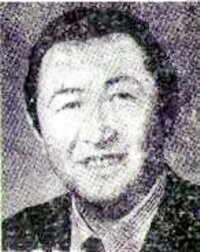
Kazat Akmatov
For the record: Kazat Akmatov was born into a farming family on 23rd December, 1941, in the village of Bosteri in Issyk Kul.
He graduated from school in Bosteri in 1958 and began working in the local Horse farm. He joined Komsomol and went to study in the ESC Komsomol Central Committee in Moscow in 1965/6 and graduated from the Faculty of Philology in School of Journalism at the Kyrgyz State University in 1967. The same year he became a member of the Communist Party of the Soviet Union and was also elected the First General Secretary of Komsomol Regional Committee.
In 1967 He served in the Soviet Red Army and worked as a correspondent for the Army newspaper – and was actively writing.
Following his time in the military, he held a number of positions in various party organizations:
- in 1972 becoming the Senior Editor, and later the Chief editor, of the Kyrgyzstan publishing house;
- rising through the ranks of the Communist Party apparatus between 1974 and 1983, holding positions of Instructor, Head of Sector, and as a Departmental Deputy Head;
- between 1983 and 1986 serving on the Radio and Television Committee and serving as a Senior Editor.
He became a member of the Writers’ Union in 1974, when his first collection of short stories was published: Boz Lancers, (Youth). Other works were to follow, and he is the author of more than 20 novels including:
Sacred Hearth. His novels included: Mezgil, (Season). which appeared in Kyrgyz in 1979 and later in Russian under the title Time to Earth, (in 1982); Munabiya in 1987; The Years Around the Sun, published in 1988 and Arhat
He also wrote a series of plays and scripts for film.
As an active member of the Writers’ Union, he was involved in organizing various conferences and also served as a member of the board of the Writers’ Union of the USSR. He received several awards:
- Commemorative Gold Medal “Manas-1000”
- Jubilee medal “For Valiant Labor (for military valor). To commemorate the 100th anniversary of the birth of Vladimir Ilyich Lenin ” ,
- Gramata of the Supreme Soviet of the Kirghiz SSR
- The Ostrovky Union Literary Prize, for the story Two Lines of Life
- Gold Medal. Lomonosov Russian Federation
- the winner of the International Association ” Rukhaniyat” (Heritage)
- People’s Writer of Kyrgyzstan
He isn’t, however, just an author. He was elected a deputy of the Supreme Soviet of the USSR, and as a member of Jogorky Kenesh (Parliament ) between 1990 to 1994.
In 1999 he became a member of the Presidential Council and has served as the Chairman of the National Commission on the State Language and as Deputy Chairman of the State Commission for the Development of the State Language. He also served as Deputy Chairman of the Organizing Committee for the World kurultay (assembly) of Kyrgyz.
In 2002 he was a member of the Public Commission for Constitutional Reform and is considered one of the pioneers of Kyrgyz democracy. The first chairman of the Democratic Movement of Kyrgyzstan, which was the driving force prior to independence and played an important role in the rise to power of Akaev.
He is very proud of his native land and says that he always writes around Issyk Kul – “describing it’s many moods and moments: its waves, sounds, soul, its character, during storms, on windy and rainy days.” He claims that he is not a religious person but some things are “sacred” to him: “the spirits of: Ak-Taiylak, (a white colt), of springs, trees, houses, lakes and mountains”, adding that these represent “… a belief held in Tibetian Buddhism. Occultism, tengriism, shamanism – all these are in our traditional culture and we should keep them strong. These enrich our spiritual life and our imaginations and have made it possible for our people to distinguish themselves from others”.
In the past, despite high praise for his novel Arhat, (but perhaps more about that another time), Akmatov’s writings have evoked strong reactions which have sometimes been characterized as “anti-Russian and anti-communist” and resulted in being subject to censorship. There is certainly an element of a critical approach towards the Russian influence in the region’s history – for example, I have references where he describes Prezhervalsk as nothing more than a “Russian spy”, (which is probably true – but he was a lot more as well), whilst he is much more sympathetic towards Chokan Valikanov, (who was also a Russian spy – but a Kazakh who researched the Manas epic and other aspects of nomadic culture).
On the other hand, (especially given his personal history), it is a bit harder to credit the labeling of him as an”anti-communist”.
He does, however, have a record as a Democrat … and Erika Klaus not only has elements which are critical of the Russians, he also attacks corruption (even among the Kyrgyz elite) and the depravity which comes when power corrupts the human soul.
At times, as I read the text, I found myself feeling somewhat frustrated at moments which seemed at odds with the real world. To give just one example, according to the draft Press handout, the book is apparently “based on real events in a mountain village in Kyrgyzstan ten years ago” but, to be honest, I don’t recall them and I couldn’t find any references to a similar set of incidents as described. I went looking for Chet, but drew a blank … at least, that is, I couldn’t find such a village near the Chinese border.
Then again, I thought to myself, it’s a work of dystopian fiction and certain aspects of the story have a dream like quality, like a painting by Salvadore Dali … or, to be more precise, like a Kafkaesque nightmare. In a way it’s an allegorical tale like Orwell’s 1984 or Animal Farm … and whereas the narrative tells a story, there’s a lot more behind it and it attempts to do more than just trying to tell us a “good story”.
So what did I come up with?
In an allegorical tale set in a remote border post and the surrounding village, the heroine, Erika Krause, takes thirteen steps towards the sun, but discovers that life in “The Post” is violent, cheap and lawless. In a challenging read that brings together hope and despair, naivity and calculating cynicism, courage and foolhardiness, tenderness and brutality – Akmatov leaves us with a question: is it just a story? or is it reality?, a fantasy?, a dream? or surrealistic nightmare? … or is it a little bit of each?




 Bishkek