What to wear for Ladies’ Day

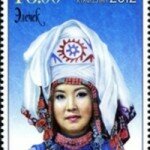
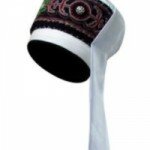
- Elechek – traditional headgear of Kyrgyz women
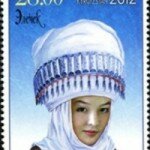
- Elechek – traditional headgear of Kyrgyz women
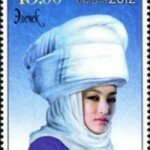
- Elechek – traditional headgear of Kyrgyz women
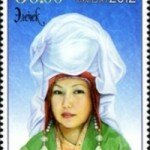
- Elechek – traditional headgear of Kyrgyz women
International Women’s Day was back in March, but in certain circles – today is Ladies’ Day. It’s all to do with a four day race meeting that takes place back in Good Old Blighty that has become a traditional event in the cultural calendar: Royal Ascot.
For the record: Nobody really knows the origin of Royal Ascot but it seems that the event evolved out of a race meeting held at Ascot for the first time in 1768. Until 1939, Royal Ascot was the only race meeting held at the Ascot race course … before that it was probably just an annual gathering or festival. It started to take shape as the Royal Ascot meeting that we know today in 1807 when the race known as the Gold Cup was introduced.
This is one of the major races in the British racing calendar, for four year old toroughbred horses, (or older – although the original race was probably for “three year olds” and above), over two and half miles, (that’s just over four kilometers). It’s what is known as a Flat race, in other words there are no hurdles to jump and because of the length of the course, it is a race for “stayers” rather than pacers or sprinters.
The prize money for the winner of the first race was just a hundred guineas – although I say “just” that would have been a substantial sum in those days. Today the prize money is worth £350,000 … but only something like £200,000 goes to the winner.
It was renamed the Emperor’s Plate for almost ten years in honour of the trophy awarded by Tsar Nicholas I of Russia who attended the event in 1844 … but it reverted to its old name following the original title. Unlike many of the trophy’s awarded at race meetings, the winner of the Gold Cup is allowed to keep it and a new one is presented every year.
It’s a very prestigious race as well as being a very valuable one to win … and is the first of three distance races, (the others being the Goodwood Cup and the Doncaster Cup), which are considered a particular test for horses.
Although the race has been held at different venues from time to time, it is traditionally associated with Ascot – and the Royal Ascot Race Meeting …
The Gold Cup remains as the feature race on the third day of the meeting, which is traditionally the one that attracts the largest crowds and is colloquially known as Ladies’ Day.
The Royal Ascot race meeting maintains a very strict dress code … which probably helps to account for its enduring appeal … offering the chance to “dress up” and make an “occasion” out of a trip to the races. As part of that strict dress code, all ladies entering what is known as the Royal Enclosure must wear a hat. (This tradition has since been adopted at other race meetings around the world, such as at the Kentucky Derby in the United States.) It’s now become almost a tradition for ladies to wear extravagant hats that add a touch of the theatrical – a trend which is synonymous with the name of the milliner David Schilling, who made his first Ascot creation for his mother in 1968, (when he was just 12). The next year was already in demand and able to sell his designs to others.
I am not sure if Roza Otunabaeva ever attended Ladies’ Day when she was the Kyrgyz ambassador to the Court of St. James, (that is, to Britain), but if she had I am fairly confident that her choice of headgear would probably have been the traditional Elechek, (known in Southern Kyrgyzstan as an Ileki).
It may not seem to be the most appropriate headgear for a warm Summer day, being a turban, but it was the headdress of married Kyrgyz women for centuries – worn in the heat of the summer as much as in the cold winters. Without it, according to one source, a nomadic wife wouldn’t even leave the family yurt, not even to fetch water … although following the birth of the second or third child the elechek might have been replaced by a more simple shawl.
By tradition, married women kept their hair covered from the day of their wedding. The elechek provided a effective way of achieving this. The hair would have been plaited and covered with a cap, (called a bash kap or kep takiya), with a small rectangular piece cloth may have been used used to cover the neck and around the cheeks and passed under the chin. On top of that a long piece of cloth, (cotton or canvas), was wound round the head forty times in the form of a turban. The turban was then held in place with a silk or embroidered band known as a kyrgak or tartma.
The material would have been anything from seven meters in length up to 20 or 30 meters, according to the anthropologist Klavdia Antipina, (and weighing in at up to 5 kilograms(!) it must have been quite a weight to carry),
It served an additional purpose, however, as shroud for the woman after her death.
Different tribal groups adapted the basic design from simple to quite complex forms, including embroidery and sometimes tassels, jewellery such as strings of beads or pendants.. Some of these were featured in a set of stamps issued by the Kyrgyz post office in 2012.
These days, it is possible to buy ceremonial elecheks already formed as a single piece which is placed over the head in much the same way as an ordinary hat. The style and decoration could also serve as a symbol of both wealth and status.
And finally, for the record:
- Elechek is the name of a film, (which some claim is a documentary – I haven’t seen it so I can’t tell), by Nailya Rakhmadieva, produced in 2006 by the International Gender Policy Network. The film tells the story of Sairash, who had been married contentedly for more than a quarter century … until, that is, her husband took a second, younger wife. Sairash could not accept her new circumstances, (including the quarrels and insults), and she broke with tradition and walked out. Members of the community and her relatives blame her for the break down of the marriage, and she discovers that divorce laws cannot protect her. In any case, and any division of property would inflict pain and hardship on her children. “Though Sairash’s decision set her on a path of hardship, it was the path to her true self: strong, independent, and capable of standing up for her own beliefs.”
- Recently there has been some discussion about women turning to the burqa as a traditional Islamic form of headgear, with appeals being made in the press calling on girls to reject this “arab” practice and return to the traditional form of costume – including the elechek. I am not sure how effective this would be in the modern fashion conscious world.
- In Britain there used to be a horse race called the Elechek Handicap, run at Newmarket … but it has nothing to do with Kyrgyz headdress, having been named for the sponsors – an electronics company.




 Bishkek