Virus

BCS logo
When I was teaching Information Technology, I joined the British Computer Society, (BCS) as an Associate Member – The chartered Institute for IT.
They seem to have updated their image a bit since then but they still offer a range of benefits and services ranging from professional recognition and development opportunities, (training); career guidance and support; news and discussion on the latest issues and developments in IT … with 40 local branches across the UK and over 50 specialist groups in a huge variety of fields and a vibrant online community.
I remember the first event that I went to was a meeting of the North London Branch to discuss the hot topic of Computer Viruses. The speaker was Dr. Solomon who went on to develop one of the first anti-virus scanners. The meeting seemed to have caught the Branch Committee unawares; it was packed. If they were lucky to amass a dozen members to a normal meeting, this one was not just “standing room only”, it was “breathe in and squeeze your way through the door”. If meetings normally faded out after an hour or so, this one ran overtime and the caretaker was jingling his keys to indicate he wanted to lock up.
I felt a little guilty because I had with me three Sixth formers who were studying A-Level computing … we stood attentively at the back and kept quiet, (which is quite unusual for me).
The meeting was fascinating. It was the mid 1980′s and Computer viruses was still pretty new, but there was a lot of hype about them in the press. I wasn’t sure if I believed much of what I read … but Dr. Solomon was a very effective speaker and he brought along with him a floppy disc infected with the first ever self replicating program written for the IBC PC, Brain. It was a fairly innocuous “boot sector virus” written by a couple of brothers in Pakistan that simply renamed all your floppy discs as “Brain”. They supposedly wrote it in order to deter their software from being pirated – but I don’t see how it would have done that – and the virus was first released “into the wild” on January 19th, 1986.
Dr. Solomon pointed out, however, that there were in existence, (even back then), some malevolent viruses which could do serious damage to your computer.
Well, we’ve moved on a bit since then …
Computer viruses were so named as a direct analogy with the small infectious agents that occur in nature and replicate inside the living cells of an organism – from animals and plants, (the first virus infection to be described affected the tobacco plant), to bacteria and archaea – single cell micro-organisms. The word has now been adopted to describe any sense of feeling unwell, in the same way as cold and influenza were so “devalued” in the past. When I was young, (I feel so old just typing that phrase!), if someone was feeling unwell we said that they had a cold … later we would say they had the flu … nowadays everyone seems to have “caught” a virus.
Lots have been feeling under the weather recently. I suppose it is a result of the extreme weather conditions we’ve been experiencing. One day this week there was a serious outbreak and some of the ambulance stations had trouble finding crews to send out in response to emergency calls. Something like 10% of the 500 employees didn’t turn up for work and they tended to be drawn from the paramedic staff so there were only enough crew for something like 60% of the ambulances … and some of those were crewed by medical staff drafted in from the city’s family medical centers.
The crisis situation in the enclave of Sokh that I mentioned last week seems to have settled down. That didn’t stop the Interior Minister preparing us for “bad news”, saying that the situation was still unstable and may require the deployment os special troops in the region, and calling for barracks to be built … just in case. What struck mne about this was that the tone was so unlike that normally adopted in official statements.
There is talk about constructing a road to the isolated Kyrgyz village which will bypass Uzbek territory, but it’s not going to be cheap. The existing roads which were damaged are being repaired. Compensation is apparently being paid by Uzbekistan to the Kyrgyz citizens who suffered damages in the disturbances. Perhaps more worrying is the fact that the residents of the enclave say that they are being blockaded and prices have gone through the roof, and in the meantime the Ministry of Emergency Situations is distributing food to the villages that have been cut off. The border is being reinforced with barbed wire.
There are other problems with the border … with the Uzbeks closing the main Dostuk border crossing outside Osh. I hope that situation is sorted out in time for the tourist season and this one of the few border posts which is open to foreigners and important for many people following the southern branch of the Great Silk Road, over the Irkeshtam Pass to Kashgar in China.
The melee between Chinese workers and Kyrgyz citizens in Southern Kyrgyzstan that I wrote about last week has apparently been resolved – according to the press service of the regional administration in Osh, with the two sides being reconciled at a meeting attended by the regional governor, village elders, and representatives from the Chinese Consulate in Osh and the Chinese company who employed the workers.
Too late for inclusion in last week’s postcard, a senior police officer, (the Head of the local department for Fighting Organized Crime and Corruption), was shot and killed in Osh last weekend. He was shot five times while driving his vehicle and the gunman apparently left his jacket in a taxi. I’m not sure if that provided the vital clues, but and identikit picture was issued and a search was mounted for two men … and a shortly afterwards a man was arrested and is currently being held on remand.
Another on-going story that has been in the news this week is the future of the transit base at Manas airport which is key to American operations in Afghanistan. A visit by Robert Blake, the American Deputy Secretary of State led to a variety of stories speculating about what will happen … some saying that the he was looking to negotiate an extension on the lease, whilst others expressed surprise at this given the well publicized position of President Atambaev. It led to a long analytical piece about bilateral trade between the two countries which shows something like a 10% increase in the last year, so it will come as no surprise that the Kyrgyz side proposed that any discussions should focus on economic cooperation between the two countries and that there should be no military presence at the airport following the closure of the Transit base; which Atambaev reiterated once again. The plan, of course, is to turn it into a “civilian transport hub” and the American’s said that they support this – even offering advice on the issue; they may be a bit late, however, as discussions with the Russians are already well and truly underway.
This wasn’t the only subject on the agenda, which were said to cover a “broad range of topics”, but it presumably hung over the other discussions like the legendary Sword of Damocles, as must have reports in the British Press suggesting that the Kyrgyz threatened to close the base if Britain didn’t agree to extradite Maxim Bakiev.
The situation post withdrawal from Afghanistan in 2014 has once again raised the question of militants rushing in to fill the “power vacuum” left once the foreign forces leave the country and what this could mean for the whole of Central Asia.
If the aim is to focus on the economic cooperation – the economy has been well and truly back in the news this week. The National Statistical Office reported that inflation rose by something in the region of 7.5% last year whilst GDP fell by 0.9%. Most of that decline is blamed on a fall in output at the Kumtor Gold Mine, (which contributes 12% of the country’s GDP), and if Kumtor is excluded from the figures then GDP shows a growth of 5%.
It has been suggested that the situation at Kumtor is the result of a 10-day walkout by workers last February over Social Security payments, (whilst the workers weren’t at their posts ice formed in the open-cast mine), and encountering geological difficulties. The Prime Minister has even said that the country needs for Kumtor to return to 2011 levels of production next year.
It is hoped that, in due course, other gold mines will eventually come on stream and now that lawsuits have been settled, the license for the ill fated Jerooy mine is up for grabs once more with bids being invited for a tender. The government think that the enterprise should bring some 3 million som into the budget in taxes each year … which should bring a great benefit to the country.
The President’s strategy for sustainable development for the period up to 2017 has been approved. The aim is to strengthen the economy and establish a strong economy with a proposed set of guidelines and targets. He says that he wants the country to be in the top 30 economies in the World Bank’s Doing Business survey by 2017, (at the moment it is ranked 70th) and in the top 50 least corrupt societies, (at the moment it is ranked 154th out of 181 countries). The plan includes some 75 investment projects across five different sectors, (agriculture, energy, transport and communications, production logistics, and mining), which will cost something like thirteen billion dollars over the next five years. Not all of the sources of that investment have yet been identified, however, and that could be a stumbling block.
The attraction of investments received a fair amount of attention during the week … and the experience of Kumtor, the constant troubles and tribulations that they have experienced including the number of times the agreement has been changed, was cited as one of the reasons why foreign investors might think twice about investing in Kyrgyzstan. A survey by a British based consultancy firm rated the country as an “Extreme Risk”, reporting that they had found “plenty of reasons” why investors should be wary of the business climate in Kyrgyzstan, (and several other countries in the region), including discriminatory acts by governments which reduced ownership or rights of private enterprises.
Also on the economic front, I mentioned last week that, on the whole, property prices have remained pretty stable – but it has now emerged that even so, it is difficult for the ordinary “man in the street” to be able to buy an apartment – even a one roomed apartment, (basically a bedsitter with separate bathroom and kitchen), which costs a “mere” USD33600 in Bishkek, means that they would have to save for something like ten years … and not spend much, if any, of their salary on other things – like food, clothing … and so on.
Talking of salary, one report that I didn’t understand was that Kyrgyzstan had taken 17th place, (out of 144 countries), in the “ranking of the influence of wages on labour productivity”, as part of the report on the Competitiveness of the Economy prepared by the World Economic Forum. Kyrgyzstan was assigned a score of 4.7 on a scale ranging from 1 (where salary is not related to productivity) to 7 (where it is strongly associated with productivity).
When it comes to seeking investors for the privatization of Zalkar bank, the government have said that they will restrict applications from a forty one countries which operate as tax havens … and don’t provide full information to banking supervisors.
Kyrgyzstan didn’t do too well in a recent survey of Tax, (Paying Taxes 2013), carried out by Price Waterhouse Coopers, coming in 168th place, out of 185 countries. It’s the eighth year they’ve conducted the survey but although the data from previous surveys is available on the web, I haven’t gone back to look at them. The report was headlined Tax Nightmare. It says that based on a standard scenario applied in each of the countries, the total tax burden in Kyrgyzstan amounts to something like 70%. That’s not 70% of turnover, but 70% of the net profit and includes payroll taxes and social security payments, municipal taxes, property tax, vehicle and fuel tax as well as Profit, (or corporation), tax. (It doesn’t include VAT or sales tax as these are merely collected from the customer as an agent.)
Just as interesting was the fact that it takes about 210 hours just to do the accounting and reporting the 51 payments that they identified. My gut feeling, (I haven’t done the detailed analysis), is that their figure for the effective tax burden seems high but the number of hours required to fulfill the obligations seems low.
The trials into the events of April 7th, 2010, have been resumed with accounts by some of the people in the government offices of their experiences on that day.
Problems with the electricity supply continue unabated, although we are assured that all the restrictions imposed before the New Year have now been lifted. There are still frequent announcements informing us which part of Bishkek, or the outlying villages may have the electricity cut off – usually for maintenance work to be carried out. They even warned that there could be more outages as a possible result of the worsening weather conditions. (Mind you, that’s nothing compared to what I understand is in store for people in Britain … where people in Wales have apparently been told not to venture out of doors … I wonder if that includes my nephew who is studying at University in Bangor right on the Northern coast, or just those in the remote highlands). Then, yesterday I saw a report that brought home how lucky we are to have any electricity … there are places where there is none at all, (including one village just eight kilometers from the main Toktogul Power Station), or for just three or four hours a day.
Nothing to do with the energy crisis but the energy saving street lighting that was installed by an activist is under threat. The municipality wants to demolish it because, they say, he didn’t obtain the necessary permissions for the project. I suppose he should have been prepared for criticism because he faced similar problems when he ran a similar campaign to repair potholes in the city streets.
Kyrgyz Gas have reported that there may be outages due to the failure of certain large enterprises to pay their bills. Kyrgyzstan owes Kazakhstan and Uzbekistan something like four and a half million dollars for gas … and most of that could be paid if just four enterprises who owe nearly four million dollars between them, were to settle their bills.
Oddly enough, the electricity companies have just announced that they have collected something like 98% of the money due for power that they have delivered. (Something seems wrong there … there always seem to be complaints about losses from the system).
In other news:
One of the deputies has apparently proposed a ban on Soviet cars over 20 years old on the streets of Bishkek, as they present an environmental risk. It’s just talk at the moment, he has yet to draft a bill and present it to the parliament.
Questions over the organization of the annual pilgrimage to Mecca, the Hajj, have emerged, including the apparent necessity to pay a bribe to get one of the limited number of places, (4500), that the Saudis allocate to Kyrgystan. The payment of a bribe presents believers with a conscientious dilemma, and when one asked his imam what he should do, he says that he was told to pay it … (it’s wrong, but what else can you do?) … with one mullah telling people to consider the payment as an act of “charity”. The issue seems to be a long standing problem and the Muftiyat are under a certain amount of pressure to change the system for the allocation of the 4500 places for more transparent one.
They have, however, taken a reasonably progressive step by announcing that the practice of divorce by saying talaq, three times by phone, (or in an SMS), is not valid. Interestingly, they seem to have announced the fatwa on the practice on their Facebook page.
In the five years from 2008 to 2012, there were three cases where criminal charges brought against individuals for bigamy and polygamy. Also, in September last year, For the first time in Kyrgyzstan a man received a custodial sentence for Ala Kachuu, (Bride Kidnapping).
Changes were introduced in a new law, which the president signed this week, so that people committing certain types of offences can now be sentenced to periods of Community Service. Those that do get a a prison sentence could find themselves operating the Prison Laundry, as a number of prisons have now established these.
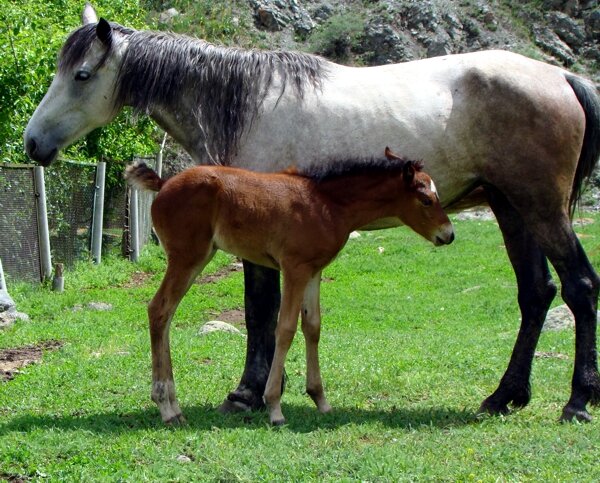
It’s not strictly about Kyrgyzstan, but a piece of good news is that it has been reported that the Prezhervalsk Horse, which were common throughout the region a thousand years ago but are currently extinct in the wild except in a small area on the Chinese Mongolian border, might be reintroduced to the Russian Steppes in 2014 from some of the 2000 specimens that are currently held in zoos around the world.
_______________________________________
Postcard from Bishkek: the weekly postcard that I send out as an email also gets posted on the website ianbek.kg each week – and there are other postcards which don’t get sent out. This week, for example, there has been the following postcards:
- Rooms at the Naryn Guesthouse - The rooms are obviously an important aspect of running a guesthouse … but life is never simple - 13/01/12
- New Year, New Week … New Start – It’s Stariy Noviy God, (Old New Year), and I take the opportunity the it is also Clear Your Desk Day to make a Old New Year’s Resolution - 14/01/12
- Wikipedia - to commemorate the anniversary of the launch of the internet encyclopedia, I took a look at its influence here in Kyrgyzstan – 15/01/12
- Getting down to work - a couple of articles in Britain’s Daily Telegraph sparked these thoughts on the “work ethic” – 16/01/12
- Wow spelt backwards is … - Customer Service Day is all about giving the Wow experience – 17/01/12
- School museums - A report in a local newspaper described an interesting aspect of the Soviet Heritage in Kyrgyzstan – 18/01/12
It is now possible to follow me on Facebook, (where I have specific pages for Celestial Mountains and ianbek … and also links.kg and Kyrgyz Diary), and on twitter, (@Bishkekpostcard and @celestialMTC ).





 Bishkek