Rooms at the Naryn Guesthouse
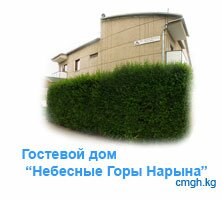
As a hotel, the main rationale of the guesthouse is Naryn is to provide accommodation for guests. As a result our rooms are our greatest asset.
There is, actually, quite a story behind the rooms. It’s a little complicated so I hope you’ll bear with me as I go through it. IO think it will prove interesting.
As I said last week, the building was not “purpose built”. It was a block of four apartments – two were what is called four roomed apartments and the other two were three roomed apartments – which we bought and renovated.
Here in Kyrgyzstan, the apartments are designated in a different way than back they would be back in Britain where we would count the number of bedrooms, “reception” rooms, kitchen and bathroom separately, whereas here they simply count the number of rooms, (apart, that is, from the kitchen and bathroom). So, the four roomed apartments could have been three bedrooms and a living room, or two bedrooms, a living room and, say, a study – or a nursery … or, (what do the Americans call it?) … a “den”.
So, we the four apartments and a total of fourteen rooms. We designated one of them as a office and another as a Television Lounge. That left twelve rooms which were designated as guest bedrooms.
If we had been designing a purpose built hotel, then the rooms would all have been of the same size, more or less, and we could have arranged for plumbing and other services for en-suite facilities. As it was the rooms were all of different sizes and laid out in such a way that it wasn’t possible to incorporate such facilities.
So, instead, we gutted the kitchens, bathrooms and storage cupboards to create showers, toilets and wash basins. We were able to establish ten of each … five on each of the two floors.
Because the rooms were all different shapes and sizes, we designated some of them as Twin rooms – with two single beds. In others where there was sufficient space, we put three single beds so that they could be used as Triples. In two of the smaller rooms we put Double beds …
A Triple Room
Incidentally: those double beds have caused us all sorts of problems …
Until relatively recently such were not very common in Kyrgyzstan. It’s hard to imagine this when so many hotels now provide King size, (or Queen size beds), and many of the furniture stores in Bishkek now sell them.
Most of the beds in Kyrgyzstan were, (are), what we in Britain would call “single beds”. There were, (are), slightly wider beds, (sometimes called “one-and-half” beds) and also collapsible divans were (are) used in homes in the same way as a Double Bed might be back in Britain.
These Double Rooms are available for “dual occupancy” – that is, they can accommodate two people – but there is only one bed. It was, (is), not always clear when we receive reservations if the booking is for a Twin Room or a Double Room – just that it is Dual Occupancy. I have met several occasions when this has presented a real problem. Couples who have said that they will not, DEFINITELY NOT (!), share a double bed … and, much more embarrassing, the occasion when gave a honeymoon couple a Twin Room.
So, we had ten showers, ten washbasins and ten toilets available … for the guests in our twelve rooms. On most occasions this proved to be more than adequate … but when the guesthouse was full it cold sometimes lead to a queue developing for the facilities.
However, as most of our guests, (at least during the summer season), were (are) tourists travelling the Great Silk Road between the Mysterious Orient, (for that read China), and the ancient cities of Uzbekistan and Turkmenistan even if they weren’t traveling all the way to/from Europe. As a result they spent one night in the guesthouse before moving on.
In Russian there is a word, (which, incidentally, I hate), pie-dyot, which basically means, “it’ll do”. Well, although it wasn’t (isn’t) ideal … the arrangement of shared toilets, washbasins and showers “across the corridor” was an example of the pie-dyot. It was a inconvenient … but sufficient for the purpose.
Not all our guests, however, were tourists, especially out of the summer season. Some were businessmen or officials who stayed for longer than just one night. So, we converted two of the larger rooms where there was easy access to plumbing and installed en-suite facilities. We called them Executive Rooms, and they were (are) always in demand.
An Executive Room
They are so popular in fact that we have decided that we really need to convert more of the rooms en-suite. However, it is not going to be a simple task and I don’t think that it will be possible to convert all of the rooms. Special arrangements will have to be made with regard to the plumbing … and it might take some time to complete.
.
Now although twelve rooms makes us one of the largest lodging establishments in Naryn, able to take large tour groups, sometimes during the summer season, they are just not enough. It’s not every day of the … but during the summer and autumn months, most of the tourists following the Great Silk Road try to cross the Torugart Pass into China on a Friday, (or if they are coming the other way), they try to cross the border on a Monday. The reason is very simple … the largest city just over the border is Kashgar and there is a very lively very famous bazaar there every Sunday. There is a problem, however, that the border post is closed on Saturdays and Sundays … so a traveler has to cross the border a weekday … and Friday and Monday are the most convenient on what is in all probability an already fairly lengthy itinerary, given the distances that have to be covered.
So, twice a week, (and sometimes on other days, too), we find that there is a demand for more rooms than we have available … and sometimes greater demand for rooms than can be found in the whole of Naryn.
As a result we decided to erect a number of yurts in the grounds of the guesthouse to act as supplementary, “overflow” accommodation – and also offer a cheaper option for “budget travelers”.
In traditional nomadic yurts, people normally sleep on mattresses laid on the ground, with odiyella, (duvets or eiderdowns), drawn up around them to keep warm in the cold nights. Now, although we thought about this, knowing that some of our guests would be staying in the yurts not out of choice but simply as “overflow accommodation”, and they might well be of a certain age that “camping” didn’t appeal to them no matter how traditional – so we fitted them out with furniture, (wooden beds and simple chairs), as if they were simple rooms. We had a concrete floor laid, and covered them with shyrdaks, (traditional felt carpets), so that people wouldn’t be walking (or sleeping) on grass, together with electricity so that there was light and the possibility of providing heaters if the nights proved to be cold.
One of the Yurts
Now, although our rooms, (and yurts), are the main aspect of our business … they are not not only aspect of our business.
We obviously have to provide other services, (food – breakfast, lunch and dinner; laundry; information, facilities for meetings and assistance in arranging transport or interpreters … and so forth) … but’s that’s another story for another time.
There is also one more little “quirk” that perhaps I should mention with respect to the rooms … and taxation(!) … but once again, that’s another story for another time.





 Bishkek