Ogurtsy Sandwiches
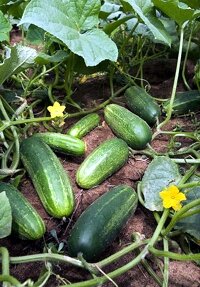
The humble Cucumber
There is something very, very English about eating Cucumber Sandwiches on a hot summer’s afternoon, (paper-thin slices of cucumber placed between two thin slices of lightly buttered white bread with the crusts cut off … all washed down with a nice refreshing cup of tea.
It is quintessentially English, carrying associations with High Tea, served at four o’clock in the afternoon, (such as the tea snacks prepared for Lady Bracknell’s visit in the Importance of being Earnest), perhaos at some posh hotel like Claridges of the Savoy … or with the Tea interval in a traditional Cricket match.
I have to admit that I came quite late to the delights of this traditional English fare but that I have also come to appreciate some of the variations where the butter is replaced by cream cheese, (American), or chutney and sliced potato, (from India).
Back in London, I even tried growing them – but without much success, although I had a better record with tomatoes and courgettes. It is basically a creeping vine, sending tendrils which grip round supports such as a trellis, with large leaves that cover the fruit which is cylindrical, tapering at the ends. Back in the UK, we seem to prefer long cucumbers, 25 or 30cm long, but here in Kyrgyzstan they tend to be much shorter, about 10 to 15cm. They are basically 90% water.
They probably originated in India, even making an appearance in the epic of Gilgamesh. They were introduced into Europe as much as 3000 years ago, and were a basic staple food in the diet of the Roman emperors. They are now grown all around the world, on all five continents, (possibly – for example in the US and parts of Europe – in greenhouses), but something like 60% of the world’s production comes from China. There are different varieties each of which are better suited to different forms of processing: slicing, pickling or “burpless” (! – that is seedless).
Cucumbers, (orgurtsy or argertsiy as they known in Russian), are grown throughout Kyrgyzstan and basically form part of a staple diet.
There are several projects which involve helping farmers to grow cucumbers. One concentrates on growing the vegetables indoors in a high mountain region in Southern Kyrgyzstan where the growing period is relatively short. Another involves growing organic vegetables for both sale (at a premium, of course) in Kyrgyzstan and for export.
They are often used in salads or as part of a dish such as miersa po kitaiskiy, (Chinese Meat) – that is, meat (beef) in a soy sauce. I suppose that a classic is use is pickled cucumber, which is probably a result of Russian influence as it is used as zakuskiy … to be swallowed after a shot of vodka.
Each month, the mother of a friend of mine pops in and brings me some … along with a selection of tomatoes, aubergines, onions, (both ordinary and spring onions), garlic, lettuce, herbs, potatoes, apples, pears, raspberries and other fruit – all produce of her own garden … and not forgetting eggs laid by her hens and ducks. Sometimes the fruity and vegetables are fresh, but sometimes she bottles them, (pickled), or makes the fruit into jams. Amongst my favourites are the sauces such as Khren – horseraddish – or Lazar - a spicy condiment used to dress Laghman or or other Central Asian dishes.A few years ago she sold up her flat in central Bishkek and bought a small house in a village some twenty kilometres out the city with a reasonable plot of land. Basically, she grows virtually all her own food, and even then has plenty to spare. Some of the surplus she used to bring to her son, but when he died suddenly a few years ago, she transferred the benefits to me. In return I give her things that she can’t grow for herself, like flour, tea and sugar.
During the hot spell that we have been experiencing, there has been a fair bit of discussion in the office about techniques for keeping cool. Some people like sitting under an air conditioner, (personally, I can’t think of anything worse), or next to an electric fan. There have been heated discussions, (pun intended), about the relative merits of hot and cold drinks; Tea as opposed to Ice cold Cola, for example. (Personally, I favour the tea option, especially Green tea). Someone bought in an Arbus, (water melon), which was duly sliced up and wolfed down by all and sundry. Some surprise was expressed, however, when I referred to the value of Cucumber sandwiches.
Well, I see that a recent news article reported the results of an American research project which adds support to my case.
In a report to the annual meeting of the American Chemical Society the researchers said that cucumber sandwiches are possibly the best food for regulating body temperature, (and that they work even better if washed down with a cup of tea … or even a pint of bitter!)
(It was an American survey, so I suppose it is not altogether surprising that the American variant of cucumber on whole wheat bread with a “slab” of mayonnaise and sea salt on top, was thought to be the most effective … but they did back that up!)
Perhaps some people will find more surprising were some of the other suggestions that they came up with, such as that hot drinks and even spicy foods can be useful … helping to “lower the body’s inbuilt thermostat to withstand the heat; avoid dehydration; and retain vital minerals and vitamins.”
Fruit and vegetables with high water content, (such as cucumber, watermelon and celery), are particularly good in hot weather, which may not be altogether surprising … but the fact that grains are good, (because they top up magnesium and calcium levels in the body, preventing cramps in the heat), could help to explain why they suggested that it might be an idea to wash down the sandwich with a glass of beer.
Whatever the temptation, they said, it is probably best to avoid anything that is too cold, “from ice cream to chilled lager and even iced water”. Water should be drunk at room temperature, they claimed, rather than ice cold. They ex[plained this by pointing out that although anything extremely cold will chill the part of the body into which it comes into contact … but at the same time will send other parts of the body into shock so that they effectively “close down”. On the other hand, hot drinks are fine. (Apparently there is some debate over the effects of caffeine, but the tannins in tea — and in wine! — act as cooling agents for the body).
Spicy foods produce perspiration, which is one method which the body employs to help keep cool; so curries with ginger or chillies, work well. ”This is why many hot countries eat so much spicy food”, said one of the researchers.
For the record: As well as avoiding extremely cold drinks and ice cream, the researchers said that other foods to avoid included those which are high in proteins and fats, because the body has to work harder to digest them … which means avoiding sweets as well as meat products.
All of that was like music to my ears … as it is what I have been telling the kids for years … but it still won’t go down well with them, and is unlikely to convince them … no matter well argued!




 Bishkek