Container Creations
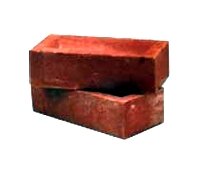
Red Brick: A traditional construction material ... what else can it be used for?
When I was young, we used to play a parlour game … the Brick game. The idea was that you took an everyday household object and placed it in front of the group who then had to jot down different uses to which it could be put – and people were awarded points for the answers. A single point if two or more people suggested the same answer; three points if the answer was unique and as a bonus five points for a universally recognized imaginative answer.
For example – an ordinary household brick: it can obviously be used for building, and as most people would have suggested that, it would probably attract just one point for each. Using is as a weapon, although perhaps antisocial, might not be suggested by other people so might attract three points … as might using it as a door stop or an ashtray, as a “stepping stone” inlaid into a lawn or as part of a bookcase, as a weight to hold down papers (especially in a windy day) or to press dried flowers between sheets of blotting paper.
It’s not exactly a household object … but it would be interesting to see what sort people might come up with for a shipping container …

Shipping containers piled one on top of each other ...
Containerization is a transportation system for freight which developed after the Second World War, based on a range of steel “intermodal containers”, built to standardized dimensions, that can be loaded and unloaded, stacked, and transported efficiently over long distances, and easily transferred from one mode of transport to another — ship, rail and trailer trucks — without being opened.
I had never really though much about this until I came to Kyrgyzstan. My main interest in shipping containers had been as an example to be cited as an example in Computing and Information Technology lessons and the need to have good algorithms to optimize the container ship’s time in port.
One day I was taken to Dordoi Market on the outskirts of Bishkek and I saw the humble shipping container in a new light. Dordoi, (also known by it’s old name as Tolchok), is billed as the largest market in Central Asia, covering some 100 hectares. I remember that first visit very well … it was in the dead of winter with snow and ice all around … the market stalls in the old part of the site were open and crowded together.
Although the aisles between them were slippery with ice that was polished by the hundreds, thousands, of pairs of feet that walked up and down them, there was no real chance of slipping over because the other people were so closely packed that the image a can of sardines comes easily to mind … it seemed that it wasn’t possible to fall over because everyone else would just hold you upright. Then again, I thought to myself, if you did fall over there wasn’t much that could be done to save you from being trampled! – Fortunately, that never seemed to happen.
There also seemed to be other problems … liker forcing a stop by a stall if you saw something that you were interested in buying … and, if by any chance you went past the stall, it was difficult to turn around and go back to have another look. It was extremely popular, even in the dead of winter, because if carried almost everything you could possibly think of – and tended to be cheaper, (a lot cheaper), than buying anything in the city centre shops. It was known as a “wholesale market” because the owners of those city centre shops would come here, buy stock and take it back to their those same shops – and, of course, there was a mark up.
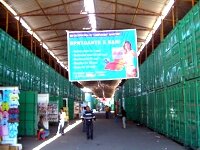
One of the Dordoi alleys ... on a quiet day
Not all of the stalls, however, were out of doors and exposed to the elements. The market was divided into a number of quite distinct sectors … if you want to buy a leather jacket, then there was a special quarter that you had to visit … her you would find Turkish, Pakistani and other dealers all displaying their wares and competing with each other. There were whole areas devoted to Chinese Goods or Turkish Goods, to clothes or shoes and footwear.
These were a maze of alleys, under cover and lined with stalls made from shipping containers. The large double doors were unlocked and opened out and along the sides of the container, separated by a narrow pathway deep down into the recesses of the container were the goods piled high, one on top of each other. Indeed, in places the containers were piled high, one of top of each other. The Market was so large, (with something over six thousand containers and employing something like twenty to thirty thousand of Bishkek’s population – depending on whose statistics are being quoted), it was easy enough to get lost and we used to offer guided visits. One of the local newspapers actually used to publish a map showing nine different sections – each with their own name and characteristics.
Part of the market’s success was the fact that the Bazaar was frequented by Kazakh traders, as well as local ones, purchasing goods to take back and trade at home. Many of those would have been Chinese goods, imported to Kyrgyzstan and repackaged with some minor work to enable them to be be marketed as Kyrgyz products and thus subject to a more favourable customs regime than if they were imported to Kazakhstan as Chinese goods.
This caused a few problems when the number of wholesale buyers from Kazakhstan, Russia and Uzbekistan started to fall and the situation was exasperated when the border with Kazakhstan closed following the 2010 revolution. Trading was severely curtailed, and then again in 2012 with the creation of the Customs Union with Russia, Belarus and Kazakhstan creating a single, unified market behind common customs tariffs which once more cut into the business done by market traders.
OK … so one answer for parlour game might be : Market stalls … but there are others … On my trip up to Naryn each month, I have noticed shipping containers being used as kiosks, (small shops), as site offices for a building site, (in that respect they seem to be taking over from the traditional wagon), even as guest accommodation for a health resort.
In fact, I recently saw a photo report on National Geographic of how they were being used to provide student accommodation in Amsterdam. They have been used as Artist studios and even recording studios, Computer Data Centres (e.g. by Sun Data Systems), Emergency shelters, Horse boxes, Medical clinics, Press Boxes for sports events, school classrooms, storage warehouses and workshops.
They have a number of advantages:
- strength and durability, (having been built to withstand a wide variety of conditions keeping their contents safe and sound);
- they are modular built to a standardized design and so are easy to combine into larger structures;
- they are easy to transport -having being designed for just that purpose, which means getting them onto site is relatively easy and also makes them appropriate for temporary accommodation which can then be moved to a new location as the need arises;
- they are readily available with something like an estimated seventeen million in the world – with something like ten thousand being lost at sea at year – even so, in 2010 there was a report of a worldwide shortage of containers …; and
- containers, (at an initial cost of USD6000-10000 each), provide a cheap form of construction,
They also have some disadvantages, such as they require considerable insulation to cope with extreme temperatures as they are made of steel.


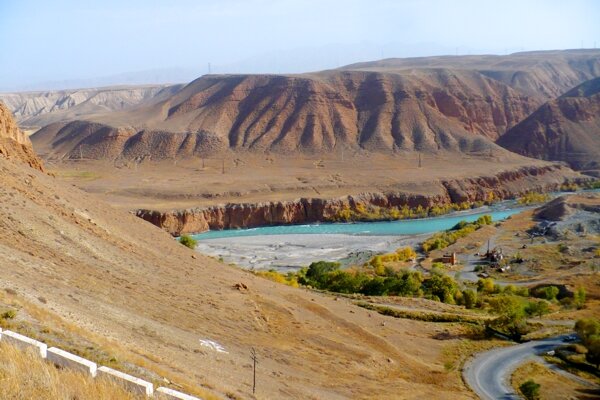
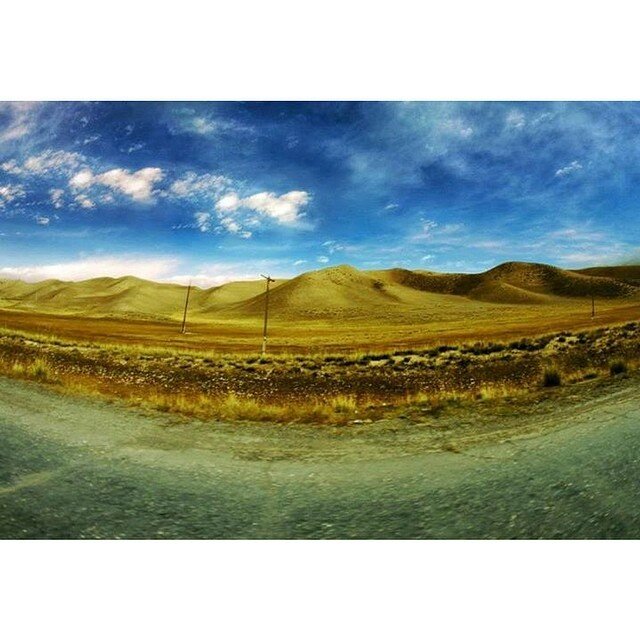



 Bishkek
A new trend seems to have started in Bishkek – building houses out of shipping containers:
Shipping containers used for rail and maritime transport are now being used as a home base. In the metal box, openings are cut for the windows and doors, the walls are insulated with plasterboard, fiber glass, foam and wooden plank for the flooring installed.
Some of the owners clad the outside walls with brick and plaster. A strong foundation for this house is not required.
…
One owner said that they once saw a house made out of containers and became interested in this new technology, discovering that the construction of the house will be cheaper than traditional methods. Actually, however, it turned out to be not so cheap. On the other hand, they managed to build their house quickly, and moved in just six months later.
The construction of the house took four transport containers weighing 40 tonnes, resulting in an earthquake-resistant house, which is warm.
The authorities, however, say that they had not issued even a single authorization to build homes from containers. As it happens, according to government regulations, homes that do not exceed 300 square meters are not subject to inspection … although it represents a new technology, it should be.
One official concluded that these houses are quite suitable for living accommodation. They have already inspected other buildings made from containers and providing rules about construction and insulation are followed, then “living in them will be safe and comfortable”
Report (in Russian) with photographs: http://www.vb.kg/doc/225070_v_kyrgyzstane_stroiat_osobniaki_iz_transportnyh_konteynerov.html