Dress Code
The other day I had to go to the Ministry of Culture and Tourism for a presentation. I wasn’t sure about the formal presentation but the occasion certainly presented me with a dilemma: What to wear?
This is actually quite a difficult question, no where as near as easy to answer as it would have been back in the UK … especially as the temperatures recently have been soaring into the high thirties … even reaching into the forties, (… in fact it has been quite difficult to sleep at night).
The rules here seem to be extremely flexible, businessmen, officials and Ministers are often to be seen in shirtsleeves, open neck shirts, even in T-shits and jeans … but that doesn’t mean to say that “anything goes”.
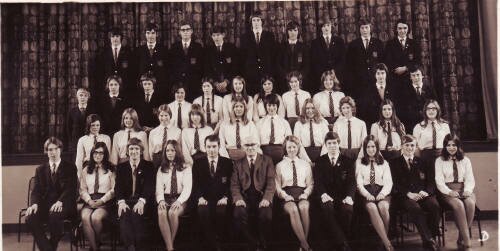
As a schoolteacher, back in the UK, the rules were also fairly nebulous and, once again it wasn’t a case of “anything goes”, but there was a wide variety of interpretations of what was considered acceptable. It’s probably a feature of my wishy-washy liberal background, but this has never been a particularly vital issue as far as I am concerned.
Oh, please do not misunderstand me, I understand that some standards are necessary – some forms of dress are compulsory: a uniform or for safety reasons; others are expected: when meeting the President or Royalty for example; some forms of dress can be considered acceptable, appropriate or advisable (or, for that matter unacceptable, inappropriate or inadvisable), in certain circumstances or on certain occasions.
On the other hand, I do not agree with Beau Brummel that “clothes maketh the man” … although Mark Twain had a very good point when he commented “Naked people have little or no influence on society“. If Brummel was really noting, as Shakespeare put it in Hamlet, that “The apparel oft proclaims the man” … that clothes tell us how someone wants to be perceived or, perhaps, how they perceive themselves, (consider the Emos, Goths and Punks).
For the record: the phrase seems to crop up first in the works of the scholar Erasmus who is quoting proverbs from classical literature.
On the contrary, to use a different cliché, I don’t think that we should judge a book by its cover. Of course I want to have confidence in the person in front of me or sitting opposite me, so it helps if they look the part … but how they look is not as important as there character and whether they deliver on their promises … or that they can do their job efficiently and effectively. One of the most cutting and cruel put downs that I have heard was delivered by a colleague about a young pupil: “I used to think that xxx was intelligent, until he opened his mouth and started talking“, … but as is often the case … oh, how true an observation it was.
A couple of weeks ago I came across an article entitled: “Business Attire for Men When Temperatures Sizzles.” Although I agreed wholeheartedly with the conclusion:
“Keep in mind that your business attire is intended to show respect for your clients. It is all about the client, not about you”,
I am afraid we parted company on some points in her argument up to that point. She noted, for example:
“In a strictly formal business environment, there is little choice. Bankers, brokers and financial advisers need to present themselves in a trustworthy and serious manner. Having said that, it leaves no room for deviation. The person who deals with other people’s finances needs to look the part by dressing in a business suit and tie.”
Personally, I am not sure that I agree … Oh, the opening premise about Bankers, brokers and financial advisers needing to present themselves in a trustworthy and serious manner is fine … but I am not convinced that the conclusion about the need to wear a business suit and tie follows inevitably from that.
We were definitely on different wavelengths when she issued a prohibition on sandals!
I remember being invited to visit to a London Gentlemen’s Club for lunch a few years ago. I turned up wearing a sports Jacket and trousers, with an open necked shirt. When I walked in and asked at reception for my host, I was told by the receptionist that I needed a tie in order to be admitted … but I shouldn’t worry because they had one which they could lend me. I should have known better, and was very grateful for their accommodating approach. My host arrived and took me into the dining room. As we were leaving, and I handed the tie back to the receptionist, my friend did a double take and said something like “Oh my goodness!”.
“What’s wrong?”, I asked … to which he replied: “You are wearing sandals … it’s a good job they were preoccupied with the tie and didn’t see … you must be the only person to have been admitted to the club and eaten lunch in Sandals!”.
I an sorry … but sandals are soooooo much more comfortable in the temperatures at the height of summer than shoes and that, I am afraid, is where I draw the line.
Recently, the question of Dress Code has become a real issue here. The Committee on Rules and Ethics of the parliament, for example, has approved a paper laying down sartorial rules to be applied. Now, I know that this relates to the Parliament building, and they apply to all enter there … Deputies (elected Members of the parliament), secretarial and support staff, members of the press, (who are probably the most affected by the new rules) and also members of the public … but I wasn’t sure if it applied to other government buildings.
“Business style” clothing is recommended, (in discrete colours, not bright ones – blue, beige, grey and brown are recommended … different colours for jacket and trousers/skirt are permitted, but the shirt and tie should not “clash” and match the colour of the suit).
For the record: although it didn’t relate to me, women, lace, taffeta, chiffon, brocade, shiny embroidery and beads, massive and colourful decorations are ruled unacceptable – as are open blouses, tunics, dresses with cleavage, bare shoulders, stomach and back, “mini” and “maximum” skirts.
Also forbidden, (and, although the reports weren’t clear on this point, I assume it applies to both sexes), are jeans; shorts; T-shirts; sportswear; and thick knitted items like sweaters.
Excuse me, I thought to myself, but with the current temperature even a light suit seems like overdressing, (unless, of course, protocol demands it … but as I didn’t expect to meet the visiting President of either Kazakhstan or Turkey at the Presentation, I decided to risk it), so I went in trousers and shirt, without a jacket … but I did decide to wear a tie … on the principle I could always take it off. I thought about wearing a short sleeved shirt, but conscious of a recent diatribe on “acceptable business dress” which said that this was a definite n0-no, I decided to on a normal shirt with long sleeves … However, I also decided to roll up the sleeves on the basis that I could always roll them down if necessary. To complete the outfit I donned a tie … although I think the last time I wore one was two months ago, before the current heat wave set in.
When it comes to footwear so are: beach shoes (which I presume means flip flops), slippers and sandals.
Now, I usually wear sandals during the summer months, so I decided to risk it. I chose a pair which are pretty close to being closed and rather than wearing them without socks, (as I do most of the time), I chose a pair of dark socks that I hoped would attract less attention.
There is a prohibition on strong scents, and men should be clean shaven, but if they do sport a beard or moustache, then it should be of a classical style and neatly trimmed.
Just to be sure … I trotted off and shaved especially before setting off for the meeting.
Apparently wedding rings, cufflinks and tie clips are acceptable as jewellery, but I am not sure about broaches, necklaces, bracelets, earrings or other things like nose studs.
As it happens I do sport a ring – a thin silver band, but it’s not a wedding ring … and I also wear a silver chain around my neck – but it is not visible, nor does it set off metal detectors … so I decided not to remove either.
As it happens everyone around the table were dressed very soberly we were all very presentable – even though there was someone wearing a polo shirt, someone else in jeans and, I was in sandals. Also, I won’t say that I felt overdressed, but I was the only one sporting a tie.
I don’t think that the lack of “Business Casual” sartorial elegance either affected either the relationships and respect that we felt for each other , (even though it was the first time four of us had met), nor the results of our discussion. In the words of another cliché, it strikes me as another example of “horses for courses“.






 Bishkek