Visa Free Regime – What it means and what it doesn’t!
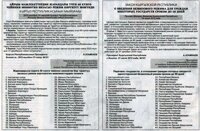
The all important official publication of the law extending the visa free regime to another 44 countries!
I wrote a postcard the other day, (Visa free … finally!), about the long and drawn out process of trying to get a visa free regime adopted here in Kyrgyzstan … and I said that I had two press releases waiting on my computer, but I was reluctant to issue them until the new law actually came into force.
Well, apparently the law’s now been published … which means it is now in force.
For the record, here are the two press releases that I referred to … :
The first is aimed at a foreign audience, i.e. potential tourists:
Visa Free Regime – What it means and what it doesn’t!
Visiting Kyrgyzstan has become easier … at least for some people.
This is because Kyrgyzstan has unilaterally decided to adopt a “visa free regime” for visitors from forty four different countries. Citizens of these countries now join those of seventeen other countries that can travel to and enter the Kyrgyz Republic without having to apply for a visa, (making a total of sixty one countries so that enjoy this privilege).
Obtaining a visa not only involves costs in terms of fees, but also in terms of time in order apply and receive the all important stamp in the passport; (and more so for those who were also required to obtain an official invitation which in turn needs to be approved in advance).
Welcoming the measure, Ian Claytor, the President of the Kyrgyz Association of Tour Operators, commented: “By taking this step and eliminating these administrative barriers, Kyrgyzstan has made it easier for many more people who are interested in visiting this small, mountainous Central Asian Republic which sits across some of the ancient trading routes known as the Great Silk Road, to do so. At the same time, they have reinforced the country’s image and reputation for offering a warm welcome and traditional nomadic hospitality.”
As is always the case, however, there is some “small print” of which travellers should be aware.
The first point to note, for example, is that the measure applies to just 44 additional countries and visitors from other countries will still need a visa. In some cases they may also need an invitation approved by the Ministry of Foreign Affairs in Bishkek.
When the term “visa free regime” is applied to a country, it does not necessarily mean that all visitors from that country do not need a visa. Although this is true in some cases, in others, the visitors are allowed to stay in the country for up to sixty or ninety days. A visa will be needed for a longer stay.
Although the rules and regulations concerning visas may have altered, there are others that apply to the entry and stay of foreigners in Kyrgyzstan. For example, it may be necessary for the visitor to register with the authorities after their arrival and separate permission to work in the country will still be required.
The new arrangements may have come late for many tourists visiting Kyrgyzstan this year, who will have already obtained their visa. It is hoped, however, that the measure will prove to be a positive advantage when planning and preparing for next season and beyond. (It is a long way off in the future, but the current arrangements are limited until 2020, after which a new law will have to be passed to extend them.)
The 17 countries that already enjoyed a visa free regime were:
Azerbaijan; Armenia; Belarus, Cuba; Georgia; Japan; Kazakhstan; Malaysia; Moldova; Mongolia; North Korea; Russia; Tajikistan; Turkey; Ukraine; Uzbekistan and Vietnam
The 44 countries covered by the new measure are:
Australia; Austria; Belgium; Bahrain; Bosnia and Herzegovina; Brunei-Darussalam; Canada; Croatia; Czech Republic; Denmark; Estonia; Finland; France; Germany; Greece; Hungary; Iceland; Ireland; Italy; Kuwait; Latvia; Lithuania; Liechtenstein; Luxembourg; Malta; Monaco; the Netherlands; New Zealand; Norway; Poland; Portugal; Qatar; Saudi Arabia; Singapore; Slovakia; Slovenia; South Korea; Spain; Sweden; Switzerland; United Arab Emirates; United Kingdom; United States of America and Vatican City.
The 20 countries not covered under the “visa free regime”, whose citizens do need to obtain a visa but can obtain one, valid for up to one month, without needing an official invitation:
Albania; Andorra; Argentina; Brazil; Bulgaria; Chile; Cyprus; Indonesia; Israel; Macedonia; Mexico; Montenegro; Oman; Philippines; Romania; San Marino; Serbia; South Africa; Thailand; Venezuela
Notes for editors:
- Kyrgyzstan is a small, landlocked country in Central Asia. One of the former Soviet Republics it declared its independence in 1991. It is predominantly mountainous with over 90% of the country above 1500m, and the backbone of the landscape is formed by the Tien Shan Mountains. Lake Issyk Kul is the world’s second largest mountain lake and its beaches and resorts, (hotels, sanatoria), have long been a popular holiday destination for citizens of the former Soviet Union. The Kyrgyz are traditional a nomadic people, who take their horses and sheep into the high mountain meadows (jailoo) to graze on the lush pastures for the summer. It formed an important link on the Great Silk Road, between the orient (China) and the ancient cities of Uzbekistan.
- Tourism is a major part of the Kyrgyz economy, representing about 4% of the GDP.
- Amongst the different aspects of tourism in Kyrgyzstan are Inbound Tourism: (Recreational Tourism, based mainly on Issyk Kul and attracting visitors from former countries of the Soviet Union as well as citizens of Kyrgyzstan; Travel along the Great Silk Road, Adventure Tourism – including mountaineering, trekking, horse riding, cycling, rafting and other types of activity, Historical and Cultural tourism concentrating on the history and traditions represented in the country); Outbound Tourism, which involves providing services for Kyrgyz citizens travelling abroad and Domestic Tourism where residents of Kyrgyzstan travel within the country.
- Amongst the services offered by those in the tourism industry are arranging or providing transport, (including tickets); accommodation; meals; guides and other support services; information (for example, museums) and entertainment, (for example, concerts) and the sale of souvenirs.
- According to official statistics from the Border authorities, in 2010 there were 891000 people who crossed the state border and in 2011 – 2317600.
- According to official figures there are 2697 Tour Operators and Agencies working in the country. Also there were about 6000 enterprises working in the industry (hotels, restaurants, homestays (a form of Bed And Breakfast), transport companies, etc.).
- The Kyrgyz Association of Tour Operators is the largest body representing Tour Operators and Institutes of Higher Education in the Republic. It was formerly established and registered as a non-commercial organization in 1997, having existed as an ad hoc, unofficial, body for several years before that. It is a growing organization – there are currently 35 members and include some of the longest established and largest tour companies in the country, as well as ones which have been established more recently.
- Although members of KATO work in all area of tourism in the country, the majority are engaged mainly in Inbound Tourism, that is the reception of foreign visitors to the country.
- The President of the Association is currently Ian Claytor – a British citizen who has lived and worked in the Kyrgyz Republic since 1995.
For further information contact:
Altyinai Musabaeva: Executive Director KATO : 0 312 613857
Ian Claytor: President KATO; Tel. 0 312 311814
________________________________________________________________
The second was aimed at the local Kyrgyz media and although much of it was basically the same … after the opening paragraphs, the section about the “small print” was replaced with the following:
It is also hoped that it will help to make the country more attractive as a destination and lead to a substantial increase in the number of tourists visiting the republic, bringing with them increased revenues for the country and improved employment opportunities.
Although these new arrangements are the result of long and detailed consideration, it is important to note that it is not a panacea that will solve all the problems facing the development of tourism in the republic.
We will not see, for example, many (if any) additional tourists this year, as the season is already well under way. Many foreign tourists who might have benefited from this measure will already have obtained their visa. Hopefully, however, the simplification of procedures will send positive signals and make it easier to attract more visitors in the future.
Visa policy is, however, just only one element in a much more complicated situation, and it is unlikely that we will see a considerable increase in the number of visitors if we do not address other issues.
It is vital, for example, to improve the marketing of the country, not only in order to publicize the measure but also so that the potential visitor is aware of what Kyrgyzstan has to offer the tourist. It is also important for those working in tourism to concentrate the range and quality of facilities and services so that guests are satisfied and feel able to recommend Kyrgyzstan to their friends and relatives, colleagues and acquaintances.




 Bishkek