Let the Games begin … at last
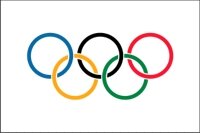
The Olympic rings
Yes, … it’s that time again and I don’t suppose I can avoid references to the Olympics. I have tried to do so but in the last few weeks I have already had to make some passing reference to them.
It used to be once every four years that everyone seemed to get into a frenzy over the Olympic Games … but now the International Olympic Committee, (IOC), organize not only the main summer games, but also the Winter Olympics, the Para Olympics and the Youth Games.
Although we know a fair bit about the ancient games, we don’t really know when they started or when they eventually ceased to be held. It is generally held that the first games were held in 776BC, but we are not certain and this is based on an inscription in Olympia which lists the winners of the races held every four years – starting with the races held in 776BC. The traditional games seem to have lasted last for almost 12 years, the last ones being held somewhere around 393AD, when “pagan practices” were outlawed, or 426AD, when the Emperor ordered the destruction of all Greek temples in his domains.
Most people know that the “Modern” games were the brainchild of Baron Pierre de Coubertin and started in 1896. In fact, the Baron was not “living in a vacuum” and his games emerged from a tradition of National games in Revolutionary France dating back a hundred years and also in Britain (at Much Wenlock and Liverpool) for half a century. The 1896 games in Athens, however were the first truly International games, bringing together some 241 athletes representing 14 nations and competing in 43 events across 9 different sports, and which sought to recapture the “Olympic ideal”.
This is the third time that London has hosted the games – the only city to have been so honoured, in 1908, 1948 and now, in 2012, (that is, if you don’t count Athens : 1896, 1906 and 2002 – but the 1906 games were not officially recognized by the IOC). In 1908 there were over 2000 athletes, representing 22 countries and competing in 110 events across 22 different sports. In 1948 there were 4104 athletes from 59 countries competing in 1366 events across 17 sports. This year there will be over 10,000 athletes from 204 nations and territories competing in 302 events across 26 different sports.
Kyrgyzstan has competed in every games since the 1992 Winter Olympics in Lillehammer, Norway. As it happens, there was only one Kyrgyz competitor on that occasion, Yevgeniya Roppel who competed in the Biatholon, and she arrived after the opening ceremony, so the Kyrgyz flag entered the Olympic arena for the first time borne by Norwegian translator, Torkel Engeness.
Back in 1908, the Russian sharpshooting team, (generally regarded as potential medalists), also turned up late … and they actually missed their event … because nobody realised that, whereas the rest of the world had long since adopted the Gregorian Calendar, Russia was still working on the old Julian Calendar. (For the record, in 1948, the USSR had been invited to send a team, but they decided not to participate.)
In a way, I am a little late as well, as the opening ceremony has already taken place … but, as they say, better late than never.
Although I have tried not to get carried away with Olympic fever … it is quite hard. Although it has been fairly low key, there has been a certain amount of attention paid to the event in the local media. There have been articles in the papers, the TV and over the internet, about several of the 14 athletes that will be representing Kyrgyzstan. The timetable of events has been published and there are high hopes that the country will improve on it’s medal haul – a silver and two bronze medals to date – primarily in the various martial art disciplines. Aisuluu Tynybekova, the Women’s Wrestler who had even attracted international interest as a potential medal winner, was in the headlines for all the wrong reasons – a fracas which by all accounts lasted just seconds but resulted in a teenager in hospital and the athlete being investigated on an assault charge. Eventually the court gave her permission to leave the country to participate in the games, but the hearing is scheduled to resume in mid August and it will be interesting to see what happens. Of course, as commentators are already pointing out, it will be difficult to separate the results in the arena and the courtroom.
As it happens, one of the first Kyrgyz citizens to appear in the Olympics was far from late – although he appeared as an official rather than a competitor. Bahadir Kochkarov is a linesman in Football and has already officiated in several international competitions … including the opening match of the 2010 World Cup. Well, he was one of the officials in charge of the qualifying match between the United Kingdom and Senegal at Old Trafford, the home of Manchester United, on Thursday. Incidentally, this is a fairly historic match for other reasons – it’s the first time the UK have fielded an Olympic team since the Munich games in 1972; forty years ago. At that time, Olympians had to be amateurs, but a couple of years later the Football Association abolished the distinction in that it stopped recognising separate competitions for amateurs and professional. There has also been a problem in that in the UK there are separate National Teams: England, Scotland, Wales and Northern Ireland. When it comes to the Olympics, these countries are not represented, only the United Kingdom, and when it comes to Football, there is no UK Football Association.
It seems to me that this could provide plenty of scope for future Quiz Nights and Trivial Pursuit questions …
(For the record: the Women’s football competition actually kicked off on Wednesday and the Archery competition also gets underway before the official Opening ceremony.)
Interestingly, today, (July 28th), has been declared the Day of Kyrgyz Citizens Abroad … of course I may be wrong, but don’t think that was done with the Olympics in mind.
One of the more interesting Olympic stories was about six sports which were once but are no longer included in the Olympics: Solo Synchronized Swimming, Hot Air Ballooning, Jeu de Parme – an old version of Tennis, Pigeon Shooting, Rope Climbing and Tug of War. Although some of these might seem a bit esoteric, the last two are both fairly traditional – for example among the Tartar and they are keenly contested at the annual Sabbantui festival. For the record: they got dropped because they don’t really have an international following. Tug of War got dropped because there is no international governing body for the sport and most of the contestants for Rope Climbing came from the United States. Also, apparently there are only something like 20 coursts to play Jeu de Palme and most of them are in France.
Well, there is an old joke that “Tax evasion is a National Sport in … (you name the country)”, and there are so many variations that I suppose it could be considered as an international “sport” but, for a number of reasons, it obviously couldn’t be adopted as an Olympic sport. A new report by a non-profit watchdog group called the Tax Justice Network, (TJN), suggests that the gap between Rich and Poor in the countries of the Caucasus and Central Asia is increasing and is much wider than previously thought. It said that Kyrgyz citizens had just under a billion dollars hidden away tax havens. As it happens, with all the controversy that is currently raging in the West about Tax Avoidance schemes, it was announced that in the first half of the year, the tax authorities here conducted some four and a half thousand inspections – recovering something over a billion som in unpaid or undeclared tax for the budget.
The gap between rich and poor came to the fore again with the news that a group of citizens have suggested closing all banks, microfinance companies, credit unions and so on. It seems to comprise of people who have taken out loans and then found that they can’t meet the repayment schedules – mainly due, they say, to the high rates of interest. They draw attention to the fact that many have had to take out second loans to repay the first, or lost their homes which had been pledged against the loan and in some cases led to suicide. These commercial organizations, they say, should be replaced by a state run institution. What made the report more significant was the fact that it included a threat that if their “demands” are not met then there are amongst their number several who are prepared to set fire to the banks.
Interestingly, one of the local banks has just announced a new service … Consultations on Financial Literacy …
The question “economic crime” of inevitably leads to that of corruption. There has certainly been a loot of attention being paid to the anti-corruption measures adopted recently. All sorts of officials including Police officers, (one, from the main Drugs Control unit, being detained trying to cross the border with 15 kilograms of drugs – and another receiving an eleven year prison sentence for eliciting a bribe); employees of the local authorities; Prosecutors, Government appointed administrators of businesses, Members of Parliament, Ministers and Former Ministers, are either under investigation or actually facing prosecution. There are some concerns about whether the campaign is being used by some people to pursue their own agendas, settling scores and so on … and one investigation reported in the press has involved a certain amount of banter allegation between the investigator and the investigated. One international journalist points to a possible political agenda. The Prime Minister has signed off on several new ( and controversial?) measures which are now to be submitted to the parliament.
It’s not one of the government’s proposals, but someone posted a comment on Twitter suggesting that we need a site similar to ipaidabribe.com, which seems to be based in India.
Allegations of corrupt practices has led to the suspension of international adoption procedures – yet again. Then again, there seems top be some people with a far more cynical point of view that saws this all down to politics.
I am tempted to draw parallels with the trials and tribulations of the Mining industries which has also faced the withdrawal of licenses and so on … which some cynics suggest may simply be a case of someone “playing politics”. However, there has been news of another company being granted a license – so something seems to be working.
It looked as if another scandal was about to erupt at the start of the week concerning the Kumtor Gold mine. Over 200 employees at the site, (out of a workforce of over 1600), were referred to Karakol hospital with symptoms of fever, general weakness and diarrhoea. The doctors diagnosed food poisoning, apparently traced to a consignment of eggs, 78 patients were admitted to hospital. Fortunately, however, the outbreak seems to have been stemmed.
Another interesting Golden story involved a decision of the Russian Federal Security Service to return gold which they had seized in an investigation back in 2009. Although charges against five people, (including the head of a jewellery company with shops in Russia, Kazakhstan and Kyrgyzstan which was supposed to own the gold), were dropped, the gold was not returned. The amount of gold concerned was apparently one and a half tons (!) and although the price of gold fluctuates somewhat, I have seen estimates which value it at anything between 35 and 60 million dollars!
The slowdown in production at Kumtor has had a serious effect of the economy – leading to a decline in GDP. Having said that, the Minister pointed out that not all the “blame” can be placed at the feet of the Canadian firm and that there is also a recession in other industries.
One area which looks as it could present us with problems in the near future is the grain harvest as a result of high temperatures and low rainfall. Crop levels look to be less than half of previous years. The situation will be aggravated by the fact that the harvest in other countries is also likely to fall. Farmers are already facing a crisis in the production of meat as an outbreak of a new strain of Foot and Mouth disease has led to the slaughter of something like 3-4000 head of cattle.
Although it might seem that the Olympics have, to a large extent, been “hogging the headlines”, there’s been a fair bit going on this week.
The controversy over last week’s “shootout” between Kyrgyz and Uzbek border guards in which two were killed, (one from each side), has continued to simmer away. A Kazakh newspaper went as far as to say that this was a sign that the two countries were “at war”, drawing comparisons with the escalating violence in the Europe just before the Second World War. This has, of course, been denied and we are told that relations between the two are “stable”.
If this particular incident could be considered as a simple skirmish arising out of a tense situation which got out of hand, then the situation in Gorno Badakshan is more worrying. In what was essentially an internal “security operation” in neighbouring Tajikistan, at least nine soldiers were killed and twenty injured. The region which shares a common border with Southern Kyrgyzstan has basically been closed and cut off from the outside world – especially internet access.
Some people have been trying to get away from the Olympics, and some thirty artists from Central Asia and further afield, (Turkey and France), have been participating in an Arts Festival on the Southern shore of Lake Issyk Kul.
This week also saw the opening of the Seventh Oimo Festival and Craft Fair organized by the Central Asia Craft Support Association. After the official opening here in Bishkek, it transfers up to Cholpon Ata and there are always a variety of activities, (master classes, conferences), as well as the stalls selling wares and souvenirs.
There will, also be the International Festival if Turkic Speaking Countries, which will also include guests from India, South Korea, China and Tajikistan; which are not generally considered to be a Turkic speaking countries.
The really big news this week, as far as I am concerned, is that the President has finally signed the law extending the visa free regime from seventeen to sixty one countries! What’s more, the law has been published which means that it is now in effect. It’s not quite as straight forward as “no visas are required” … for example, for the 44 countries covered under this change in the law, it covers stays in the country of up to 60 days … but in most cases, that will be true.
The 17 countries that already enjoyed a visa free regime were:
Azerbaijan; Armenia; Belarus, Cuba; Georgia; Japan; Kazakhstan; Malaysia; Moldova; Mongolia; North Korea; Russia; Tajikistan; Turkey; Ukraine; Uzbekistan and Vietnam
The 44 countries covered by the new measure are:
Australia; Austria; Belgium; Bahrain; Bosnia and Herzegovina; Brunei-Darussalam; Canada; Croatia; Czech Republic; Denmark; Estonia; Finland; France; Germany; Greece; Hungary; Iceland; Ireland; Italy; Kuwait; Latvia; Lithuania; Liechtenstein; Luxembourg; Malta; Monaco; the Netherlands; New Zealand; Norway; Poland; Portugal; Qatar; Saudi Arabia; Singapore; Slovakia; Slovenia; South Korea; Spain; Sweden; Switzerland; United Arab Emirates; United Kingdom; United States of America and Vatican City.
The 20 countries not covered under the “simplified visa free regime”, (so their citizens do need to obtain a visa – but they can obtain one, valid for up to one month, without needing an official invitation):
Albania; Andorra; Argentina; Brazil; Bulgaria; Chile; Cyprus; Indonesia; Israel; Macedonia; Mexico; Montenegro; Oman; Philippines; Romania; San Marino; Serbia; South Africa; Thailand; Venezuela
_______________________________________
Postcard from Bishkek: the weekly postcard that I send out as an email also gets posted on the website ianbek.kg each week – and there are other postcards which don’t get sent out. This week, for example, there has been the following postcards:
- Kasha for breakfast - Porridge … traditional breakfast fare here as in Scotland!;
- Tolubai - about another one of the forty of so “minor epics” of traditional Kyrgyz nomadic culture ;
- Khan Tengri - one of Kyrgyzstan’s 7000 meter peaks;
- Visa Free … finally! – As the President finally signed the law extending the visa free regime to cover another 44 countries, I took the opportunity to review the history of the struggle to have this measure adopted
- Tsifra Dnya – Figure of the Day – One of the local newspapers publishes a regular feature highlighting a different statistic each day – it’s quite surprising what they reveal.
- One day, seventeen years ago! - A recent “spring clean” brought to light something which brought back memories of my first day as an ex-pat in Kyrgyzstan …
It is now possible to follow me on Facebook, (where I have specific pages for Celestial Mountains and ianbek … and also links.kg and Kyrgyz Diary), and on twitter, (@Bishkekpostcard and @celestialMTC ).




 Bishkek