The Secret of Chon Tash
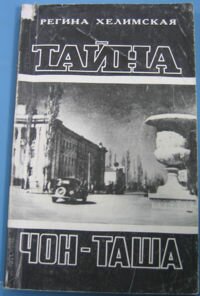
The book published about "The Secret of Chon Tash
This year saw the Independence Day celebrations marking the day, 20 years ago when the Supreme Soviet of the Kyrgyz Soviet Socialist Republic decided to break away from the “permanent and everlasting” Union of Soviet Socialist Republics … to strike out and forge it’s own path in the world.
In many respects it was a joyous occasion, but there were also reports in the press relating to a much darker moment represented by the Ata Beyit Memorial, just to the of the capital in the foothills of the Kyrgyz Range. The story behind the memorial is a remarkable one, reminiscent of the dark days of Stalin’s Purges.
The largest known purge of the period in the Kyrgyz SSR took place in November 1937, at Chon Tash, (or Chong Tash), just to the south of the republican capital Frunze (now Bishkek). Chong Tash is now a small, low lying, ski resort, (and a favourite place amongst residents of Bishkek to while away a few free hours over a weekend).
Over two days, (the nights of November 5th/6th and 8th/9th), some 137 people (or possibly 138 – there is some doubt about the actual number), were killed by the secret police – executed by a single shot to the back of the head. It is believed that this included the entire Supreme Soviet Central Committee of the day – including Djusup Abdurakhmanov, Bayaly Isakeev and Torokul Aitmatov, (father of the famous Kyrgyz author and diplomat, Chinghiz Aitmatov). There were also some other notable characters such as Kasym Tynystanov, (the linguist whose portrait appears on the 10 som banknote). These were Kyrgyz politicians and luminaries who had welcomed the Bolshevik revolution in 1917, joined the Communist Party, and served in high-ranking official posts.
For over five decades the relatives of the victims had no idea of what happened to the loved ones. People who had been taken from their homes or offices, never to return. Many believed the men were taken to Russia and perished there.
The secret of Chong Tash came to light in 1991 when an elderly lady went to the police and recounted the story. She was only eight years old at the time, back in 1937. and her father had been the caretaker and was the only witness apart from those actually involved. He was sworn to secrecy by his KGB employers – but on his deathbed he entrusted the secret to his daughter, apparently in the hope that one day she would be able to tell the story.
In the heady days of 1991, when the USSR was already in trouble, being torn apart by internal tensions within many of the individual republics, she now felt free to come forward.
At the end of July, President Akaev held a meeting with representatives of the reletives of those who suffered un Stalin’s repressions in the White House and pledged: ”… We declare our firm resolve to restore the historical and legal justice, to clear our lives of lawlessness … now in our country to develop an extensive search for new forms of democracy … respect for human rights, its freedom and dignity, the rule of law – this is an ideal which we have chosen as a goal which began the renewal of society. ”
The public were aghast as the excavations of the site were undertaken … and televised. Recovered with the bodies were many personal effects: cups, bowls, combs, shoes, coins, even a match, and tobacco.

The memorial at Chon Tash
The Supreme Soviet passed a resolution in the middle of August for the remains to be re-interred in a special Memorial – Ata Beyit, the “cemetery of the fathers”. The ceremony took place on August 23rd, 1991.
The mass grave, about 100m to the East of the parking lot, was excavated in front of television cameras. The small brick kiln (measuring about 4m x 4m x 4m) just 40 cm below the surface of the sloping ground contained skeletons, (each with a bullet hole at the back of the skull), some of them with clothing, identity papers and personal belongings such as toothbrushes. The actual site is surrounded by a small fence – but the bodies were moved to the West, (across the road) and placed in a new grave on the site of the resort’s former helipad and a special memorial erected.
Then, in 1993 a book, “The Secret of Chong Tash”, by Regina Helimskaya was published. It contained an account of the events, the names of the 137 people it is thought were buried in the mass grave, and photographs.
Although a sign was erected, for the next four years, the memorial apparently lay more or less neglected and visited by very few people. Then the complex changed hands and was transferred to the balance of the local authorities..
Then, last year, after the April Revolution, it was decided to also bury many of those killed during the events of April 7th in the cemetery.
It seems that there are more visitors now..
In fact, what happened in Chon Tash was only a part of the Stalinist Repressions known as the Great Terror here in Kyrgyzstan. According to one report, which complains that the statistics are “incomplete”, over 60 thousand people were victims of the repressions and who, (often without anything we would recognize as a proper investigation or the benefit of a trial), were executed or deported to the camps in the Urals, Siberia, the Far North and Far East of the Soviet Union.
It is said that even before November 1938, the four prisons of Kyrgyzstan, (in Frunze – now Bishkek, Osh, Karakol and Naryn), could no longer hold all the prisoners who had been detained as ”enemies.” Perhaps it should also be noted that not all those detained were arrested for “political crimes”, (that is, under the article 58 of the Criminal Code). The peak of the mass shootings in Kyrgyzstan occurred in November-December 1938. The number of those executed just in the southern city of Osh, in the first three days of December that year was apparently nearly five times that of those executed at Chon Tash.
Similar execution sites are believed to be located near the villages of Kamyshanovka and Vasilevka near Bishkek, in the visinity of the brickworks near Karagachevoy Grove in Bishkek, near Karakol and Naryn, and in the hills south of Osh, (where a mass grave was discovered during the digging of the pit).
Although the Ata Beyit Cemetery and Park is dedicated to the memories of the victims of the repression, and there is a small monument in Central Bishkek, there is a campaign to erect a more significant memorial in a prominent position in the City Centre.





 Bishkek