Bishkek Parks
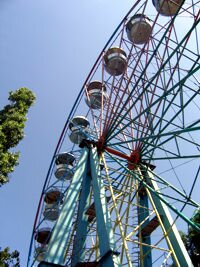
The Bishkek Eye in Attaturk Park
Bishkek is renowned for being a “green” city, with more trees per head of population than any other city in Central Asia. It owes this distinction to the Russian Army Engineers who drew up the plans for the city when it became the regional headquarters towards the end of the nineteenth century, and to individuals who planted trees to provide shade from the heat of the summer sun. Locals and visitors alike can be found ambling through the parks and the avenues in the central part of town – taking it easy and soaking up the atmosphere. In the centre itself, many of the open areas merge one into the other and it is not always clear where one park ends and the next begins. Some of the parks may appear a little dishevelled – but that doesn’t mean that they are not cared for. The outlying districts have fewer trees, but do have some parks and open areas.
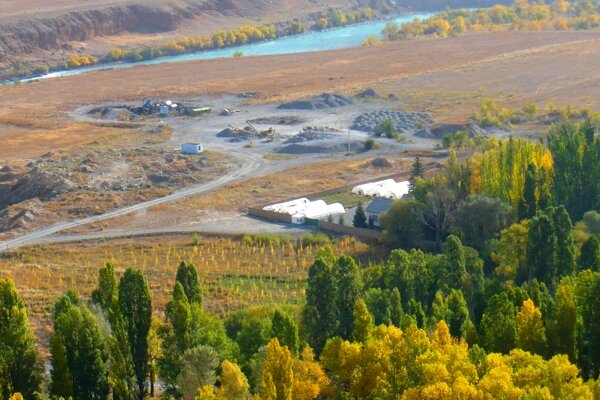
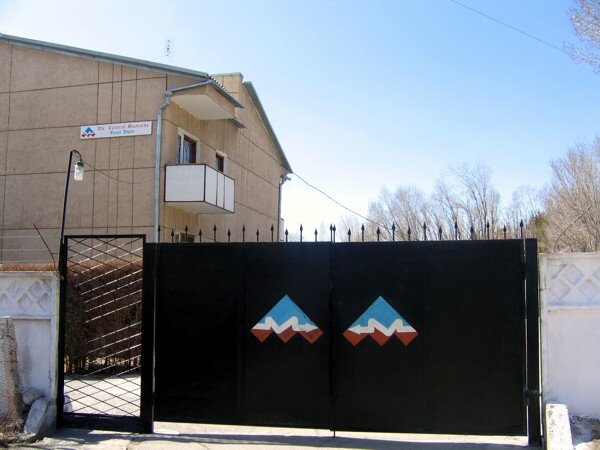
As it happens, I have been invited to attend a conference today on the “Current State and and Sustainable Development of the Parks of Bishkek“, which is being held in the Ala Archa State Residence. (Despite the name, this isn’t in the Ala Archa Natural Park, but on the extreme Southern Outskirts of the city.)
The aim in holding the conference is to discuss the challenges facing the parks of Bishkek, perspectives for their sustainable development and to bring these issues to the attention of politicians, the business community, civil society, (the the form of Non Governmental Organizations – NGOs) and the public in general. As well as the reports and statements Mayor’s Office and other experts, participants will have the chance to exchange opinions, and become acquainted with new and practical information on the management and ecology of the city’s parks.
The Conference is being organized by the National Institute for Strategic Studies of the Kyrgyz Republic, (NISSKR), the office of the Mayor of Bishkek, and the French Kyrgyz Association of Ecotourism, (FKAE).
The President (Roza Otunbaeva), Mayor of Bishkek (Isa Omurkulov), and Director of the NISSKR (Chinghiz Shamshiev) will all take part and are scheduled to make short speeches.
There will be a presentation of a report that studies the current situation of seven of the parks and development plans for five, complete with recommendations for the reform the management of system of “urban green zones” within the city.
One of the proposals to be presented for consideration has already been leaked to the press by the head of Bishkek Zelenstroi, which is like the city’s Parks Department and is responsible for landscaping and care of the greenery that decorates the city. The proposal: the prospect of building a Zoo in Karagachevoy Rosha, (Elm Park). Apparently, according to him, negotiations are being held at the moment with French investors who are interested in the establishment of the zoo and “ecopark”. The animals will not be kept in cages but in enclosures with special protective measures so that people will be able to watch the animals.
.
Anyway, as a result, I thought I would take the opportunity to present a list of the main parks within the city, and here is a list of the main green areas, basically working from South to North:
Kemal Attaturk Park – on Akhunbaeva – This park used to be called Drujba Park (Friendship Park) but was renamed in honour of the founder of modern Turkey, whose statue stands at the entrance on Akhunbaeva. Inside the park is a memorial to the fallen soldiers of the war in Afghanistan with the inscription “People, Don’t Forget the Lessons of the Past”. In 2004, a 48 meter high memorial to the military men who died in the struggle with international terrorism in the events in the Batken region in 1999 and 2000 was erected in the park. It is the highest memorial in the Republic, reaching the level of a 16th floor apartment. The metal used in it weighs more than 60 tons. Three metal pylons are crowned with a pyramid – designed as a beacon to be seen from far away. Also in the park are a large Ferris Wheel and other amusements – and on summer days there are often people selling collectables (stamps, badges, etc.)
The park has been the subject of considerable controversy in recent years as some of the land was sold for construction, and a riding school, resulting in the loss of amenities and a large number of trees.
- The Gareeva Botanical Garden – on Akhunbaeva – managed by the Academy of Sciences
- Arbetorum Botanical Garden – off Gorky Street – about 130 acres managed by the Academy of Sciences and bisected by the Minina Street.
The Hippodrome – West of Robochiy Gorodok. A dirt racetrack sometimes used on holidays for National Horse Games – and the home of a riding stables.
Togolok Moldo Park – off Moskovskaya – a small rarely visited park. Just to the West of the park is a well preserved small wooden house (No. 145) which is typical of the sort built by the original Russian settlers to the area in Tsarist times.
Prospect Erkindik – Running from the Railway Station down to Prospect Chui. Now called Prospect Erkindik – (Freedom Avenue) it was originally named “the Boulevard” in 1902. In 1924 it was renamed as “Komsolmolskaya”, and later as “Prospect Dzerzhinsky” after the founder of the Cheka – the secret police and forerunner of the NKVD – itself the forerunner of the KGB. The main part of the street marks a promenade under the silver poplars planted in 1883 over a filled-in streambed. It is a favourite spot for local to simply stroll in the evenings, weekends and on holidays. The street is flanked by many old, expensive, buildings, and a number of monuments including, Mikhail Frunze on horseback and, at one time, the Kyrgyz “Statue of Liberty” which replaced an earlier statue of Dzerzhinsky (and was recently removed from its pride of place in the main Ala Too Square). Actually the Avenue continues further North of Oak Park down to Jibek Jolu. On the sides of the section of the Avenue you can find some of the Ministerial buildings and the first Bank built in 1926 (where you have to pay your fees for OVIR registration) and the headquarters of the Security organization the MNB – which is the new, Kyrgyz, name for the KGB.
Molodaya Gvardia – (Avenue of the Young Guards) – once a streambed filled in by Army engineers and converted into a boulevard. The Avenue runs from the Railway line to the Northern edge of the city. There are a number of monuments to war heroes including the Avenue of Heroes and Komsomol monument on Prospect Chui.
Fuchika Park – at the intersection of Fuchika and Moscovskaya – built by the Czech Socialist volunteers of Interhelpa who came in answer to Lenin’s call for assistance to build a new socialist land, completed in 1936 and named after the Czech Socialist leader.
Panfilov Park – The park stands on the site of what once an orchard planted in 1879. Known at one time as the “State Garden” it suffered considerable damage in the heavy frosts experienced in the years from 1916 to 1921. As a result it was transformed into a park and was called “Red Star Park” because of the pattern made by its network of pathways. In 1938, part of the park was given over to the construction of a sports comple – now the Spartak Arena. In 1942 it was reconstructed and renamed in honour of the war hero, Ivan Vasilyevich Panfilov, whose statue can be found at the Eastern end of the park, behind the White House. The park is filled with amusement rides for children and a small ferris wheel. In 1949 a small fountain was constructed in the center of the park. Over the years it has been painted several times, and now sports a coat of yellow and blue … as a sign of friendship with the people of Ukraine.
Oak Park – between Prospect Chui and Abdumomunova, West of Sovietskaya – began as a grove of Oaks planted by Alexei Fetisov in 1890 and home to the Russian Drama Theatre, The Memorial to the Red Guards and the Open Air Museum of Sculpture.
Gorky Park – on the corner of Isanovna and Ryskulova – behind the Palace of Sports. This park is an open area with a statue of Maxim Gorky. Much smaller than it’s namesakes in Moscow, Almaty etc. it sometimes serves as an impromptu running track for sportsmen in training and a place for protest demonstrations – but can be a pleasant place to sit in the cool of the evening – the lack of trees may make it too hot for the full glare of the summer sun during the day.
Park Pobeda (Victory Park) – on Sultan Ibraimova Street between Prospect Chui and Frunze – and open area on the site of the former Central Bazaar and containing the Victory War Memorial
Ala Archa Cemetery – On Abdumomunova, West of Molodaya Gvardia. Cemeteries are interesting places, often being peaceful parks as well as places as interest historically and socially. Bishkek has a number of cemeteries in the outlying districts – this one is relatively near the city center. There are a number of attractive tombs including two of the Prime Ministers of the newly independent country – one assassinated at the Presidential residence in Cholpon Ata on Issyk Kul in 1991 (a crime which has never been solved) and the other who died in office after a period of illness in 1999.
Children’s Park – on the corner of Sovietskaya and Michurina – once the private property of Pishkek’s mayor, Ilya Terentev, (whose house is still to be found in the grounds behind a concrete wall), the park is home to the puppet theatre.
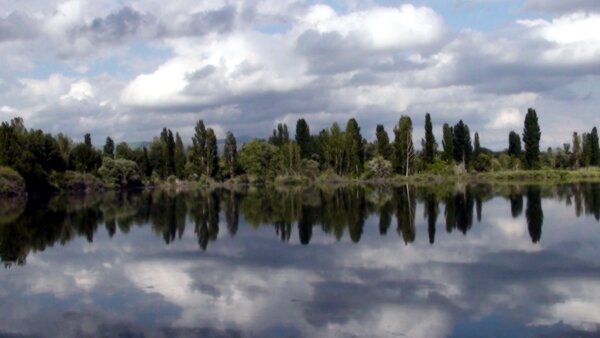
Karagachovaya Rosha (Elm Grove) – North of the Grand Chui Canal, some distance to the East of Sovietskaya. Created out of swampland by Alexei Fetisov in 1881 this park is criss-crossed by concrete walkways beneath the trees and is especially attractive in Autumn and Winter – but because it is so far from the city centre attracts fewer visitors than it’s size might merit. There are two small lakes – still called Pioneer and Komsomolskoye – where children swim during the summer. The paved road which bisects the grove used to be the main Vernoe (Almaty) post road. It has over 50 species of trees and shrubs and houses dendrarium and a branch of the botanical gardens.




 Bishkek