Membership has its benefits
United Nations
On 2nd March, 1992, Kyrgyzstan joined the United Nations.
The UN, of course, is an intergovernmental organization with membership open to all “peace-loving states which accept the obligations contained in the present [UN] Charter and, in the judgment of the Organization, are able and willing to carry out these obligations.” At the moment there are 193 of them. The organization also grants “observer status” to some non-member states, (at the moment there are two of them: the Holy See – Vatican City – and Palestine), together with intergovernmental organizations, and other international organizations and entities (whose statehood or sovereignty are not precisely defined), which allows them to participate and speak, but not vote, in General Assembly meetings.
Some countries joined the UN by signing and ratifying the original Charter in 1945, (sometimes referred to as “Original Members”, “Founding Members”, or “Founding Member States”).
The USSR had been one of the original Founder Members of the organization, serving as one of the permanent members of the Security Council. When the dissolution of the USSR was imminent, Boris Yeltsin, (President of the Russian Federation), wrote a letter to the Secretary-General, (on Christmas Eve, 1991), informing him that the membership of the USSR in the Security Council and all other UN organs would be continued by the Russian Federation, with the support of the 11 member countries of the Commonwealth of Independent States. (As it happens, all the other fourteen independent states established from the former Soviet Republics eventually became members in their own right.)
Other countries joined later, through the adoption of a resolution admitting them to membership. The process usually follows these steps:
- The country applies for membership and makes a declaration accepting the obligations of the Charter;
- The Security Council adopts a resolution recommending the General Assembly admit the country to membership;
- The General Assembly adopts a resolution admitting the country.
March 2nd, 1992, must have been a busy day for the officials in the “membership department” which only has a small of member states to worry about, (the organization has only 193 members – with a couple of “observer states”), and on that particular date, as well as Kyrgyzstan there were eight other countries that joined on the same day: Armenia, Azerbaijan, Kazakhstan, Kyrgyzstan, Moldova, San Marino, Tajikistan, Turkmenistan, Uzbekistan.
The interesting one in that list, of course, is San Marino … the others were all members of the former Soviet Union – I must do some research and see if I can find out how this particular accident of history came about.
Mind you, there have been two dates which were even busier: 14th December 1955, (when 16 new members were admitted), and 20th September 1960 (which saw 14 new members join).
Membership obviously has some commitments: they have to be “peace loving” nations , (whatever that means); there are the obligations contained in the Charter (and subsequent resolutions) and payment of the membership fees (which, fortunately, for Kyrgyzstan are not particularly high). There are also benefits to membership, such as participation in various programmes of the organization – and Kyrgyzstan has benefited considerably from some of these over the years.
Kyrgyzstan has managed to chalk up a number of achievements and make a mark during it’s membership. Although it lost out in last years election for a seat on the Security Council, for example, it was an initiator, (and host), of the two Global Mountain Summits – a unique achievement – the only such gathering which has been held in the same location for two consecutive meetings – and also, back in 2007, suggested the designation of February 20th as the International Day of Social Justice.
It’s, also, looking to increase its existing modest contribution towards the UN’s peacekeeping operations by allocating additional troops to be posted to the world’s trouble spots. (Mind you, I suspect that this is not just an altruistic move … several nations use such deployments as a way of gaining experience and also as a revenue earner for the budget.)
Actually, the news this week has had quite an international flavour. Of course, Canada featured as a result of the ongoing controversy over the Kumtor gold mine. Whilst the President of the country, Atambaev, has added his voice to those supporting criminal investigations into the signing of the original agreements dating back into the days following Independence, the President of the company has said that they won’t agree to revising the current agreement. Although he hoped some compromise could be reached without the need to appeal to international arbitration, that’s obviously being held in reserve as a card that can be played at a later date.
There have been other criticisms of the company, (with the apparent suggestion that the origins of the company are not exactly transparent), and the agreements themselves, (with the Ministry of Justice declaring that certain aspects of the deal were illegal).
Other historic agreements are also coming under scrutiny … the procurators’ office is investigating the sale of Kindergartens. It’s generally agreed that there aren’t enough kindergartens in the country, and the buildings were prime targets for privatization in the early days of independence. Now there is a call to have them returned … the funny thing is that some of them were converted into government buildings: a police station, tax offices and that sort of thing. One became a children and some became private schools – including the prestigious European School.
Perhaps more interesting was the observation from the State Agency of Geology that one of the delays in the development if mineral deposits has been “conflicts with local communities”. I am not sure what led to that particular insight but it was interesting to see it being declared publicly just a week after some local communities called for a fifty year moratorium on mining activities, and a few days before the local communities around the Jeroy mine called for an early start for the development of the mine.
Incidentally, apparently it’s not just the Mining sector that is facing problems with the locals … news broke this week of a conflict between a ski resort and some local youths … apparently demanding money for local families and backing up the demands with threats of violence … . It all seems to have to a head because, although the resort refused to appeal to law enforcement agencies, the Prime Minister was there himself, skiing, when the latest incident occurred.
Perhaps one reason for the international flavour in the news has been the high profile visit of President Atambaev to Japan, where he met with the Emperor as well as the Prime Minister, (who, incidentally, has accepted an invitation to make a reciprocal visit). There was a lot of coverage of the cooperation between the two countries over the year and much made of the fact that trade between them has increased by 30% in 2012 alone – and although that trade grew impressively in both directions, (in percentage terms), it is still heavily weighted in favour of imports to Kyrgyzstan from Japan.
Arising out of the trip was the good news that there are plans for a new international flight to be inaugurated … Bishkek-Tokyo. There aren’t many international flights using Bishkek at the moment and precious few connecting us to the East … so this is especially good news. Turkish Airlines already operate Istanbul-Bishkek and are planning to introduce an extension to Ulan Baator, (in Mongolia) … and now it appears that they also plans for extensions to both Tokyo and Shanghai. Add o that the news that it’s planned to reintroduce flights to Delhi (in April) and there are also discussions about an Islamabad-Kashgar-Bishkek route and flights to Dubai and Tehran.
The Prime Minister of Japan is not going to be the only high profile visitor we can expect; it was announced that the President of China has also agreed to make a state visit to Kyrgyzstan. That news cam in the same week as a report from the influential International Crisis Group, ( ICG), on China’s role, involvement and commitment, in Central Asia. That made some interesting observations including the fact that China seems to be looking more at economic influence than military presence … especially in the hope that it will help pacify opposition in the neighbouring Xinjiang Autonomous Region. Their are risks in this policy, however, as there is a long antipathy felt by the Kyrgyz towards their neighbouring superpower, and failure to deliver lasting benefits to the local population is likely to create even more resentment, (a la Kumtor).
If China is not keen to project a military presence, there are others who are. The Americans may be near to losing their base in the country but not Russia. The new agreement between Russia and Kyrgyzstan bringing all Russian Military units in the country under one umbrella has, apparently, even brought speculation about a new Russian base being established, down in Southern Kyrgyzstan. This would bring benefits to Russia in terms of projecting its power in the region as a whole, not just in Kyrgyzstan and even President Atambaev is on record as saying that it will help to stabilize the current situation in the country. I can’t help thinking that it is also a policy with some risks … sometimes it seems as if at least some of the Kyrgyz also have a fairly ambiguous attitude towards the Russians.
As another example of cooperation between the two countries, Russia are expected to hand over a wide range of military equipment to Kyrgyzstan, including armored vehicles, man-portable air defense systems, (surface to air missiles) and artillery. Not to be outdone, even the US are donating equipment – in this case donating 14 vehicles to state Drugs Control Service as part of what Robert Blake announced as a 20% increase in security assistance to Central Asia as a whole. And other countries like Turkey are also donating equipment.
One thing that might not go down too well in Russia is the continuing arguments about language. The president has signed into law a provision that in future all legislation will have to be drafted and adopted only in the State language, Kyrgyz – with translations into the Official language, Russian, if needed.
A bit more controversial might be the news that large posters outside the Russian Drama Theater, (where performances are primarily given in Russian – even if it is named after the famous Kyrgys Kyrgy author, Chinghiz Aitmatov), have to be taken down – because they are in breach of the law on advertising, which says that the text in any display should be in Kyrgyz first and only then in Russian. These posters are just in Russian – Hey, it is the Russian Drama Theater. To complicate matters further, it seems that the Theater simply put the posters up without getting the necessary permits, (which wouldn’t have been issued anyway, because they weren’t in Kyrgyz). When the officials came to dismantle the posters, it seems the theater staff prevented them from carrying out their duties – and I am told that it was all getting a bit heated … but in the end they made a tactical withdrawal and issued notices telling the theater that they had until March 5th to take them down … or else the officials would come back and do it themselves.
Having said that, Russia is still a favoured friend and ally, neighbour and trading partner. Soon it is destined to be an even more important trading partner as preparations for Kyrgyzstan to join the Customs Union with Kazakhstan and Belarus continue unabated. One official this week even called for “no delays” in accession … I wonder how the politicians in London, (especially those in the Conservative Party and UKIP), and Brussels would view this argument.
Belarus cannot be too impressed at the moment as it has now received yet another extradition request for the Bakiev Brothers – Kurmanbek and Janysh. According to the security services Janysh keeps changing his place of abode which seems to imply two things: they know where he is and that he is worried – even if the same services have admitted that they don’t have the resources to carry out a Mossad type operation to grab him. Minsk have refused precious extradition requests on the grounds that they were politically based – but this time the request is in accordance with a guilty verdict, so the decision may be a little more difficult for them … especially in the light of Kyrgyzstan’s impending accession to the Custom’s Union. They have apparently said that they will a make a decision within month.
Not all the news has focused on international affairs, however, and one interesting story has been the gossip about the possibility of a new “revolution”. Now, let’s be clear – no-one seems to want one, but as Spring approaches, people have started “speculating” leading to stories openly discussing the issue in the press.
For the record: Yesterday, March 1st, was actually the first day of Spring as it is reckoned here … the weather has been warmer, but there was still compacted ice on many of the pavements and the weather forecast is for slightly colder weather than is usual for this time of year … and more rain.
Also, For the record: The two previous revolutions both took place just before the Easter weekend … , (Western Easter, that is), which is March 29th this year … but …
An astrologer has even got in on the act predicting that it will be a tense time with “big changes” possibly ahead – including changes in several Ministerial posts … he is a bit late there as at least two people have already left their post – in connection with taking up new jobs.
Comments from a precious Minister of Finance predicting a financial crisis have been “pooh-poohed” in government statements who claim that the tax revenues should be much increased due to administrative changes introduced last year … which, by the way, are very unpopular with the business community even though they are supposed to make the whole process of tax collection simpler.
Everyone seems to agree, however, that we have a democracy and the only way to power is through the ballot box. Perhaps the most interesting reports were those of an interview given by a former Prime Minister when he described stories associating him with a plot to stage such a coup as fantasy – One of them was headlined something like “Coup is cancelled”. In the meantime, President Atambaev has said that there is no need to dismiss parliament … and that the country will not allow a “coup” to take place.
Work is under way on building a new Central Mosque here in Bishkek which is planned to be the largest in Central Asia, able to accommodate 10,000 worshipers, when it is completed in 2016 at a cost of something like twenty five million dollars, most of which is being donated by Turkey … Well, it was underway … work has been stopped.
For the record: at the end of the nineteenth century, the Central Mosque was near to where the Hyatt is now … it was knocked down after the revolution and the site became the town’s main bazaar. Then, that was moved to the other side of town, (to what is now Osh Bazaar), and the site converted into the city’s main War Memorial – Park Pobeda – Victory Park. In the last couple of years there have been calls for the land to be returned to the original owners – the faithful – as it was improperly seized, in the same way as some of the Orthodox Churches have been returned to Church – such as the one in Karakol.
I don’t suppose that was ever going to happen, but the city authorities allocated land for the project – the site of an old cinema … which in turn had once been a cemetery … which, when I first heard of it, brought to my mind scenes from Stephen Spielberg’s Poltergeist.
It’s been a somewhat controversial project for a number of reasons … there were, for example, complaints about the number of trees that are going to be cut down, even though the muftiate have promised that only “dry” trees have been felled – and they will be replaced by new dwarf seedlings. Then there was the fact that the cemetery was the last resting place of the Kyrgyz hero Pishkek Baatyr – after whom the city may, (or may not), have been named … but no-one seemed to have worried about that when it was a cinema.
Now, however, the city planning department have called for a halt on the construction … because there is not enough parking space according to the regulations. It looks as if the purchase of adjacent land for the car park is going to cost something like another four million dollars – and, at the moment, they just don’t have the cash. So I suppose it’s a case of “Back to the Drawing Board”.
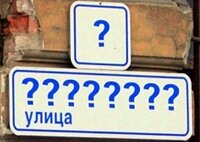
What street?
Knowing my penchant for statistics, there were a few that caught my eye during the week:
- Agriculture accounted for 46.2% of GDP in 1996, but has fallen to just 18.5% in 2011
- The level of the shadow economy has fallen 14% since 2005 … but I can’t help wondering how they measured this;
- There were six cases of corruption exposed this week;
- There were 48539 people who changed their names last year … and I don’t think that includes women taking their husband’s surname when they get married …Incidentally, in Osh they’ve renamed the main street … and I loved the photo that went with that story – even if it is a photoshop montage!
- Last year there were 154000 children born in Kyrgyzstan …
- … and this year there have already been three sets of triplets born in Bishkek – the latest, a boy and 2 girls, are all doing well
Finally, Ursula … Thank you for the Christmas Card … it may have been posted “Air Mail” on the 10th December, but it arrived only yesterday. According to the stamps on the envelope, it arrived in Bishkek yesterday (so the delay is not down to the Kyrgyz postal service) and in our local post office this morning, before the friendly postwoman came bounding into the office … trying to give another letter which was addressed to someone in the next building.
_______________________________________
Postcard from Bishkek: the weekly postcard that I send out as an email also gets posted on the website ianbek.kg each week – and there are other postcards which don’t get sent out. This week, for example, there has been the following postcards:
- On the back of a man’s wings - Horse riding is a popular activity on tours to Kyrgyzstan – 24/02/13
- Red and Black - Here in Kyrgyzstan, these are not just colours but also refer to the two sides in law enforcement – 25/02/13
- Occupancy - Why I think that a newly proposed tax for resorts in Issyk Kul is based on a misconception – 26/02/13
- Friendly Steppes – A newly published book describes a journey in the footsteps of Marco Polo along the Great Silk Road … including Kyrgyzstan – 27/08/13
- Scrap Merchants – Kyrgyzstan’s reputation as the Steptoe of Central Asia – 28/28/13
- Fassol - Baked Beans may be a staple in the British diet … but the beans in the can may well have come from Kyrgyzstan – 01/03/13
It is now possible to follow me on Facebook, (where I have specific pages for Celestial Mountains and ianbek … and also links.kg and Kyrgyz Diary), and on twitter, (@Bishkekpostcard and @celestialMTC ).





 Bishkek