A Tax Minefield
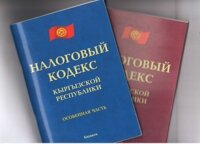
Not exactly bedtime reading, although it might help insomniacs: The Tax Code of the Kyrgyz Republic
A phrase that I hear over and over again is : Pay your taxes and sleep soundly. Oh, if only it were that simple! Unfortunately, things in real are rarely simple!
It doesn’t help that nobody likes paying taxes (even if they are an important and a necessary fact of life – after all, Taxes are compulsory payments levied by the state on citizens in order to raise revenues in order that it is able to fulfill its obligations and perform its functions) and the system is so complicated with many checks and balances, allowances and liabilities.
It is so complicated, in fact, that trying to understand it sometimes feels like trying to navigate a course through a minefield.
Here in Kyrgyzstan there are a variety of different sorts of taxes, direct, (paid directly to the government by the taxpayer – such as Income Tax or Profit tax), and indirect, (which are collected from the consumer by an intermediary before being passed on to the exchequer, such as sales tax or Value Added Tax – VAT).
When I first came here there were something like twenty different types of tax …
In fact, the system was so complicated that we employed an accountant to draw up a “tax passport” outlining what taxes we were liable to, the rates, when they had to be paid and when we had to file reports with the authorities, (and there were lots of those).
Some of the taxes were targeted on specific businesses or subjects, such as the Tourism Tax, Hotel Tax, Parking Tax and Dog Tax. These “little taxes” were often referred to as “nuisance taxes” … because that’s what they were … raising very little income for the budget – apparently, one of them raised nothing at all before it was abolished in 2009.
Fortunately, the adoption of a new Tax Code in 2009, simplified things, at least a little … the list of taxes was reduced to just eight different types of tax:
| Personal Income Tax | Direct tax levied on individuals |
| Profit Tax | Direct tax levied on legal entities |
| Value Added Tax (VAT) | Indirect tax, based on the value of the goods and services, collected from the consumer by the seller if their turnover is over a particular threshold which requires their registration for VAT |
| Excise Duties | Indirect tax, based on tariffs levied on certain types of products, collected from the consumer by the seller |
| Mineral Resources Tax | Direct Taxes, (Bonus – a one-time payment for the right to prospect and explore for mineral deposits – and Royalties – the regular payment for production form a mineral deposit), paid by Mining companies for the use and exploitation of mineral resources |
| Sales Tax | Indirect tax, based on the value of the goods and services, collected from the consumer by the seller |
| Property Tax | Direct Tax, paid on the value of property, (typically buildings and vehicles) |
| Land Tax | Direct tax, based on the size, paid for the right to own and use a plot of land |
For the record: I suppose that I ought to add that, in addition to these taxes, there are other mandatory payments (such as customs duties, customs fees, fees for garbage disposal, mandatory insurance payments – social security payments, etc.).
Now that looks fairly straight forward and logical:
- two forms of direct tax on income,
-
- one for individuals and
- the other on companies;
- three forms of indirect taxes on sales,
-
- one – the Sales tax – which is relatively simple in concept (although it has several complicated features) and is designed for small companies to collect – although at the moment it applies to everyone. The major disadvantage to the sales tax is that it is cumulative – and so includes an element of a tax on a tax;
- another – VAT – which is much more sophisticated, (and in my opinion far to complex to be really effective or sophisticated), which is designed for larger companies and allows them to offset the element of tax which they have already paid when buying goods and services in order to produce their goods and services to the final consumer. Then there is:
- one – Excise duties – designed to be targeted at specific “luxury” products such as tobacco, alcohol, jewelry petroleum and petroleum product … and – at one time at least – coffee(!));
- then a number of taxes based on the use of resources – Land tax, Property Tax and the Mineral Resources taxes
Now, it seems to me that taxes on income and expenditure are both fair and logical. You pay a contribution to maintaining the state proportional to the amount you earn or that you chose to spend.
I have a few issues, however, with the other taxes on resources – and especially the Property Tax.
I do understand that the land, and the minerals contained in it, are both natural resources and I can see the point that people should pay for the right to exploit them. (What is more, the Land Tax is virtually the only tax paid by many of the small individual farmers.)
Property taxes however, are based on value – the value of an asset, (be it a building or a vehicle), and I am not sure that I agree with this in principle. I see no problem with taxing people on the purchase and sale of such assets, or on using them to generate income by, for example, renting them out … but I do not see the justification of taxing people simply for the ownership of them.
In Britain the main property tax (on buildings) used to be called the Rates, and the level of the tax due was based on the estimate of he “rentable value” of the property – what income could be received if the property was rented to a tenant. Personally, I see nothing wrong with taxing that income, but it does not seem right to tax the potential earnings. If no income is actually received, then what is the source of the money being paid in tax?
I feel a little happier with the property tax on vehicles. There used to be a vehicle tax – as there is the UK, and, (in theory at least), the proceeds were supposed to be “earmarked” and “ring fenced”, that is, reserved for the Road Fund and maintaining the network of roads in the country. (As it happens, however, the Road Fund didn’t really exist and the money simply went into the coffers of the general budget.) Certainly, maintaining the road network is an expensive business and the idea of a targeted tax such as this does seem to have some merit. I wonder, however, if it might make more sense to raise the money required from the road users in proportion to the amount that they use the road network – for example, through the cost of fuel … through the Excise Duty levied on fuel.
Anyway, so far – so good … but, unfortunately, that’s not the end of the story. There are, in fact, several exceptions or alternatives to the General Tax Regime described above:
| The “Patent” Tax | A direct tax levied on entrepreneurs, based on tariffs set for certain types of designated economic activity which subsumes all other taxes. For some activities a patent is compulsory, for others it provides an alternative to being a party to the main tax system. |
| Simplified Unified Single Tax | A direct tax levied on entrepreneurs and enterprises which subsumes certain kind of taxes in a simplified single payment and reporting system, as an alternative to being a party of the main tax system. |
| Tax Contract | A form of direct tax, where the business undertakes, (contracts), to make certain payments according to a schedule in lieu of certain designated taxes. |
| Free Economic Zone levies | A form of direct tax where registered enterprises pay a fee to the administration of the Free Economic Zone, (based on turnover), which subsumes other forms of tax. |
| Special Resources Tax |
A Direct tax levied on state organizations for the use of state resources, based on the level of sales, and subsuming certain types of other taxation
In fact this section of the Tax Code was repealed at the beginning of December 2013 |
| Technology Park Taxes | A form of direct tax where registered enterprises pay a fee to the administration of the Technology Park, (based on turnover), which subsumes other forms of tax. |
Now I understand the logic behind each of these special tax regimes. They each have their advantages and disadvantages.
The patent system is very good for sole traders or people starting up in business – a one off payment and that covers all of their tax liabilities, (unless their turnover is sufficient to cross the threshold so that they have to register for VAT), and absolves them from all forms or reporting to the tax authorities. It’s simple, easy to administer and, assuming that they are able to earn considerable sums, means that they could actually be better off – perhaps a lot better off – than being in the main tax system. On the hand, they pay a notional fee that is calculated by assuming that they will earn a particular sum, which means that they will be out of pocket if they don’t actually earn it.
The fact that it obligatory to have a patent for some activities can cause problems. For example, we have saunas at our hotel in Bishkek and they provided us with a small income which basically covered the cost of operating them. They certainly didn’t provide us with a substantial profit and they were in use for, (at most), just one or two hours a day … so the income was very modest. Then the law was changed so that it was compulsory to take out a patent. The fee was calculated on the basis that the sauna would be occupied for a considerable number of hours a day … and a separate one was required for each sauna – we have two, so we needed to get two patents. Each patent fee was more than the income that we were receiving from both saunas combined. To make matters worse, any expenses we incurred for operating the sauna had to be deducted from our main accounts. We had a choice … pay the fee and obtain a patent, swallowing any losses incurred … or close the saunas and lose an asset and feature of the hotel. In fact, we came to a compromise … as the losses incurred were less than those we would have borne by obtaining the patents, we kept the saunas but didn’t charge for them, instead making the use of them complimentary for guests staying at the hotel.
The patent system is not available to everyone. There is a list of activities which are covered by the system which includes taxi drivers, market traders and interpreters, (but not guides). There is no offset for expenses (such as petrol to drive the taxi or repairs to the vehicle), which can cause some misunderstandings as it is sometimes assumed that all the money they earn goes into their pockets as profit.
The Simplified Unitary Tax is attractive to a number of small business that fall within the system’s threshold. There is a limited and simplified form of accounting required and much simpler reporting to the authorities than under the main tax system.
The Tax Contract was originally proposed by some of the business community some years ago. They calculated the amount of tax that they paid in a year under the many different taxes and then negotiated with the authorities a contract to pay a certain amount each month which may be the same or more, and in return they were exempted from inspections and checks by the authorities. Although I have considered this, it occurs to me that it is fine IF the level of business is maintained or improves, but there will be times when there is a downturn in business but the contractual commitments remain.
The Free Economic Zones were introduced to help stimulate economic activity in certain special regions … with the intention on trying to create suitable and attractive conditions in order attract new businesses to open and in the zone. However, the only one that works well seems to be the one in Bishkek. The others have all faced difficulties and are often threatened with closure. To make matters more complicated, the rules governing the operation of the zones have changed on fairly frequent basis. There might be good reasons for those changes, but it can make it difficult for businesses to operate within the zones because of the uncertainties involved.
Although the fees paid to the General Directorate of the zone are considerably lower, (for example 2.5%) than the general tax rates, (such as profit tax which stands at 10% – and the general tax burden which stands at over 20%), they are based on turnover – not profits and make no allowances for expenses.
The Special resources tax is designed specifically to close certain anomalies of state institutions using government resources in activities which could be considered commercial. It has now been recognized as not necessary and this section of the Tax Code was repealed at the beginning of December 2013
The arrangements for Technology Parks are similar to those operating Free Economic Zones, with the same intention on trying to create suitable and attractive conditions in order attract new businesses to open and in the park. To be honest … I am not sure that there are any Technology Parks operating in the country at the moment … although this provision was made so that they can be created
For the record: There is currently talk about creating another special regime … a special form of patent for sanatoria and resorts on Lake Issyk Kul … but that’s another story, for another postcard.
So, I hope you found a walk navigating through the minefield of Kyrgyz tax systems interesting … but I can’t help asking myself if Kyrgyzstan really needs such a complicated system.


 Bishkek