Energy
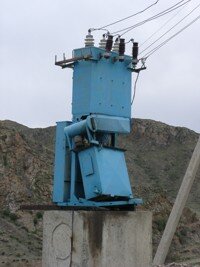
Transformer - a common image of the energy industry
The Kyrgyz Republic has the potential of being a source of energy for many regions within Central Asia. Whereas neighbouring countries may be rich in mineral resources like oil (Kazakhstan) and Gas (Uzbekistan), Kyrgyzstan has only limited deposits of oil and gas. There are however, extensive deposits of coal – and considerable potential for the production of hydro electric energy.
Indeed, one characteristic of the Kyrgyz energy sector is that most of the electricity produced in the country is generated by the sixteen Hydro electricity power stations that stretch along its network of mountain rivers. What is more, although the proportion of energy generated this way is growing – the country is estimated to utilize only about one tenth of its total potential.
During the Soviet period, of the electricity generated in the republic, about a third was produced by its two thermal power stations, burning expensive fossil fuels, and two thirds by hydro-electric generators. Since the collapse of the Soviet Union, however, the proportion of output from thermal power stations has fallen to under 10%.
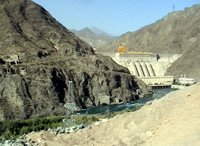
The Toktogul Dam
The sixteen hydroelectric power stations range from small stations to the 1200 megawatt Toktogul Power Station at the head of the Toktogul Reservoir. The Toktogul dam on the Naryn River and associated power complex were constructed in 1973 – the 215m high dam flooded part of the river valley creating a massive reservoir, which takes an hour to bypass as the Bishkek-Osh road skirts its shore. Planned as one of a series of dams across the mighty river – the complete cascade was never finished but the plans still exist and there are proposals to complete the cascade on the upper part of the river and the Kambarata cascade. The Toktogul dam is featured on the 100 som bank note.
The use of water from the Toktogul Reservoir for irrigation downstream, and there are a number of international agreements governing this activity. This means, in effect, that electricity generation from the Toktogul power station is to all intents and purposes a by-product of the water release agreements, and this has led to a number of problems. For example, during 2008 the water level in the reservoir fell close to its minimum and a series of restrictions on power consumption were introduced. Three phase supply was virtually withdrawn, certain applications (such as heating and saunas) were forbidden and a series of rolling power cuts effected across the country.
Although the network apparently generates some 11 billion Kilowatt hours, domestic sales amount to on seven billion, which implies a loss of approximately 40% in transmission or, to put it another way, that considerable amounts are “stolen”. The pattern of demand for electricity has changed dramatically since independence in 1990, when industry used 85% of the power generated. As factories closed, this dropped to just 40% – the rest being consumed by domestic users, especially for heating, cooking and hot water, (with most consumption occurring in the winter – in the first and last quarters of the year).
Electricity is highly subsidized by the government – even though the law specifies that tariffs should cover the cost of generation, transmission and distribution and that one group of consumers should not subsidize others – and tariffs were below the level required to service the industry. Despite the fact that the government had begun a policy of switching from “socially protected” pricing to a basis of “profitability and efficiency” as early as 1998, one of the conditions which led to the Kyrgyz rejecting the HIPC debt relief programme was the requirement to raise tariffs (by 30%) as it was claimed that would be socially unacceptable, raising manufacturing costs and placing local industry at a disadvantage.
The subsidized pricing policy has led to one of the biggest problems facing the industry since the collapse of the Soviet Union: the lack of resources for further investment. This does not mean new investment – but also investment for repair and renovation of the existing equipment. This has been exacerbated by the additional wear and tear placed on the equipment from the switch to greater use of hydroelectricity as a source of energy. Other problems have included the fact that many consumers are late in making payments for the electricity they use and that (as noted above) large quantities of power are stolen from the system.
To try and generate investment the main generating enterprises have been privatized and increased opportunities for exporting power to Kazakhstan, Tajikistan and China and beyond are being exploited. There are even discussions about extending exports to the growing markets in Pakistan and Afghanistan. This resulted in considerable criticism of the government – for selling electricity to its neighbours, only to buy it back from them at a higher cost.
A number of projects have been initiated which provide for smaller power stations, designed to meet the needs of specific small remote communities and users.
There has also been some exploration of the possibility of implementing wind power, thermal heating, organic production using methane from organic waste and utilising solar energy. One such project which has been explored is the possibility to place wind turbines at the entrance to Boom Gorge, near to Balykchy and in some places, especially in some of the resorts around Lake Issyk Kul, it is possible to see solar panels which were installed in a former period – but, apparently, few are still operational.



 Bishkek