999
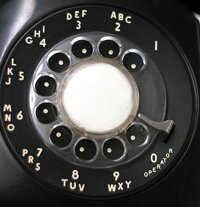
Photo from: Dhscommtech at English Wikipedia
This week, the regular Saturday Postcard from Bishkek looking back at the events of the previous week, is actually being sent out a day early – on Friday. No, that’s not a sign that something is wrong … it’s not an emergency … the reason is actually very simple: I am off up to Naryn and elsewhere today, and won’t have access to email or internet until I get back on Monday. So I decided to take the opportunity to post the email early.
Talking of emergencies … (OK … Yes, I admit that the link is somewhat contrived… I’m sorry!) … in November, 1935, fire broke out in a house in Wimpole Street in London. One of the neighbours tried using the telephone to contact the local fire brigade but was unable to get through as there was so much traffic and they were put into a queue at the local exchange (… some things never change!). It was unfortunate because five women died in the tragedy.
Incensed the caller did what any “Disgusted of Tunbridge Wells” might do; they sat down and wrote a letter to the editor at the Times. That led to a government inquiry and, on June 30th, 1937, the establishment of a new system to summon assistance, (from the Fire Service, Police or Ambulance), in the event of an emergency. The coin operated public telephones were adapted to enable people to make free connections by dialing numbers using just the digits 0 and 9 – using any of the other would require payment. The digit 0 would enable a connection with an operator, but dialing 9 three times would set off alarms, (literally … although it is usually in the form of flashing lights rather than alarm bells), to alert the operator. It was thought that 999 would easy to be dial even by those with limited sight, (for example, the blind – or those blinded by smoke), whilst avoiding the problem of the number being “dialed” by accident due to crossed connections. (In the days of push button phones, the repeated sequence is actually a combination that can be “dialed” accidentally, which is one of the reasons why numbers such as 911 and 112 are commonly used these days). At first the new system operated just in London, but it was soon extended nationwide and the idea caught on around the world.
Here in Kyrgyzstan, however, there isn’t a single Emergency number … each of the different emergency services have their own contact number … 101 is for the Fire Service, 102 – the Police, 103 – Emergency Medical Service and 104 – Gas Service, in case there’s a leak.
According to the Ministry of Emergencies, in the first five months of the year there have been 269 emergencies registered in the republic: 262 natural and 7 man-made: 9 earthquakes, 81 avalanches, 6 strong winds, 8 large fires, 5 ice jams, 136 mudslides and floods, 11 landslides, 11 cases of infections and infestations, 1 rockfall. I presume the 7 man-made emergencies were the fires
As it happens, much of the news this week, however, wouldn’t have necessitated the use of an emergency number, (except perhaps the minibus that overturned in the center of Bishkek), which has been dominated by continuations of stories from last week:
It seems, for example, that there is more to the story about three Kyrgyz citizens being arrested in Tajikistan for being in possession of “mercury” and how this had led to a group off Tajiks being seized when they came to market, and were held as hostages against the release of the Kyrgyz. I confess that I had been somewhat astounded by the news reports. We are so used to stories about people being arrested for being in possession of narcotics, or explosives, and even of Uranium, the idea of arresting someone for being in possession of mercury struck me as rather odd. I know that the silvery liquid metal is often considered toxic but this still appeared to be a case of overkill and the cynic in me began to wonder if everyone who had an old fashioned thermometer might be at risk. News reports this week, however, include another word that was missing in last week’s … it appears that he wasn’t arrested for simply being in possession of mercury, but for being in possession of “red mercury“.
OK, when I saw that, I was none the wiser … in fact I was even more confused. I didn’t know that mercury could be red,” I thought to myself as visions of Red and Green Kryptonite flashed through my mind. ” … but thank heavens for modern technology and, in particular Google. The search engine sent me off to several sources – including Wikipedia, about.com, the BBC and the Guardian … and I can now confidently say that … I am none the wiser. What I found particularly intriguing was the policeman’s entreaty to the jury in a terrorist case in London in 2006, “not to get “hung up” on whether red mercury actually existed at all … .” In that particular case, the alleged terrorists were being charged with seeking to obtain it … but, if the early press reports are to be believed, these three Kyrgyz nationals actually seem to have been in “possession” of whatever it is, real or non-existent, and that cost them between ten and fifteen years! Later reports seem, however, to have reflected the “urban mythical” nature of the substance and dropped the adjective “red”.
Anyway, the original group of Tajik hostages were released by the authorities, but by some accounts they and their captors knew each other and they were hardly unwilling hostages. The next day, however, saw a group of truckers seized and this seems to have been a more serious incident with a standoff developing, some of the participants in the demonstration apparently being armed and stones being thrown. The authorities mounted a “special operation” which appears to have involved the use of stun grenades and shots being fired into the air, before the crowds dispersed and the “ringleaders” detained.
The general impression seems to be that, although it sounds pretty worrying, the incident was probably more dramatic than serious. However, what may be more significant is whether or not it is a symptom of more deeply rooted problems related to the economic and social conditions in this poor and remote region of the country …
Amongst the other “big stories” last week was the attempt to arrest Tuleev, the former Mayor of Bishkek, as part of an investigation into corruption. Although he was released that same night, it seems to have been on a technicality as he was detained the next day and a court decided to remand him custody – for two months. Although he was (is) a deputy in the parliament, and therefore supposed to enjoy immunity from arrest, the Prosecutor’s office argued that such immunity doesn’t hold for “serious crimes”, and this is a sufficiently serious crime. In response, it’s been announced that Tuleev started a hunger strike in protest, and the Ombudsman was asked to take part by keeping the process under review, attending hearings, etc. The parliament held a session behind closed doors to consider the situation and set up a special ad-hoc commission to review the issue and started gathering statements eventually finding the detention to have been illegal. There weren’t any representations from the Procuror’s office, (nor from the National Security Committee), which instead appealed to the court to have it the decision to establish it as “invalid”. In the meantime the Kyrgyz love affair with protest meetings continues unabated with protests taking place both for and against the former Mayor.
All this reference and reverence paid to the courts seems a little ironic given the ongoing debates about the process of electing/appointing judges. In a survey carried out in the first three months of the year, it was “discovered” that almost a third of the almost 1500 respondents didn’t trust the courts. Not all of the 64% who said that they did trust the courts were prepared to say they had complete confidence in them – but only partially trusted them. For some reason the breakdown wasn’t given in the reports that I saw … Apparently confidence in the judicial system seems to depend on geography, (people in the South having more trust than those in Bishkek and Chui), and educational level, (the more highly educated being more suspicious).
Then there was the speculation about the possible nationalization of the Kumtor gold mine, or at least the withdrawal of their license as a result of environmental concerns. Needless to say, the company, and some others, challenge the report and its conclusions, saying it contains “a long list of undeserved accusations … which for the most part, unfortunately, are based on incorrect facts and assumptions” and one commentator labelled as “illiterate”. Well, whatever the literary merits of the report, the parliament voted to “note it” and to set in process further investigations, cancelling some of the licenses and a call to start “renegotiations”. The inevitable happened, of course, as shares in the parent company, Centerra, plummeted by as much as 35% and Kyrgyzstan, as the largest shareholder in the company lost over three hundred 300 million dollars. It looks like a classic case of “shooting oneself in the foot” and the possibility that the deputies had succeeded in “scoring an own goal” with the best that they could hope for being a Pyrrhic victory. To add to the pressure, the representatives of Kumtor have issued a statement reminding everyone that, not only have the reputation of Kumtor and Centerra been harmed by the report, but so has the value of Kyrgyzstan’s assets and the the country has contractual obligations before the company and may end up in an international tribunal.
Interestingly, the deputies have also passed a packet of draft legislation on subsoil use for their second and third readings after they had been considered by the relevant parliamentary committee, (including the draft law on subsoil, amendments to the law on non-tax payments, amendments to the Land and Tax Codes, some of which have been a little controversial), and The State Agency for Geology and Mineral Resources has provided information on “vacant deposits of mineral resources” which are to be offered for development on the basis of competition. I wonder how many bids they expect to get whilst everything seems to be up in the air.
In a couple of the more unusual stories recently was one about proposals to ban miniskirts and track suits from the parliament building. Well, there have been further developments and the Committee on Rules and Ethics has approved a paper laying down sartorial rules to be applied. ”Business style” clothing is recommended, (in discrete colours, not bright ones – blue, beige, grey and brown are recommended … different colours for jacket and trousers/skirt are permitted, but the shirt and tie should not “clash” and match the colour of the suit). For women, lace, taffeta, chiffon, brocade, shiny embroidery and beads, massive and colorful decorations are ruled unacceptable – as are open blouses, tunics, dresses with cleavage, bare shoulders, stomach and back, “mini” and “maximum” skirts. Also forbidden, (and, although the reports weren’t clear on this point, I assume it applies to both sexes), are jeans; shorts; T-shirts; sportswear; and thick knitted items like sweaters. When it comes to footwear so are: beach shoes (which I presume means flip flops), slippers and sandals. There is a prohibition on strong scents, and men should be clean shaven, but if they do sport a beard or moustache, then it should be of a classical style and neatly trimmed. Apparently weeding rings, cufflinks and tie clips are acceptable. I think it’s going to take a fair bit of effort enforcing these rules – at least to begin with.
Another interesting story concerned the theft, in the early hours one morning, of the statue of the journalist Gennady Pavliuk who was thrown from the sixth floor window of an apartment block in Almaty. Well, it seems that it has now turned up again … in pieces. The prevailing theory at the moment seems to be that the theft was undertaken for the scrap value of the metal … which is always possible, but seems a little strange. It wouldn’t have been an easy task to steal the statue in the first place … to get a vehicle capable of carrying it away near meant crossing an irrigation channel and along a pavement … then to leave the cut up remains in bags in somebody’s home seems a little odd if the motive was profit.
Amongst the rest of the news this week:
It seems that one of the parliamentary committee has called on the Ministry of Finance to to fund the newly established State Service for Combating Economic Crimes, (SSCES); the body established to conduct the combat with corruption since the Finance Police was abolished in March. Their argument is that there is not enough money in the budget, which doesn’t mention this new service, (because, of course, it hadn’t been established when the budget was drawn up).
It ‘s a bit like the government charging relevant agencies to ensure 18 billion cubic meters of water in the Toktogul reservoir by 1st October, because the inflow has fallen. Actually, in this case I think that the “relevant agencies” stand a better chance than the tax authorities. At least they can do something to regulate the outflow from the reservoir, even if it means more power cuts.
The budget was an important factor in another snippet of news during the week as well. The Mayor of Bishkek has asked the Prime Minister to dismiss the heads of the Tax Service of four of the local districts in the capital. It seems that not enough tax is being collected to fill the municipal coffers and so the city is running up a debt. Earlier reports have suggested that tax revenues are above the expected levels, so the fact that the level of revenue from local taxes seems a little odd … although according to other statistics the level of economic activity is down.
Organized Religion seems to be coming under the spotlight once more. The body supervising religious organizations here announced that there are over 2200 such organizations, representing 40-45 different religions. The vagueness behind the first of those figures in that sentence is due to the fact that I have seen one report that said 2200, another that said 2300 and a third which said 3000 … and the lower figure seems to refer the organizations which are officially registered … the second may just have been a misprint and the larger figure seems to be an estimate to account for the unregistered, informal groups, that may not have the 200 people necessary for registration. (Under the previous law, you only needed 5 people to register.) From these figures it seems that something like half a million people are members of a religious organization … getting on for 10% of the population. I wonder what the equivalent figure is for other countries.
I am not sure, however, why the authorities aren’t sure if its 40 or 45 religions. The days are gone when, if you were Kyrgyz you were a Muslim and if you were Russian were Orthdox. According to the report, there are many “destructive cults” working in Kyrgyzstan … including: Mormons, (I wonder if that definition might change IF Mitt Romney wins the US Presidential election in November); Hare Krishna, (“Destructive”??? - Gosh, I remember my brother taking to see them in a Disco back in the 1960′s after they made it to Top of the Pops); Donald Hannong, (I don’t know … the only reference I could find to this group on Google referred to this new story reported on various news agency sites); Satanists, (Really?); Church of Mun, (better known,. perhaps, as the Moonies); etc., (Oh, the all inclusive catchall … I wonder if that includes the Baptists, Methodists, Catholics and Jehovah’s Witnesses – the Jews and Bahai … etc. – and yes, for the record, that etc. was a deliberate attempt at subtle sarcasm).
In the last seven years, some eight religious organizations have been defined as terrorist organizations, (they are: Hizb-ut-Tahrir, The Turkestan Liberation Organization, the Islamic Party of East Pakistan, the Islamic Movement of Uzbekistan, Al-Qaeda, the Taliban, the Kurdish Labor Party, and the Jihad Group), and as a result they are prohibited in Kyrgyzstan … but it’s thought that they still work in the country “under cover of different social funds”.
All this at a time when there is a move to collect signatures for a vote of no confidence in the government. Some 41 signatures are need to initiate the debate – and it seems that over 50 have now been collected. Signatures to initiate a debate is one thing … but 61 votes are needed to force the resignation of the government. Apparently there are a number of groups mounting protests outside the parliament building in support of the measure … but there also seems to be a mounting pressure calling for the parliament to go … I am not sure but that looks like a young, Bishkek based, internet mobilized “force”. However, as shown by the recent analysis of the “Zima ne budet”, (They’ll be no winter), and the “Putin is a Biorobot” stories that kept us amused over “the Winter that most definitely was” … that doesn’t necessarily mean all that much.
Still, nobody seems to think that it’s an emergency … (yet) … but I wonder if anyone is reaching for the phone … and anyway, who are they going to call? After all, Ghostbusters wouldn’t be much help.
_______________________________________
Postcard from Bishkek: the weekly postcard that I send out as an email also gets posted on the website ianbek.kg each week – and there are other postcards which don’t get sent out. This week, for example, there were postcards about:
- Responding to how others see us - some thoughts inspired by a story about poor service received in a shop.
- Reptiles – a look at some of the “cold blooded” residents of Kyrgyzstan
- Nam 15 Let – Fifteen years ago we registered the Celestial Mountains Tour Company.
- ATM -
- A Perfect Day - nothing to do with Kyrgyzstan … a tribute to a Glam Rock icon and a mathematical oddity
- The appeal of the Mountains - a review of some of the comments about “Mountains” in Tuesday’s TTOT – Travel Talk of Twitter.
Although the email version of this weekly postcard was sent out early … the server for the website allows me to schedule postcards in advance so this won’t appear on the website until Saturday … as usual … and I have planned postcards for Sunday, (Tax inspectors’ Day), and Monday as well.
It is now possible to follow me on Facebook, (where I have specific pages for Celestial Mountains and ianbek … and also links.kg and Kyrgyz Diary), and on twitter, (@Bishkekpostcard and @celestialMTC ).


 Bishkek
I just wanted to mention you a possible explanation of the “red mercury” mystery. Most mercury salts are bright red (close to orange), as any chemistry student will tell you. This may be the important point, as there is one specific mercury salt that could explain everything: mercury fulminate is an explosive commonly used in detonators… (see http://en.wikipedia.org/wiki/Mercury%28II%29_fulminate).
Being in possession of 30 kg of such a product, aside from being extremely dangerous for whoever carries it, would be an indication of some terrorist intent on an industrial scale: I’ve no idea of how many detonators you could manufacture with that amount of the product, but the answer is certainly well over one thousand…