A newsletter arrives in the mail

http://healthprom.org/
Last week a newsletter arrived in the email from Healthprom .
I have written about Healthprom before, (for example: here), about their work, (particularly in Kyrgyzstan), how I came across them and why I like their particular approach.
This particular newsletter included articles about their work in Tajikistan, Uzbekistan, Afghanistan and Russia as well as two stories from Kyrgyzstan:
- New day care centre opens in remote Kyrgyz region
HealthProm and partners have opened a new day care centre in the remote Kyrgyz region of Talas to provide children with disabilities and their families with the support they so vitally need. More. - Meerim’s story
Meerim started visiting one of HealthProm’s day care centres in Kyrgyzstan last year. She couldn’t speak or eat by herself. Now Meerim can eat by herself, speak a few words and count to ten in Russian and Kyrgyz. More.
Autism is a disorder of neural development characterized by impaired social interaction and communication, and by restricted and repetitive behavior. Although there is no medical way to treat autism, early diagnosis and prompt intervention may alleviate the effects and improve the quality of life of those affected. Apparently, “research shows that early behavioral intervention for at least two years in the preschool years, can lead to significant improvements in IQ and verbal abilities of many young children with autism spectrum disorders”.
It’s estimated that there could be as many as 24,000 children suffering with the disorder in Kyrgyzstan, although only something like 115 are officially diagnosed. The reason for the discrepancy, according to ARDI, is that doctors, (child psychiatrists, speech therapists, pathologists, psychologists) are not really aware of it and do not have enough experience of cases. In most cases, according to ARDI, the doctors simply write “retarded child” in their records – which is later, (when the child reaches, say, 12), with the diagnosis “schizophrenic”.
Foreign experience shows that intensive training from an early age leads to improved mental abilities of the child. However, in Kyrgyzstan there are no state rehabilitation centers to which people with this disease could turn for help. There are a few privately run and funded centers, and one of them in Bishkek held an open lesson for children with autism as part of the activities to raise awareness about the disorder.
Parents described the problems of living with a child who has autism. Not only was there the problem of diagnosis, (in many respects the children appear no different form other children, and one of the mothers explained that sometimes it was only to someone who cared for a child full time, 24 hours a day, that the symptoms were noticeable).
Then they described the problems of social acceptance. ”Meeting children with a diagnosis of ‘early infantile autism’, (RDA), people often refer to them negatively, many perceive an autistic child as unruly and capricious, but not as sick,” said one member of ARDI. She added that this attitude of society causes further problems for the child and its family, as one of the conditions necessary for successful rehabilitation of a child with RDA is the socialization of children.
Members of ARDI have sent an open letter to the President asking the authorities to pay more attention to the issue, stressing the need to develop social legislation and modernize social services for people with intellectual and mental disabilities. In the letter they asked:
- To finance the rehabilitation center established by ARDI and other rehabilitation centers around the country which have been organized by parents from the budget;
- To pay a decent allowance to parents for child care;
- To ratify the UN Convention on the Rights of Persons with Disabilities;
- To monitor the implementation of the Strategy for the Development of Social Protection of the Kyrgyz Population, adopted in 2011 year for 2012-2014;
- To increase allowances to disabled from childhood after the age of 18.
In fact, according to a spokesman from the Ministry of Social Development, the government are working on the last two points. The convention has been signed and the procedure for its ratification is in the plan of work. Also, there are plans to increase the disability allowances from July onwards.
“The successful integration of people with mental and intellectual disabilities also needs a clear government policy on the formation of a respectful attitude towards people with developmental disabilities, which would use an arsenal of media, art and culture in the society”


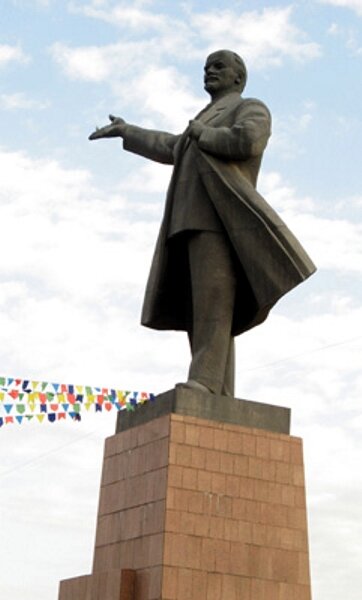


 Bishkek