Promoting health
This last week I have had a stream of visitors asking to see me, each of them, so it seems, with an air of shy embarrassment and hopeful expectation, and each of them clutching a piece of paper.
I know them all. We’ve before and the conversation starts with general small talk: How are you?, How’s business?, What strange weather we are experiencing and that sort of thing. Although such small talk is a common feature of any meeting, it’s especially important in Asia where conversations tend to go “all round the hills” before coming to the main point in the concluding moments of any meeting. It can be rude to try and shortcut the process or trying to speed up the discussion by trying to jump to the point prematurely, even when pleading pressures of business or some other tactic. In these particular cases, people say they understand and hurriedly present their case, but it is clear that all you have done is to have ruffled their feathers and emphasised their unease and discomfort.
Why unease and discomfort? Because the pieces of paper they are clutching are letters asking for sponsorship. They are representatives of various voluntary organizations and charities planning to organize some event and the budget exceeds their meagre finances so they have to seek out additional support. To many of the older generation, brought up in the Soviet Union where the State cared for you from cradle to grave, they feel as if they are coming “cap in hand”, begging for a handout.
In a way, of course, they are right.
As I said, I know them all, those who have come to see this last week. We’ve met before and we have given them sponsorship in the past for this event or that, for one activity or another. Now, they are coming to ask if we will be able to support them this year as well. They have a problem because most of those who have sponsored them in the past have pleaded poverty, a result of the downturn in their business since the revolution and social upheaval of last year, or they say that all of their budget for charitable causes has been designated to other causes, (for example, helping the communities down south which have been riven by the violent disorders during the summer). There are fewer sponsors this year, they explain, and those that have agreed to support them are pledging smaller sums. They are finding it difficult to raise the funds necessary to carry out their activities and they have had cut back on their plans. All of this has, of course, only heightened their anxiety and sense of unease.
During the course of a year we receive a huge number of such appeals and it is always a difficult and agonizing task to decide which ones to support, (and to what extent), and which ones we have to decline.
Such decisions of which charity to support are usually based on either emotional appeals of personal circumstances. We all feel sympathy, for example, for children with terrible diseases or in need of a life saving operation and stories crammed with personal details accompanied by photos appeal to our feelings of compassion. On other occasions, the problems of a family member or friend can induce us to support a cause with fewer photogenic possibilities.
.
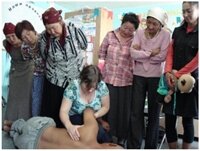
Last year, I was introduced by one of our investors to a charity with which he is involved: HealthProm. They are based in the UK but also work here in Central Asia, as well other places around the former Soviet block.
It was established in 1984, before the break up of the Soviet Union, by doctors and other health professionals with the aim of promoting health education through various activities such as tours, conferences and exchange visits. Over the years they have expanded their activities and now include projects covering social care for children in vulnerable situations. As their website puts it, their mission is “to achieve sustainable, culturally sensitive dissemination of best practices in health and social care for vulnerable groups in the region in partnership with our overseas partners”
As their name implies, they do not provide services directly but rather aim to promote and build the capacity of their local partners, mostly through in-service training and the development of services. That’s hardly rich in photogenic opportunities likely to pull at our heartstrings, but nevertheless worthy and important, especially in a region rich in need but hamstrung by financial difficulties.
Their current portfolio of activities focuses on reducing maternal and infant mortality rates, and on working with people with disabilities, through projects currently in Afghanistan, Azerbaijan, Kyrgyzstan, Russia, Tajikistan and Uzbekistan. As well as providing support for programmes aimed at “safe childbirth”, they also aim to support parents to care for their children, especially children with disabilities, and so reduce the institutionalisation of babies and small children.
.
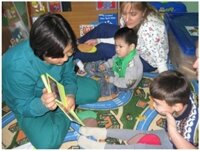
As it happened, a couple of weeks ago, I was able to meet some of the people involved as they were in Bishkek for a conference called “Innovative approaches to working with children with special needs and their families: Kyrgyzstan and international experience”. Despite the fact that it’s not a catchy title, apparently it was very successful, drawing together some 140 people from around the region.
(One of the interesting highlights, according to one of the attendees to whom I spoke, which provided a lighter moment in the crowded agenda, involved a lecture/demonstration on the mundane but important task of bathing an infant.)
This was just one of their activities in Kyrgyzstan, where they are concentrating on work with children with disabilities, (“special needs”). These children are particularly vulnerable as many of them who do not receive any school education at all. I have seen several reports in the local media and on the internet during the last year drawing attention to the plight of families with disabled children and one common feature in many of these reports is the link between disability and poverty. It’s not only the cost of providing care for children with disabilities, in many cases the demands of caring for their child exclude parents from earning an income, making them particularly vulnerable.
One project, based in Bishkek and Issyk Kul, has involved working with their local partners on improving the health and well-being of both young children with disabilities, (between birth and seven years of age), and their parents, providing access to information, (including public awareness campaigns as well as multi-disciplinary training for local specialists and volunteers); community-based support services (working together with their local partners they have established two day centers and provided a minibus for outreach services); emotional and practical support to new families of children with special needs through counselling.
Another aims to establish and strengthen sustainable community-based support mechanisms, mainly in the Talas region. Support is being provided to parents groups to become local Family Support Centers, increasing access to basic health, social and educational services as well as providing flexible and affordable childcare and income-generating opportunities to parents.
One of the imaginative results of their work together with The Association of Parents of Disabled Children, (ARDI), IT and media specialists, a group of housebound children have been able to connect to the internet and create their own blog, (in Russian: http://my-osobennye.livejournal.com/), featuring stories, pictures and several video clips. This has helped them to make new friends on-line, tell their stories thus breaking down stigma towards disability and has been featured on local and Russian TV.
.
Like most of the charities that have been to see me in the last week or so, they have to “cut their cloth according to their means”. Their budget in 2009/10 was worth over a quarter of a million pounds, the majority of which came in the form of grants, and something like 96% of it was spent on delivering their operational programmes, (which looks like a pretty good ratio to me). The administration, (accounting for the other 4%) is provided by a small staff based in London and they publish their accounts on their web.
.
Amongst the things that I particularly like about HealthProm is that they work with local partners emphasising capacity building and sustainability, which means that help given today should be effective for several years to come.
To find out more you can visit their website, www.healthprom.org, subscribe to their e-mail newsletter and/or follow them on Facebook and Twitter.
.




 Bishkek
A couple of pages from their website
- about the conference: http://healthprom.org/?page_id=2821
- from one of their partners in Bishkek: http://healthprom.org/?p=2933happiness