Asylbek Nasirdinov – One Man Band
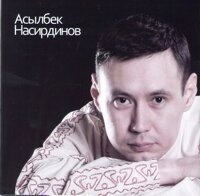
Asylbek Nasirdinov
The other day I picked up the newspaper and was thumbing through it to see if there was anything interesting, and was about to put it down again when I was pulled up sharp by an article on one of the inner pages.
There was a photo of a young musician playing a choor – a Kyrgyz flute. He looked familiar and so I took a second look. Yes, I was right – it was a photo of Asylbek Nasidirov.
I wrote a postcard about Asylbek back in February when I explained how I came to meet him and he had helped us with material for our website, sounds.kg. That postcard was inspired by a clip featuring him that I had seen on local television.
In fact, as this full page spread pointed out in its opening paragraph, this was not an isolated instance: ”Many people have heard his colourful music. It’s often heard on television and radio; an essential feature of major celebrations, creative and official events.” (That’s a loose translation, not exactly word for word, but I am assured that’s what the phraseology meant.)
So, I read further.
Asylbek grew up and went to school here in Bishkek. He didn’t show any particular musical talent in his early years. His family weren’t particularly musical, his father was a philiologist and journalist, but he spent his summers in Talas with his grandmother who played the Komuz, (the archetypical Kyrgyz instrument – a sort of three stringed mandolin), and Temir Komuz, (literally, “Iron Komuz”, known in the West as a Jaw’s Harp or Jew’s Harp), sang songs and koshoks. He says that it was from her that he gained his first exposure and interest in music.
Then he picked up his older brother’s guitar and began strumming the strings. He taught himself to play and by the third class, (aged about 11), was already performing in school concerts. His teachers noticed his remarkable talent and suggested that he apply for the Shubin Music School here in Bishkek. The self assured 12 year-old appled and was given a place … and only then did he bother to tell his parents.
He excelled in his classes and amazed his teachers with his skill and encyclopaedical knowledge of traditional music and musicians. He graduated school and attended the Conservatory where he excelled, not only on the Komuz but also on traditional Kyrgyz wind instruments, (which has developed into his speciality). Graduating from the conservatory, he now teaches Music, passing on his love and knowledge to future generations. He has an expert knowledge of historical musical instruments and one of his ambitions is to create a museum of traditional musical instruments at the Conservatory.
He also performs – and hence the praise in the article’s opening paragraph.
The article was called “One Man Band”. Actually, to be honest, it was “Chelovek Orkestr” which is probably better translated as “Mr. Orchestra”, but I think that “one man band” conveys better his remarkable versatility in being able to play a wide variety of instruments of which he has an extensive personal collection. As well as the Komuz, he can play all the traditional wind instruments, of which there are more than fifteen, including: the chopo choor, (a sort of whistle made from clay); the choor, (a variety of flute); troob (or pipes); sabyzgy; yshkyryk; choino, surnai and kurnei; and not forgetting the temir komuz and its wooden relative the djygach.
Performance is an integral part of Music, it isn’t just something to be listened to, and most musicians are the “unsung heroes” of performance. He points out that most people these days have the ambition to be a famous singer, but in order to achieve that ambition they need musicians in order to accompany them. Of course, the peak of instrumentalists career is to be a famous soloist, (as he is), but even they need accompanying.
His repertoire includes, of course, all the classic Kyrgyz melodies, but also encompasses a wide variety of other genres. I have heard him play, for example, the Beatles and Schubert’s Ave Maria on these traditional instruments. He also composes original works and writes arrangements.
His career has taken him far and wide; throughout Europe, Japan and America, (where, in 2003, he appeared in New York’s Carnegie Hall).
Asylbek not only plays the instruments, he also makes many of his own, himself. He orders his Komuz from a master craftsman in tishkek and his temir komuz from another from Issyk Kul, but he makes most of his wind instruments himslef. It’s a specialized and demanding knowledge of materials and tradition and accuracy. Raw materials from different regions can produce different timbres and just a millimetre’s difference in finger hole on a choor or chopo choor can have a major effect on it’s sound. Sometimes these variations can become particularly noticeable on recordings which can be very unforgiving.
If the article began with his reputation and versatility, it ended with “a sting in it’s tail”, as Asylbek was quoted as saying that despite the number of folklore groups, there are few people paying attention to traditional, historical instruments and music. As a result, this ancient artform is in danger of going the way of the Dodo. The state pays little attention to preserving serious folklore which instead has to rely heavily on the support of International Donor agencies.
For the record: there are several clips of Asylbek on youtube featuring some of the instruments that are mentioned. Here is one:
http://www.youtube.com/watch?v=tzbfRBjjLEE
It is based on a story told by Chinghiz Aitmatov in his novel “The white Ship” of an old legend about the origins of the Bagu tribe.


 Bishkek