Asylbek and an unusual music clip
I was ten years old, and still at Primary School on January 1st, 1964, when the disc jockey Jimmy Saville presented the very first edition of the United Kingdom’s flagship programme reviewing the pop music charts, Top of the Pops, (TOTP). To be honest, I can’t remember actually watching it, but I am sure that my brother and I would have joined with the vast majority of Britain’s youth gathering in front of their TV sets to watch the new programme. Little did anyone realize that the programme which was scheduled for a short run, would still be running over forty years later.
The line up on that occasion began with The Rolling Stones performing “I Wanna Be Your Man”, followed by Dusty Springfield with “I Only Want to Be with You”; the Dave Clark Five with “Glad All Over”; The Hollies with “Stay”; The Swinging Blue Jeans with “Hippy Hippy Shake” and it finished with that week’s Number One, the Top of the Pops, “I Want to Hold Your Hand” by The Beatles. All of them, names to cherish in their own right, not simply because of their role in this particular piece of historical trivia.
In most cases the disc jockey would announce the next number and the screen would show a spinning record before switching to a view of a dance floor with young people gyrating away. For some numbers a professional dance troupe would perform a routine on special stage. Occasionally, depending on the vagaries of the movements of individual records up and down the charts and which acts were available, (and willing), some artists would appear on the show. (Not all acts were keen on the exposure of a live appearance on the show, however, as live performances do not always reflect the same quality and sound on the commercial recordings.)
Although it was rare for a record to be featured in consecutive weeks, (unless it happened to Number One), sometimes, recordings of an earlier appearance was repeated in a subsequent broadcasts, and my brother once pointed out to me that you could tell if the producers thought that the record had a “future” or not … if it did, then the crowds were kept back, at a distance, so that the film could be used again. If not, however, then the crowd were allowed to gather up close to the artists.
Then a new trend appeared, that of the “pop video” produced by the record company in order to promote the record. This added a new feature to the variety of formats available to the producers.
Today, the music video is so endemic that it is easy to forget what the original programmes were like – unless we watch some of the archive films that have managed to survive the clean-out of the BBC which claimed many of the early episodes, (including the only live appearance made the Beatles, back in 1966), or films like Hairspray.
.
All this came to mind because the other day I was watching the news on one of the main local channels and when the bulletin had finished it was followed, as is often the case here, by a clip of traditional Kyrgyz music.
Now, although I actually enjoy traditional Kyrgyz music, I have to admit that I normally “channel hop” during these moments. The reason for this is simply that I am not a great fan of music videos. This one, however, was different. Whereas the video normally shows the artists dressed in traditional national costumes standing somewhere in the mountains, amidst greenery, by the side of fast flowing streams with visions of tall mountain peaks in the background, this one interspersed shots of a young musician, Asylbek Nasirdinov, performing on a variety of instruments somewhere in a studio, with scenes from a feature film, newsreel shots of the Manaschi, Sayakbai Karalaev, and a variety of other “archive” clips.
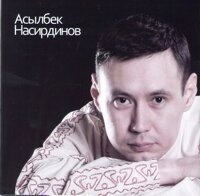
As it happens, I had seen this very clip just a couple of days beforehand, when Asylbek visited me in my office with copies of the presentation CD that he’s just had produced with eleven tracks and two video clips. We had sponsored the design for the CD and he was bringing me our copies.
I have known Asylbek for almost all the time I have been here in Kyrgyzstan. He is married to the sister of one of our shareholders and we meet maybe half-a-dozen times a year, mainly at family gatherings.
He is a talented musician, having studied at the Conservatory, and performs both as a soloist and as a member of a folklore ensemble, (at the present time, for example, he is the Manager of the ensemble “Saamal”). He performs, not only here in Kyrgyzstan but also abroad where he has participated in many international folklore festivals. Although he does play the Komuz, (a sort of three stringed ukulele), he specializes in wind instruments, (some of which are more unusual), and, in keeping with the traditional nomadic culture, he doesn’t just play the instruments, he actually makes his own.
When we were preparing the website www.sounds.kg, he was extremely helpful giving us much valuable advice and information. It seemed that nothing was too much effort, he found us books, instruments – including some of the very rare instruments that it is difficult to find, contacts of other people who could also help us, he spent time with the photographer – it’s his photograph that you’ll see on the site – and he gave us permission to place some of his recordings on the site for people to download.
Some of the tracks are quite haunting and reminiscent of music from my past … no, not the music of The Beatles and the Swinging Blue Jeans, but Twin Peaks, The Flight of the Condor, Enigma and Enya.
.
Although I found the clip sufficiently enticing to avoid the temptation to reach for the remote control and start channel hopping, there was one thing that I felt could have made a really big improvement … Like most of the musicians here, Asylbek is very intense when it comes to performing. He is proud of his traditional culture and concentrates intensively on his performance, which means that he doesn’t smile that much. That’s not he’s playing the wind instruments, such as the Choor and the Chopo Choor, (indeed it would be impressive if he was able to smile whilst playing them – especially the Choor which looks extremely uncomfortable instrument to play … he says, though, that it isn’t), but it would be nice if he could whenever possible, for example when he plays the Komuz, and it would help to convey the feeling that he is actually enjoying what he is doing, (which he is … ).
.
As I said, the CD is a Presentation CD, which means that it’s not on sale anywhere. For anyone who is interested, however, some of the tracks are available on www.sounds.kg, and in particular, I recommend the second track: “Balbal tun”, (“Night of the Balbals”), which was the piece featured in the clip.




 Bishkek