Fishermen’s Day
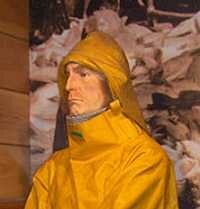
Amongst the list of Professional Holidays commemorated here in Kyrgyzstan, today’s is the one that always brings a smile to my face: The Day of Fisherman.
That’s a bit unfair, but remember that I am from Britain which is an island nation, surrounded by the sea and the image which is conjured up by the term of Fisherman, is of swarthy trawlerman in oilskins who risks his life by sailing out into the deep sea for weeks on end. For a long time the classic dish of English cuisine was Fish and Chips: deep fried cod coated in batter accompanied by deep fried potatoes.
Kyrgyzstan, on the other hand, is a landlocked country and although commercial fishing does exist on some of the lakes, (notably Issyk Kul and Son Kul), but in recent years restrictions have been introduced in order to try and preserve stocks and it doesn’t carry the same romantic imagery, even though it can be a dangerous activity, (see the postcard Landlocked Sailors).
Fishing is an important activity on Lake Issyk Kul. Stalls selling dried or smoked fish line the road along the northern shore fish taken from the lake. The name of the town at the Western end of the lake, Balykchi, is the Kyrgyz equivalent of the town former Russian name – Rybachi – which loosely translates as “Fisherman”. (Ryba is the Russian word for fish). There is a story that a Russian soldier serving in the region fell in love with the area and decided to retire here. He had so much success fishing from his home made boat that many local people came to settle nearby, followed his example and took up fishing the waters of the lake. When he died, it is said that the town that had grown up around his hut was named in his honour: Riybachie – “The Fisherman”.
Angling takes place on a number of mountain rivers, (the waters of the fast flowing rivers and mountains streams offer numerous opportunities for fishermen of differing experience), Lakes Issyk Kul, Son Kul and several of the reservoirs. It requires a permit and there are restrictions on the size of catch permitted (e.g. up to five kilograms per day and for some species – up to 5 fish). The permits are not expensive – although there are different rates for locals, citizens of CIS countries and citizens of other countries. Fishing at night is not allowed and it is not permitted in Lake Sary Chelek.
.
A recent development has been the introduction of “fish farming” with a productive farm situated just South of Bishkek, and several others on Lake Issyk Kul.
.
Fish provide an important source of iodine – otherwise lacking in the Kyrgyz diet – and is a popular form of food.
Today, there are some 54 species found in Kyrgyzstan – 38 of them indigenous and 16 introduced. The greatest diversity is found in Issyk Kul and the larger rivers … depending on the waterflow and number of different habitats available. Only a few species are found in most of the country and most lakes feature only two or three species. These are mostly small and not commercially important.
A large variety of fish have been introduced into the waters of Kyrgyzstan – mainly into the Issyk Kul region, Son Kul and the various reservoirs – some having a serious effect on the populations of local indigenous species. Fish were introduced into Lake Son Kul in 1959. Although Chatyr Kul has no fish – it does have some freshwater shrimps.
The species of fish that can be found include varieties of: Sturgeons; Salmon; Trout; Whitefish; Peled; Pike; Roach; Dace; Minnow; Rudd; Asp; Tench; Gudgeon; Barbel; Marinka; Osman; Bream; Carp; Goldfish; Loach; Catfish (including the Som); Sticklebacks, Perch; Zander; Snakeheads and Bullheads.
.
The fish of Kyrgyzstan have been studied over the centuries. Early studies or observations were carried out by Russian explorers. A standard reference book, “Fish of Kyrgyzstan” was published in 1990. In 2004, a book called “Looking at Fishes in Kyrgyzia” was published as a direct result of the work of the TACIS West Tien Shan Biodiversity project. It has text in both Russian and English and a large number of illustrations. It details the habitat and distinct features of each type of fish found in the waters of the Kyrgyz Republic and offers an invaluable guide for identification.
.
Endangered Fish species – listed in the Red Data Book of Kyrgyzstan:
of There was only one fish listed in the original (1985) Red Data Book of the Kyrgyz SSR:
- Turkestan Catfish: A native fish to the mountain rivers of Central Asia. It is found in the Kara Darya and Naryn Rivers and their tributaries – including the Toktogul Reservoir. It usually grows up to 18cms in length, although specimens up to 25cms have been recorded, and weighs about 100-120g. (The larger specimens recorded weighed up to 180g). The female of the species is normally smaller than the male. It has a flattened body, with four barbells on its head, and pectoral and pelvic fins for crawling along the sandy, gravel, bottom of the stream bed. A small eye is placed high on the head. It is coloured green, yellow and brown – sometimes with brown stripes, and is a light brown on the underside. It spawns in June.
In 2005 the list was expanded to include the following species:
- The Issyk Kul Marinka: A indigenous species with small scales arranged in irregular rows. It sports an intense golden-bronze colour. It inhabits both the lake and the rivers which feed the lake, and is also found in the Chui and Talas rivers of Northern Kyrgyzstan. Gernerally it prefers the riverbed habitats of the freshwater rivers – but it has also been noted in parts of the lake which exhibit higher levels of salinity. It is more common on the northern shores of the lake than the southern – where it can be found in the shallows (5-10m … or possibly as deep as 25m) in the warm weather but retreating to greater depths (for example 40m) during the winter months. A typical fish may weigh about 2kg – but specimens upto 80cm and weighing 8kg have been found. Once important for commercial fishing, with about 15-20 tons caught each year before 1964, it is now a rare sight.
- The Pike Asp: An indigenous fish, native to the Naryn River and now found in the Toktogul Reservoir … and there are some suggestions that it may also occur in the Chui River. It resembles a pike with bright silver scales along its long “snake-like” body, a big head with a large mouth and protubing lower jaw. A typical specimen grows to 80cm and weigh 5kg.
- The Naked Osman: There are several subspecies of this fish which are indigenous to Kyrgyzstan. Found in both rivers and lakes, the river specimens tend to be smaller than their relatives inhabiting lake environments – about half the size. The are called “naked” Osman because they exhibit scales only on their their sides and near the anal fin. It is coloured dark brown on top, silver sides with spots of brown and grey-blue and a yellowish-white underbelly. A mature adult, at 25 years, can measure 50cm in length and weigh 3kg. It used to be fished commercially on lake Issyk Kul, with yields reaching 70-80 tons in the 1930′s falling to just 5 tons in 1966. One reason for the decline was that the fishing season coincided with the spawning period – and Osman spawn are poisonous.
- The Sharpray: This indigenous fish has a long, smooth spine along a pronounced dorsal fin – and resembles a Dace. It “sparkles” a silver colour with a grey back, showing green-yellow tints, and silver white sides and belly, and yellow fins. It is found in the steppe portions of the Chui River where it prefers river ruffles and pebble and sand beds. This fish can grow to a length of 16cm and a weight of 55g – although a typical adult specimen is likely to be about 10-13cm and 20-30g.
- The Aral Barbel: Found mainly in lakes, this indigenous fish is pink in colour with dark grey fins, fine scales and barbells around the mouth. It grows up to 1m long and over 20kg. It used to be found in the Chui River up to Tokmok, but hasn’t been observed in Kyrgyzstan since 1970.
- The Bultman Barbel: This fish is found throughout Central Asia, but has become very rare. It has a yellowish body with darker, (golden) upper parts and brighter underbelly. Younger specimens also sport dark spots. There are two pairs of barbells around the mouth, one pair to the fore and another set back to the rear. During the Spring and Summer it may be encountered in the Chui river up to Tokmok, but in the Autumn and Winter it inhabits water channels and floodplain lakes. It can grow up to 1m in length and a weight of 16kg.
.
For the record: The Day of Fisherman is celebrated annually on the first Sunday in June.
.



 Bishkek