Mannerheim – Marshall of Finland
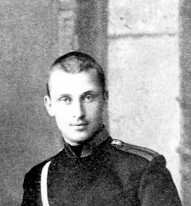
Tomorrow, June 4th, is a holiday in Finland. It’s the birthday of Carl Gustav (Emil) Mannerheim, (1867-1951), a Finnish political and military leader, explorer, former general in the Russian Imperial Army and President of Finland from 1944 to 1946.
He supported close ties with Sweden and Western European culture and opposed both socialism and the national socialism of Nazi Germany. He was an excellent linguist and had wide international experience, which helped him to maintain wide international contacts at various levels.
OK, so why does he merit a Postcard from Bishkek? Let me explain:
At the beginning of its recorded history, in the eleventh century A.D., Finland was conquered by its powerful neighbor Sweden. Throughout more than 600 years of Swedish rule (c. 1150-1809) the country often served as a battleground between Sweden on the west and Russia on the east. Over the centuries Russia exerted pressure on Finland and eventually Russia conquered Finland and incorporated it into the Russian Empire, where it remained for more than a century from 1809 to 1917.
Carl Gustaf Emil Mannerheim was born Gustaf Mannerheim was born into a wealthy and distinguished Finland-Swedish family at Louhisaari Manor 4 June 1867. He was the third child of Count Carl Robert Mannerheim and his wife, Helena von Julin. As a younger son of a count he inherited the title of baron.
His early life was overshadowed of his mother’s death and problems in the family’s financial situation. At the age of fourteen he attended a Military Cadet School but was expelled for “disciplinary reasons” and he continued his studies at a private grammar school in Helsinki, passing his university entrance examinations the next year. The expulsion did not, however, put him off the idea of a life in the military and after finishing his schooling, he enrolled in the Russian Army – and went to the Nikolaevsky Cavalry School in St. Petersburg.
In 1892 Mannerheim married Anastasia Arapova, daughter of Major General Nicholas Arapov and they had two daughters, Anastasia and Sofia (Sophy). The marriage was dissolved in 1903, but the divorce was not officially acknowledged until 1919. Anastasia moved to France. It is said that the reason Mannerheim divorced her was that he had fallen in love with Catharina Eugénie Marguerite (Kitty) Linder (1887-1969), who was twenty years his junior. The couple never married, and it is possible that she rejected his proposal. From 1921 they were only friends.
He served in Poland as a Captain for a couple of years before being transferred to the Chevalier Guards of the Empress in St. Petersburg.
Mannerheim served as a staff officer during the Russo-Japanese war of 1904-05 and was received a battlefield promotion to colonel and three decorations for his strategy in organizing the retreat from Manchuria.
Mannerheim in Central Asia
The following year he was offered a special commission by the General Staff – which meant travelling on for two years on horseback over 14000km through Russian Turkestan to Beijing, in China. Taking with him only a few men, he was to investigate the mountain and desert regions. Mannerheim kept a diary, which along with his notes made on the journey, he wrote in Swedish, (not in Russian), to hide the fact the he was also on an intelligence mission for the army.
Turkestan was a vast geographiocal area divided into two: Russian Turkistan, which had been absorbed the Russian Empire in 1800s following the conquests of the Silk Road khanates of Bukhara, Khiva and Kokand, and Chinese controlled East Turkestan.
Amongst their reasons for launching this expedition were:
- The fact that Russian foreign policy was often driven by a fear of being encircled by “unfriendly” powers
- Having just lost (disastrously) a conflict with Japan (and in doing so becoming the first Western power to be defeated at the hands of an Eastern one);
- Memories of the “Great Game” intrigues with Britain over influence in Southern and Central Asia;
- Concerns about:
- The spread of Japanese, and Western, influence, and
- Pan-Turkic desires for independence taking root among the local populations (Sarts),
- The need for a more effective railroad connection towards Manchuria
Tsar Nicholas II and the Russian government planned further conquest on the Chinese territory in East Turkestan (Xinjiang).
Mannerheim studied the customs, languages, ethnic traits and of the tribes that he encountered, as weall as archaeology in the region and collecting artifacts and taking photographs. His purchases included a number of everyday articles. From a beggar he bought a complete outfit of clothing.
In Kyrgyzstan he travelled on horseback, (making extensive notes in his journal), from Osh (where he spent time talking with and photographing the local Sarts in the bazaar), to Gulcha through the Taldyk Pass and then through the Alai Valley to the Irkeshtam Pass.
He also visited Kurmanjan Datka, the Queen of the Alai and left photographs and drawings as well as photographs as a record of his meeting with her, and her sons.
While in Jarkand, Mannerheim suffered badly from rheumatism. In Utaishan Mannerheim met the Dalai-Lama. He was handed a piece of white silk to give to the Tsar and he gave the Dalai-Lama his Browning pistol, explaining how it could be loaded with seven bullets simultaneously. Mannerheim returned to St. Petersburg in September 1908 – one wonders what the religious leader made of the gift. The objects from the expedition were donated to the Finno-Ugrian Society.
Later Mannerheim published accounts of his journey in “A Visit to the Saro and Shera Yogurs” (1911), and ”Across Asia I-II”, (1940). (The latter was later publuished in English.) Many of his photographs were published in the 1990s – including a CD version.
Promotions to a place in History
In 1911 Mannerheim was promoted to the rank of Major General and given a command post in Warsaw. During the First World War Mannerheim served, leading operations against the Austrians and was awarded the Cross of St George, the highest military award in Russia. Promoted once more to the rank of Lieutenant-General, during the final phases of the war was given a Cavalry command on the southern front.
The Russian revolution ended his career in the Emperor’s army and in December 1917 he returned to Finland which, although it had recently declared its independence, was torn by revolutionary disturbances and with 40000 Russian troops still in the country. The Finnish Senate gave Mannerheim the task of forming an army and restoring law and order in the country.
At the same time as the troops under his command were disarming the Russian garrisons in the north the revolutionary Red Guards seized power in the south. In the three-month long Civil War, as the Commander-in-Chief, he organized the “White Guards” which with German help defeated the “Red Guards”. In his Order of the Day after the celebration of victory in Helsinki, Mannerheim stated: “The task of the army is accomplished. Our country is free. From the Tundras of Lapland, from the remotest skerries of Åland to Systerbäck, the Lion flag is flying. The people of Finland have flung away the chains of centuries and stand ready to take the place that properly belongs to them.”
Relations between Mannerheim and the Senate, however, gradually became tense as the he did not approve of the Senate’s pro-German policy. He foresaw the trouble that Finland, (whose independence was not yet generally acknowledged), would face by being too friendly with Germany, which was losing the war. The situation deteriorated and Mannerheim resigned his position as Commander-in-Chief and travelled abroad where, (despite his unofficial position), he was able to exert an influence on behalf of the new country amongst politicians in the Allied countries, particularly in France and England.
In December 1918, when Germany finally collapsed, Mannerheim was recalled to act as Regent. In Finland’s first presidential election the following summer, he lost, however to K.J. Ståhlberg. Mannerheim signed the constitution of the Republic of Finland in July 1919.
After attempting to make Finland participate in the Russian counter-revolutionary military intervention operations, he retired to private life. He devoted much of his time to traveling abroad, and to humanitarian work in the Finnish Red Cross and the “Mannerheim League for Child Welfare”, which he had founded in 1920.
He returned to public life in 1931 when he was appointed Chairman for the Defence Council. In 1933 he was awarded the title of Field Marshal, and in 1942 he was named Marshal of Finland.
He reorganized the army and constructed a system of defence, (later known as the Mannerheim Line), across Finland’s southeast frontier. He advocated a “Nordic orientation” to Finnish foreign policy but also cultivated relations with both Great Britain and Germany.
A threat of resignation over the defence budget was quickly forgotten when a Soviet bomber squadron attacked Helsinki on November 30, 1939. He was appointed Commander-in-Chief of the Armed Forces once more, a position he held during both the Winter War (1939-40) and in the Continuation War (1941-44, when German forces faught alongside Finnish soldiers in order to oppose a Soviet invasion).
Mannerheim was not, however, concerned only with military operations – he was also actively involved in political activities with a view to prevent Finland from getting too involved in German politics, and military objectives which he considered would have been against Finland’s interests. When it was clear that their Germany allies were beginning to lose the war, the Parliament appointed Mannerheim as President of the Republic. He led negotiations with the Soviet Union for a separate peace deal and was able to lead Finland out of the war (in September 1944) as the only country on the losing side that was not occupied by foreign troops. (German forces in the north of the country were, however, still a force to be reckoned with – and laid waste to large areas of Lapland).
In 1946 Mannerheim resigned his presidency due to ill health. His last years he spent quietly, mainly in Switzerland, where he died in Lusanne, in 1951, at the age of 83.
His monument in the military cemetry of Hietaniemi was unveiled in 1953.
.
Mannerheim’s home in Helsinki, which was built in 1874, was turned into a museum in 1951. There is a confusing history to the house. It was built in 1874. It served as accommdation for a confectionery factory until 1924, when it was offered for rent to Mannerheim – and became the first rented accommodation in the district. Mannerheim had considerable alterations made to the building, where he lived as a tenant for the rest of his life, although there was a general belief that the house had been a gift to him from parliament. In fact the Parliament had inteded to donate another house to him, (which now serves as the Labour Court building), to mark his 75th birthday but he learnt about the plan and made it known that he would rather live in his existing home. The Parliament began negotiations with the owners and a congratulatory address from parliament was published in the papers, whereupon the house was handed over to Mannerheim and he stopped paying rent. It appears, however, that in 1945 Parliament gave Mannerheim the money which had been set aside for purchasing the house and he used this money, and other sums from the General Mannerheim Fund, to purchase a manor house in Lohja.


 Bishkek