Klavdia Antipina
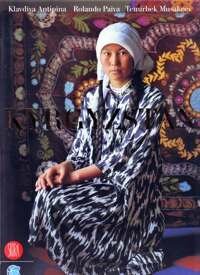
At first glance, Klavdiya Antipina appears as a remarkable woman and an unlikely heroine who would, as John Sommer says, had “single – handedly preserved ethnographical information about the unique traditional culture, and that she had accomplished this despite formidable personal barriers.”
Despite her contribution to the study of Kyrgyz nomadic culture, her work is not well known – even in Kyrgyzstan – and, unfortunately, much of it has never been published, including books on Kyrgyz Ornament and Kyrgyz Costume, and has now disappeared.
She was born on May 5th, 1904, into a large and apparently prosperous family in Morhansk, near Moscow. At the age of 18 she left home and studied at a Forestry Institute. Later she studied Ethnography at the Moscow State University, where she met and married her husband Misha, and in 1932 they had a son, Lev.
After Stalin came to power, whilst she was in hospital with her son who had scarlet fever, her husband Misha was arrested, taken away and imprisoned. She never saw him again. She too was labeled “an enemy of the people” and found herself exiled with her four year old son to the remote city of Frunze, in the Kirghiz SSR, where she found an unfriendly and even hostile reception.
Life was hard – at first she found shelter on the railway station, in a barn, in a haystack, before finding a poor Russian speaking family who gave her a room. She found a job washing laboratory equipment. Slowly she made friends.
Fifteen years were to pass before Stalin died, and she found herself a “rehabilitated person”, free to live wherever she wished in the Soviet Union and able to undertake the kind of work for which she had trained. As John Sommer points out: “At a point in life when most persons have reached the peak of their careers, Klavdiya Antipina was about to begin her career”.
Although the manuscript for her book on Kyrgyz Costume has disappeared, a book was published based on interviews with her on the topic and containing illustrations prepared for the original.
Rather than exercise her new found freedom to live elsewhere, she chose to stay in Kyrgyzstan and studied the Kyrgyz people she had come to love and to admire. She travelled throughout the republic, studying, making notes, taking photographs, publishing articles – and making a film: “Fate”.
She died in 1996.
.
In 2002, a book by Bibira Akmoldoeva and John Sommer about Klavdiya Antipina was published by Spring Hill Press of McKinleyville, California (ISBN: 1-890539-02-3). As well as biographical details, it contains a number of interviews with people who knew her, some excerpts from her writings and a wide selection of interesting photographs and illustrations.





 Bishkek