World Malaria Day
Every year, World Malaria Day is celebrated on April 25th. The idea behind the day is to recognize the global efforts to combat and control this deadly disease.
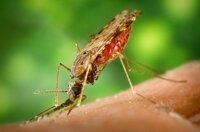
Malaria is a serious disease that is transmitted to humans by the bite of an infected female mosquito. which usually bite sometime between dusk and dawn.
Symptoms may include fever and flu-like illness, including chills, headache, muscle aches, and fatigue. Malaria may cause anaemia and jaundice. Some infections, if not immediately treated, may cause kidney failure, coma, and death. Malaria can often be prevented by using anti-malarial drugs and by using personal protection measures to prevent mosquito bites. However, in spite of all protective measures, travellers may still develop malaria.
For most people, symptoms begin 10 days to 4 weeks after infection, although a person may feel ill as early as 7 days or up to 1 year later. Some forms of malaria can relapse and the parasites that cause the disease remain dormant for several years.
Malaria is always a serious disease and may be a deadly illness. People who become ill with a fever or flu-like illness either while travelling in a malaria-risk area or after they return home (for up to 1 year), should seek immediate medical attention and should tell the physician their travel history.
.
When I first came to Kyrgyzstan, back in the mid 1990′s, I never thought of Malaria as a problem. There were no inoculations required for any diseases at all, and I was not warned that Malaria was a risk as I had been a few years earlier when I undertaken my “Round the World” trip, visiting various exotic locations. In fact, malaria used to be prevalent in Kyrgyzstan, but was eradicated from the country in the late 1950s. Since 1980, there have been sporadic “imported” cases in the country, brought here by travelers who had been infected abroad. In the early 1990s, the number of such cases started to increase gradually and in 2002, a major outbreak witnessed the return of malaria. In 2004, there were reports of over 30 hospitalized cases in the region near to Osh – apparently, among the patients were people suffering from anemia and those, who had been infected in the past (and possibly not fully recovered). In 2009, according to statistics just issued by the Ministry of Health, there were four cases of malaria registered, and 2010 there were only three.
The Centre for Disease Control in Atlanta, (CDC), on the page of their website giving advice about travel to Kyrgyzstan advises that there is a risk in Southern and Western regions, (Batken, Osh and Djalal Abad oblasts) – especially in the border areas with Uzbekistan and Tajikistan and that “the risk of malaria is low and taking an antimalarial drug is not recommended”, but they do stress, however, it is important to protect oneself from mosquito bites.
CDC also reports that there have been “no cases reported in Bishkek”, however, the travelmed.com website says that, “as of August 2007, 52 cases of a malaria have been reported; twenty nine were residents of Bishkek and 23 were visitors to the region. The majority of the patients are inhabitants of new residential areas of Bosogo, Olmo and Kalys-Ordo, located close to the water reservoir (Archunsky) of the Chuysky region.” I have certainly seen occasional reports in the local press about the occurrence of malaria in the country, particularly in the period between May and September.
Some health officials cite growing labour migration as the main source of the disease, while others say an increase in swamps in the area and the pollution of reservoirs are the main contributing factors.
Visitors to Kyrgyzstan should consult your doctor or travel clinic before travelling for advice about health precautions and in particular the various anti-malarial drugs which can be prescribed – and which would be the most suitable for them to use.
.
World Malaria Bay established in 2007 by the World Health Organization, although a similar Africa Malaria Day had been organized since 2001. Each year events are organized which reflect the chosen theme for that year. For example, in 2008 the inaugural theme was: “Malaria – a disease without borders”, (as one website points out, “mosquitoes do not respect boundaries”). This year, 2011, the theme is: “Achieving progress and impact”, and aims to draw attention to and recognize “the international community’s renewed efforts to make progress towards near zero malaria deaths by 2015″.




 Bishkek