Realpolitik
This week has seen a number of notable anniversaries: the fall of Masada to the Romans, the adoption of the Union Jack as the British flag, the start of the American Civil War, the assignation of Abrham Lincoln at the end of the war, the sinking of the Titanic, the founding of the International Labour Organization, the first manned space flight by Yuri Gagarin in 1961, the disastrous Apollo 13th flight, the first shuttle launch, not to mention the birthdays of such luminaries as Leonardo da Vinci and Leonhard Euler.
It also marks the first use of the phrase “Cold War”, in 1947, to describe the continuing state of political and military tension, economic competition after the Second World War between the Communist World, (the Soviet Union and its satellite states and allies), and the powers of the Western world, (as represented by the United States and its allies). The phrase was actually coined by George Orwell two years earlier, to describe a world living under the threat of nuclear warfare where a “peace that is no peace” existed.
Although the military force of the primary main participants never officially clashed directly, they expressed the conflict through military coalitions and deployments, extensive aid to states deemed vulnerable, “proxy wars”, espionage, propaganda, arms races (both conventional and nuclear), rivalry at sports events, and technological competitions such as the Space Race and so on. The fact that direct conflict was avoided may be seen as a sign that politicians on both sides accepted the principle of Winston Churchill’s maxim, that “it is better to jaw-jaw than to war-war”. It seems as this example of “realpolitik” has surfaced here in Bishkek.
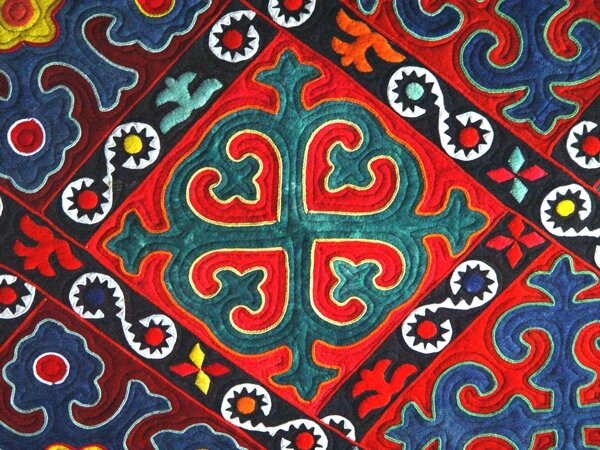
For example, the fisticuffs that broke out in the parliament has led to a rapprochement and exchange of Kalpaks, (the traditional white felt hats worn by the Kyrgyz), an(other) investigation and discovery of weapons in the parliament building … even if one of the participants is threatening to sue the other, at least the dispute seems to have been localized and threats to the coalition have receded.
Another threat to the coalition, the accusations against the Vice Prime Minister, has also been defused by his application for a “temporary resignation” whilst an(other) investigation into them is held, despite the fact that no-one really knows what a “temporary resignation” means. Some members of Parliament had already suggested that he be removed from office but his letter spiked their guns.
This has, however, brought about the situation where a number of opposition politicians from the Ar Namys party have decided to support the government in parliament. It has led to speculation that the leader of this party, Keliks Kulov, could be appointed Deputy Prime Minister.
A lot of Government attention has been directed towards the question of joining Russia, Kazakhstan and Belorussia in the Customs Union. The government, under Prime Minister Atambaev, seems to have taken a decision in principle to apply for membership, and commissions have been established to examine the issue and the necessary processes. There is some confusion over how this will affect Kyrgyzstan’s business environment, especially as we are members of the World Trade Organization, (WTO), and it looks as if Kyrgyzstan may decide to withdraw from this organization to join its former Soviet neighbours in the new body – especially as Russia seems to have decided not to join the WTO. Some people, however, including the Prime Minister, seem to think that Kyrgyzstan may be able to continue being members of both organizations. Interestingly, it is reported that Russia is ready to pay the one and a half billion dollars of compensation to third countries that it is estimated this will involve. It is estimated by some officials that not joining the Customs Union could cost Kyrgyzstan something like two billion dollars a year in the loss of traditional its traditional markets in these countries. Concern exists, however, over the future of trade with our other large neighbor and trading partner, China, and the fate of the Dordoi and Kara-Suu markets which basically live off the trade in the sale, (re-export), of Chinese goods to Kazakhstan and Uzbekistan.
There was an interesting situation at the beginning of the week. Apparently, several of the services operated by Google were unavailable for a while. The blame was laid on the Kazakhs who had introduced restrictions on a number of websites. KyrgyzTelecom engineers worked to restore access to subscribers.
Another earthquake hit the country during the week – this one exceeded six on the Richter scale, or whatever scale is used these days. The epicenter was in the Chon Doro village in the Naryn oblast, just over ninety kilometers South East of Bishkek, but I have to admit that I didn’t feel it. Over three hundred building were damaged but, fortunately, as far as I am aware, no casualties.
During the week I went to a reception held by one of the mining companies. The board of directors was in Kyrgyzstan on a visit and had decided to hold a social event to meet with a number of businessmen and other local people. The Chairman explained that had been operating in the country for some time and were now in a position to start production at a gold mine for which the exploration stage has been completed. Finance for the project was now in place, (about USD100 million), and a share had been allocated to the government. However, they were still having problems which were preventing them from doing so and facing opposition from some of the local population. They had tried to meet the apprehensions expressed over ecological and other issues and now hoped that the remaining issues could be addressed and sorted out so that they could finally begin to generate income, (for the company and the shareholders to be sure, but also for the budget in terms of taxes and royalty payments and for the local population who would benefit either directly by taking jobs in the plant or indirectly by providing goods and services). Whilst they were prevented from operating the mine, everyone was a loser, but once the mine was working, then benefits would be felt far and wide. Bearing in mind that despite the vast potential in the country, there are only two gold mines operating at the moment, (Kumtor and Makmal), one of which is so important to the economy of the country that official economic statistics are quoted in two forms (with and without the contribution made by the gold mine) and the other is apparently almost exhausted, it seems a great pity that an enterprise which is so close to being finally implemented is being hampered from finally being implemented.
We have had our first tourists of the season and, fortunately, everything went well. They were blessed with fine weather, but it has now turned overcast and a little chilly and the temperature has dropped from the mid-20’s to just 14. The place is really beginning to feel like Spring, with flowers and shrubs in bloom. The Daffodils and Tulips are in bloom and it is about time for the Aigul flower to blossom. The Aigul flower, (“Edward’s Pentilium”), is very rare and really grows only in this region.
If they had been here in Bishkek over the weekend, then they might have been able to enjoy the annual Jazz Festival. This has been operating since 2006 and has demonstrated that there is a wide interest in jazz in Kyrgyzstan. The three day event is held in Spring, (during April – although last year it was postponed until later in the year as a result of the revolution), and in previous years has brought together Jazz musicians from as far afield as France, Germany, Hungary, Kazakhstan, Russia, Tajikistan, the United States and Uzbekistan – as well as some of the more well known jazz ensembles from Kyrgyzstan. It is supported by the Swiss Cooperation Office in the Kyrgyz Republic, (part of the Swiss Agency for Development and Cooperation – SDC – which has been supporting cultural events in Kyrgyzstan since 1998 – especially through their “Music without Borders” program); and also the embassies of France, Germany and Hungary; the Goethe Institute Almaty and the Ministry of Culture.
Next week also sees a new festival sponsored by the Christensen Fund, in Batken, (in the extreme South West of the country), and Tajikistan – named in honour of the Aigul flower and the Red Tulip – the Tulip is also thought to have originated in this region. I was invited to attend and as I have only been to the Batken oblast once before I was tempted to go … but the flights are not convenient, and then there was the question of getting a Tajik visa, so I decided to give it a miss this year. I’ll probably try to go next year, however, if it is repeated.
I suppose that in next week’s postcard I will have to comment on the royal wedding, although to be honest, I suspect that it will pass me by. The embassy has opened a page for greetings on their website and they are holding a function to mark the occasion up in Almaty, but it looks as if this little corner of the world has not been infected with “royal wedding fever”. That might seem a bit odd as wedding celebrations are a big event here. A very big event, usually. They can cost an arm and a leg and many families go deeply into debt to pay for the magnificent celebrations. So much so that one of the local deputies has proposed a law to set a limit on wedding receptions, to a maximum of 200 people. It seems odd to me that the law can intervene like this in what is, basically, a private matter, and many of his colleagues seem to think that it would be impracticable … but there is a precedent: neighbouring Tajikistan already has imposes such a limit on family celebrations – which is even more stringent in that only one dish can be served. In the Djalal Abad oblast, some authorities have also recently imposed local limits on family celebrations. As well as limiting the number of guests at a wedding, the proposed bill also prohibits or restricts the holding of other events: birthday parties – which can be held in the person’s home; class reunions; celebrations to commemorate decades, twenty years and so on; Valentine’s Day celebrations and so on.
Although I can understanding the reasoning behind the bill, I hate to think for example how much William and Catherine’s nuptials are going to cost the British Royal Family and taxpayers. I can’t help thinking, however, that it is not exactly a good example of “realpolitik” and although one of the sponsors of the bill has apparently said that no-one will be standing at the entrance counting people as they come through the doors, that it is likely to be honoured “more in the breach than in the observance”.
.





 Bishkek
I always enjoy your discursions to the wider-world….and, I hope
that you have not had to exchange your kalpak recently!