“Read Euler, read Euler, he is our master in all things,”
For someone interested in history, I find it interesting how some dates in the year seem to attract important anniversaries whilst others seem to be bereft of them. Take April 15th, for example, which is not only the anniversary of the sinking of the Titanic, (which struck an iceberg the night before), and the death of Abraham Lincoln, (who was shot in the Ford Theater the night before), it’s also the birthday of two of my heroes: Leonardo da Vinci, (1452) and Leonhard Euler, (1707).
Most people will know the stories of the sinking of the Titanic and the assassination of Abraham Lincoln and have some idea of who Leonardo da Vinci was. Leonhard Euler, however, will probably be a closed book to most and I suspect that few people will have any idea of how to pronounce his name.
I may be wrong, of course, because schoolchildren learn Euler’s formula (V − E + F = 2, connecting the number of vertices, edges, and faces of a convex polyhedron – for example a cube has eight corners, twelve edges and six faces: 8 – 12 + 6 = 2), in mathematics classes and his solution for the famous Konigsberg bridge problem, (where seven bridges connect two islands and the two banks of a river, and the problem being to decide whether it is possible to follow a path that crosses each bridge exactly once and returns to the starting point – it isn’t and Euler developed the proof to show this is so).
He was born in Switzerland and was a great mathematician – one of the most prolific mathematicians of all time. He made important discoveries in fields as diverse as acoustics, algebra, artillery, astronomy, calculus, finance, fluid dynamics, geometry, graph theory, mechanics, navigation, number theory, optics, and probability. Amongst his greatest discovery was the classic identity :
 ,
,
which unites the five great mathematical constants. He was also responsible for the introduction of much of modern mathematical terminology and notation.
He spent a lot of his career in the Russian court of Peter the Great and Catherine the Great. In fact, his biography is littered with names of famous people, especially mathematicians, philosophers and other literati, such as Bernoulli, Laplace, Mersenne, Voltaire, …. My favourite story about him was the first one I ever came across and involves an encounter with the French philosopher Diderot, who was visiting St Petersburg and had been invited to the court of Catherine the Great.
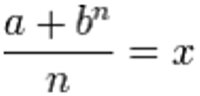
Diderot was a self-proclaimed rationalist and atheist, whereas Euler was a devout Christian and believed in the efficacy of the Bible. The Russian court, of course, was Orthodox and the Empress was alarmed that the philosopher’s arguments for atheism were influencing members of her court. Euler was asked to confront the Frenchman and as a result Diderot was informed that a learned mathematician had produced a proof of the existence of God: he agreed to view the proof as it was presented in court. Euler appeared, advanced toward Diderot, and in a tone of perfect conviction announced, “Sir,
 ,
,
hence God exists—reply!“, and then sat down. According to the story, Diderot stood dumbstruck as peals of laughter erupted from the court. Embarrassed, he asked to leave Russia, a request that was graciously granted.
I came across an account of the incident in a book on the history of mathematics. The author was quoting it as an example of how important it was to have an enquiring mind which asked questions. He pointed out that the notation, with which we are now only too familiar, was at that time new and unfamiliar. Diderot, he said, was flummoxed by the new language and instead of asking for an explanation, allowed himself to be confounded.
As I read the story for the first time, I remembered a similar situation that had confronted me when I had just sat my O-levels, (the 16+ school leaving examination), and saw an A-level Maths paper, (the 18+, University entrance examination), for the first time. It didn’t look at all like a Maths paper that I was used to. There were all sorts of symbols that I had never encountered before, terms that meant nothing to me. Like Diderot, I felt a sense of shock and disorientation.
Fortunately, I wasn’t under the same pressures of time as Diderot. He had to respond immediately, and in the face of this incomprehensible statement he is alleged to have frozen and panicked. I, however, realized that I wasn’t supposed to know this yet … it would be two more years before I had to answer questions like these, and in the meantime I would learn the topics and, hopefully, be prepared to answer them.
If only Diderot had asked for an explanation, then Euler would have had to say something like:
“Take three quantities and call them a, b and n. multiply the second quantity by itself n times, add the first quantity, a, and divide the result by the third quantity, n. Call the result x.”
Diderot would have then been justified in asking what this had to do with God, and why Euler considered that it constituted a proof.
In the face of such questioning, it would have been Euler’s turn to be embarrassed, flummoxed and confounded … although, I daresay that he would have had a suitable strategy planned for meeting with such a challenge.
Unfortunately, this story is almost certainly untrue. Diderot was by no means a mathematical ignoramus and had published mathematical treatises of his own. It does, however, make for a good story, and one with a message: When confronted with something you don’t understand … Ask for an explanation! You might be surprised by the result and discover that things are not what they seem to be.
It’s a lesson I have always tried to follow.
.
The quotation, “Read Euler, read Euler, he is our master in all things,” comes from another great Mathematician, Laplace.
.







 Bishkek