Lessons from history – The Titanic
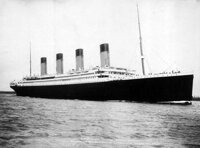
At 11:40pm on April 14th, 1912, the RMS Titanic hit an iceberg in the waters of the North Atlantic, whilst on her maiden voyage from Southampton to New York. Two hours and forty minutes later, she sank and 1517 people lost their lives. Less than a third of the people on board, (706 out of a total of 2223), survived. It was one of the worst maritime disasters in history.
The story of that night has been reconstructed several times, for example in books and films, (perhaps, most notably in “A Night to Remember” in 1958 and James Cameron’s 1997 epic, “Titanic”), but also before Boards of Enquiry on different sides of the Atlantic.
You might well wonder how I can how I can dedicate a Postcard from Bishkek, (the capital of landlocked Kyrgyzstan), to a maritime disaster. Kyrgyzstan would seem to have little connection with the world’s largest passenger carrying ship of her time, and/or icebergs. It is true, however, that there was once a hoax post on the internet about the secret construction of a massive ocean going liner in the Kyrgyz shipyards on Lake Issyk Kul, but the closest we have to an iceberg are the rapidly retreating glaciers in the Tien Shan Mountains.
This unhappy anniversary, sprung to my mind, however, as I listened to a podcast from the BBC File on Four programme about Air Crash Investigations. I have always found series like “Air Crash Investigation” and “Seconds from Disaster” on the National Geographic television channel fascinating, if somewhat worrying, even now that I have to watch them in Russian. Of course, they are just TV programmes. They have to fit into a particular time frame and are written to be dramatic to attract and keep the viewers’ attention. However, the meticulous search for clues, analysis, working towards a convincing synthesis of events makes for compelling viewing – even when you know from the outset the final outcome of the incident concerned.
They sometimes show how the teams of investigators run into all sorts of problems. First of all in gathering the data, but then also in terms of having to resist political and other pressures from governments, manufacturers and other pressure groups. The podcast seemed to be more explicit in this respect. Whereas, in the television programmes the investigating teams are the heroes of the story and the storyline might hint at and highlight nefarious actions on the part of some of the players, the podcast featured a number of incidents where the investigating teams, themselves, seemed to be “going nowhere”.
One of the interesting points made in the podcast was that despite all the avenues of investigation, (the design the aircraft; the operating procedures of the airline, maintenance crew, air traffic controllers; the training of personnel; technical or mechanical failure, and so on), there were many cases where fault was determined to lay with the crew.
The podcast asked the poignant questions, “Can we trust the results of such investigations?” and “Do the investigations find the reasons for such crashes?” The answer to both questions seemed to be “No, not always”.
One of the main reasons for holding investigations, of course, is not just to find out what happened and to assign blame, but to use the results and the conclusions drawn in order to prevent a repetition of such an event. The Titanic investigations, for example, produced recommendations about the provision of lifeboat, the operation of wireless communications, the design of ships, the conduct of safety drills and communications with passengers.
As it happens, here in Kyrgyzstan there are a number of investigations taking place … into the events of April 7th, the events in Osh last June, into the Alpha Telecom fiasco, into the fistfight that erupted in the parliament building, into the activities of the Vice Prime Minister, to mention just some of the high profile cases.
The important questions raised by the podcast, (To what extent will we be able to trust the work of the investigating commissions? and the conclusions that are drawn?), are just as important as when addressed to air crash investigations. It is important that the public have confidence in the work of the investigating commissions. For that they need to be able to demonstrate that they are independent, have the power, (the freedom and the courage), to ask questions and get to the bottom of the issues, to be able to resist pressure so as to analyze the data and draw reasoned and justified conclusions, (which not only apportion blame and make suitable recommendations to avoid a recurrence of the situation in the future), and also to publish their results.
Then the powers that be have to have the political will to act upon the results in order to not only punish those at fault and appease the various factions involved, but to implement measures to prevent similar situations occurring in the future.
The investigation may be controversial and the results may not be popular. The American commission into the sinking of the Titanic, for example, came under intense criticism for being “opportunistic” but both it and the one held by the British Board of Trade were able to demonstrate their independence and thoroughness, and thanks to a transparent process were able to draw conclusions and present recommendations which made the ocean going travel better and safer for all concerned.
Let’s hope that the investigations currently underway can demonstrate the same qualities of transparency, thoroughness, fairness, logic and rigour in order to give us confidence in their conclusions and recommendations.
.


 Bishkek