A breeze in Kyrgyz cinema
During the week I cam across a news item headed: “Initiative group translates famous Kyrgyz movies into English“.
According to the article, a group of Kyrgyz citizens living abroad have put together a plan for a Festival of Kyrgyz films, and in preparation for this have already translated several films into English, such as: Gennadiy Bazarov’s “Mother’s Field”, Bolot Shamshiev’s “Shot on the Karash Pass” and “White Steamer”, and Tolomush Okeev’s “The Skies of our Childhood”.
I was not that surprised by the news item in that it’s not the first time we have heard of such plans. On previous occasions the plans fell through due to the difficulty in a sufficient level of sponsorship – running a festival is not a cheap activity. I hope the present initiative has better luck.
Then, the next day, there was another item about five short films being selected to participate at the Fourteenth Winterthur International Short Film Festival, in Switzerland in November, (http://www.kurzfilmtage.ch/). To qualify for the festival the film have to have been made during the last two years and be no more than twenty five minutes long. The selected films are: Sadyk SherNiyaz’s “Ayan“, Akjoltoy Bekbolotov’s “Everything will be fine“, Tynchtykbek Akimaliev’s “Revenge“, Aidos Toktobaev’s “Tour to civilization” and Gulira Urkumbaeva’s “Where you are“. One interesting thing about the announcement was that this is apparently only the “first” selection of Kyrgyz films for the festival … apparently, it was claimed, there are “dozens” of films currently being prepared in order to be submitted to the organizers.
The same day, it was announced that the Kyrgyz film “Sergi“, (“Earrings“), will be screened at the eleventh San Diego Asian Film Festival at the end of October. The Festival (http://www.sdaff.org/) is one of the largest exhibitions of Asian cinema in North America. and includes examples of “narrative” films, documentaries, short films, and animation.
|
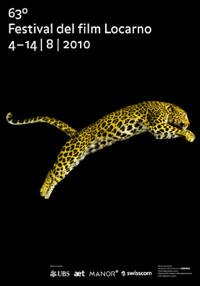
This week also sees the start of the ten day, 63rd Lacarno International Film Festival. One of the five most prestigious film festivals in Europe, it is considered to be a forum for new developments in cinema. The official part of the festival is apparently held in a gigantic open-air cinema which can seat about 10,000 people. This year, the festival is featuring the world premiere of fifty different films.
The “Open Doors” section of the festival highlights films and filmmakers from different regions around the world where film production is still relatively undeveloped. Each year this section concentrates on a different region of the world and in recent years films have been presented from Cuba and Argentina, countries in the Mekong, the Maghreb, South-East Asia (which, in this case, included: Indonesia, Malaysia, Singapore, Thailand), the Near and Middle East (Mashrek), Latin America and China. This year, 2010, they are featuring films that have emerged from Central Asia over the last twenty years.
There will be showings of twelve films and representing Kyrgyzstan will be Beshkempir, Saratan and “My Brother, Silk Road“, (which was co-produced with Lazalhstan’s “Firm Kino”).
As part of the Open Doors section, (which is supported by the Swiss Agency for Development and Cooperation), directors and producers from the region participate in a workshopthat aims to help them find co-production partners, particularly from Europe, to help them complete their films. At the end of the workshop, several prizes are awarded and two grants of 50,000 Swiss Francs, (one for development, one for production), are awarded, along with another prize of 10,000 Euros, (offered by the Centre National de la Cinématographie), which goes to support a first feature film project which is currently in development. The list of previous prizewinners includes several Kyrgyz filmmakers.
Generally, Kyrgyz films are not “blockbusters” – they are known more their “arty” nature, atmospherics and allegorical features rather than for action or “side splitting” humour … but there are a number of interesting films that have emerged out of Kyrgyzstan.
Earlier this year we heard of the launch of a collection on DVD called: “The Second Breeze of Kyrgyz Cinema” which brought together eleven films, (including seven short films and four full length feature films), on seven discs. That wasn’t a cheap endeavor, either, but for this project the Cinema Development Fund, (an independent, non-profit organization), was able to attract financial support from the Regional Arts and Culture Programme in Central Asia, a project administered by the Swiss Co-operation Office in Kyrgyzstan and, also, with support from the Young Filmmakers Studio, (which was created with support of Goteborg International Film Festival Fund).
- “The rough river, the placid sea”, 61 min, 2004, by Marat Sarulu. A story of three brothers. Having grown up in one home in love and harmony, the three go their own ways. Whilst the eldest tries to maintain tradition, the youngest sells his inheritance and the middle brother denounces both and indulges in long spells of meditation. In the face of the disintegration of the family, each brother tries to find his own path to reconciliation and reunification.
- “Beshkempir”, 78 min, 1998, by Aktan Arim Kubat (Aktan Abdikalikov). It was his first feature film and has been hailed as “a worldwide success”. One of a sequence of three films which have autobiographical elements. The central character, Beshkempir, (played by the director’s son Mirlan) undergoes an identity crisis at the age of 13 when he learns that he is adopted. Although he has good relationships with his adopted family and friends, the discovery changes his life dramatically. Filmed mainly in black and white with some colour sequences.
- “Unknown route”, 89 min, 2008, by Temir Birnazarov. The film explores the relationships between passengers on an old bus, traveling through thick fog and without lights, in an allegory for the country and its people in the period following the collapse of the Soviet Union – a time of crisis, both economic and moral.
- “Boz Salkin”, 85 min, 2007, by Ernest Abdyjaparov. A film about the traditional custom of Ala Kachuu – “bride stealing”. The film addresses the question of whether the practice can defended in this day and age, even if the couple end up living “happily ever after”. The disturbing tale that it tells explores a variety of themes includsing: family loyalty, deception, betrayal and love.
- “Aidai”, 29 min, 2009, by Erkin Rispaev. This film explores how a young couple enter adult life and how the adult world deals with them … a film about relationships, “first love”, (full of sincerity and openness), naivety, dreams and aspirations and the search for beauty.
- “Bus Stop”, 27 min, 2000, by Ernest Abyjaparov and Aktan Arim Kubat. Shooting for this film began in 1995, without any financial backing, and had to be abandoned for two years. Four strangers, (a boy, a man, a woman, and an elderly man), wait for a bus, (that never arrives), at a bus stop located close to a major, busy highway intersection. Shot exclusively in a stationary long-shot, the four characters gradually emerge as a model of a nuclear family. The old man sits on the bench and plays with his musical watch, the middle aged man fidgets in his place and the young boy keeps kicking a can. Then the woman arrives. A singing drunk bothers her. The middle-aged man protects her and makes her acquaintance. The drunk throws the old man’s watch into the snow-covered fields. Then he gets beaten up, begins to sob. The boy finds the watch. The woman consoles the drunk who is finally “integrated into the family”.
- “The border”, 19 min, 2006, by Marat Alikulov. Four labour migrants from Kyrgyzstan accompany the body of their recently deceased colleague back home from Kazakhstan when a dispute with Kazakh border guards forces them to turn back but, thanks to the intervention of a friendly Kazakh truck driver, they are finally able to deliver their friend’s body for burial.
- “Everything is OK”, 16 min, 2007, by Akjol Bekbolotov. A film about the life of homeless children inj the heart of Bishkek. In spite of the hardships of street life, the film tells how some of the children manage to maintain qualities such as friendship, devotion and responsibility.
- “Toptash”, 16 min, 2007, by Nargiza Mamatkulova. A sick young girl from a broken home loses her self-confidence and the will to live, sets out to search for her father and travels to his home village. Instead of her father, she discovers her grandfather and begins to find reasons to live again..
- “Cattle Camp”, 34 min, 2009, by Alijan Nasyrov. This film shows the life of a Kyrgyz family living in the high mountains, far from the “delights” of civilization. In a place where inhabited by wolves and yaks, the family live in harmony with nature in a spirit of self sufficiency.
- “Among Clouds”, 11 min, 2006, Stambulbek Mambetaliev. This film tells the story of a shepherd and his family, living high in the mountains where they tend their animals all year round, through summer and winter.
All the eleven films were made in Kyrgyzstan, (albeit that some of them had financial support from abroad), in the period since Independence in 1991. Some of the films in the collection were dubbed into English whilst others had subtitles; some were in black and white whilst others were shot in full colour. Some have been exhibited in foreign film festivals and won a variety of awards.
At the time, I asked the question, if this is the “second breeze”, what happened to the first one? … is there, or are there plans, for a similar collection of the “first breeze” – those films dating from the Soviet period, including those of Tolomush Okeev, who is probably the best known Kyrgyz director of this period in the West, and the films of Chinghiz Aitmatov’s novels such as “Djamila“, “First Teacher” and “The White Ship“. Apparently, there are some tentative plans but there are also problems. It seems that most of the films are kept in the archives in Moscow and special arrangements need to be made. As well as technical issues and the need for international liaison, there are also copyright issues. Whatever, I wish them luck in the enterprise.
I also commented that there were several notable films missing from the list, although Beshkempir was in the list, Saratan wasn’t but, then again, the collection was only meant to be a sample of the work of talented filmmakers of Kyrgyzstan.
Update (11th August):
After four days of screenings, lectures, and other events, the jury awarded production grants to three films. Unfortunately, Kyrgyzstan was not represented amongst the prizewinners. The top prize of 50,000 Swiss Francs, (USD40,000) went to “Sunny Days” from Kazakhstan, and two smaller prizes went to Uzbekistan’s “Aral” and “Barzagh“.





 Bishkek