Upon my word
I have always been attracted by linguistic quirks, conundrums and puns, such as:
- What’s the longest word in the English language?
- James Joyce’s spelling for the word “fish” as “ghoti” …
- What word rhymes with “orange”?
- Which European capital sounds like multiplying?
- What is the longest word in English which doesn’t contain a vowel?
- What is the longest word in the English language with the letters in alphabetical order?
Following a postcard when I mentioned ISIHAC, (I’m sorry I haven’t a clue – “the antidote to panel games”, which relies heavily on puns – almost as much as on innuendo), one of our staff came and asked me what it was all about. I played her a few excerpts from one episode which were riddled with puns and she left even more confused than ever, muttering something about the inexplicable nature of English humour under her breath. In reply I pointed out that there were a lot of jokes in Russian that I didn’t understand … and many of those are also based on puns.
A pun is a play on words which is often based on different meanings of a word, or similar sounding words. They are usually meant to be humourous but are, often, so excruciatingly awful that some people have claimed that a pun is the “lowest form of wit” … unless, that is, it happens to be one you have uttered.
Actually, I personally think that this is a much more appropriate “definition” for the word “sarcasm” and a better explanation of a “pun” is: “a form of wit to which wise men stoop and fools aspire”. A “bad”, or excruciatingly awful, pun (uttered by “a fool”), is one which elicits a groan of embarrassment whereas a “good” one, (coined by a “wise man”) involves a knowledge and clever usage of the vagaries of the language.
A little later, another member of staff posed an interesting linguistic question: “which word in the English has the most meanings?”
The question took me by surprise … and although I racked my brain, I had to admit defeat, eat humble pie and confess that I couldn’t get the right answer. I even Googled the question and came up with the answer “set” which apparently has over fifty different meanings, but that was obviously wrong as it is well short of the 179 claimed for this particular word. To my chagrin, (Svetlana, our Tour Manager), got it straight away … well, she is a linguist.
Now, both English and Russian are very rich languages, each with their own grammatical formats and rules.
For example, when I first came here, I was asked to explain the English verb “to be”. Some Russian language textbooks claim that there is no equivalent in Russian, but that’s exactly true … there are the verbs “yest” and “beet” which mean “to be”, but they aren’t used in the same way as in English … try thinking about it: I am …, you/we/they are … he/she/it is … When it comes to the past and future tenses, then the verb “beet” does have the forms “bill” and “budet” which are sometimes used as the equivalent of “was” and “were” and of “will” and “shall”.
I confess … I gave up after a few simple examples.
Both English and Russian “borrow” words from other languages. I remember, for example, when I started learning Russian, I would ask my teacher, “What is the Russian word for “xxxx”?” and quite often the reply was the same or, very similar such as “storm” and “shtorm”, “calendar” and “kalendar” or “deficit” and “defitzit”, or would have a slightly different ending: “xxxx-iy” …
There aren’t that many Russian words that have been imported into general use in English, although everyone understands the word “Tsar” and, of course, “vodka”. People are surprised to learn that the word “Bistro” may be derived from the Russian word “beestra” which means “quickly,” and was supposedly picked up during the occupation of Paris in 1815 after the defeat of Napoleon, when Cossacks were supposed to have demanded that food be delivered to their tables “beestra”.
Both English and Russian are “living” languages which adapt and evolve to the ever changing world. The example I also use to demonstrate this is “vulgar” which, apparently, in Elizabethan times simply meant “common”. So referring to someone as “vulgar” simply meant that they were one of the “common people”, an ordinary person, one of “the masses”, one of the “general public”. Think of “the House of Commons” as opposed to the “House of Lords”. In England we might talk about “the man on the Clapham omnibus”, in America they might use the phrase “an ordinary Joe”. Over the course of time, however, the concept of “vulgar” became associated with the less savoury aspects of behaviour of the “common” people. Nowadays, the word “vulgar” has lost its original meaning and whereas someone might take pride in being described as “a common man” they would be offended being described as “a vulgar man”.
Not all words lose their former meanings when adopting a new one, and so the possibility for several possible interpretations exist.
Both English and Russian have words which have several meanings, and the only way to tell which meaning is meant in a particular sentence is to know the context. For example, in Russian, the word “dom” can mean either “house”, (a building), or “home”, (a place where you live – for however a short period of time, such as a hotel room).
Andrei, (one of the Baseball Kids), often comes and asks me what a word or phrase in English means. He picks the words/phrases up from songs he plays on his mp3 player. To be honest, sometimes his pronunciation or accent makes it difficult for me to work out exactly what it is that he is actually asking me. On other occasions I have difficulty because the words/phrases are idioms, or slang, or are from derived from songs, basically poetry set to music, and as such are not exactly examples of good English … something like “bruvva” or “Unbreak my heart”. On other occasions however, I have to ask for a context … because there are several possible interpretations or explanations. Take for example the word, “cool” – is it referring to temperature or is it a value judgment … ?
Having been forced to eat humble pie and admit defeat, I got my own back in the end … I asked: “Which word in Russian has the most meanings? … and in Kyrgyz?”
So far, no-one has been able to give me an answer.
For the record:
- The longest word in the English language?: “Smiles” … because there is a mile between the first and last letters … OK, that’s worth a groan.
- “ghoti” = fish?
gh … as in “Enough”
o … as in “women”
ti … as in “emotion”
- Which word rhymes with “orange”?: Don’t spend too much time on this one … because, apparently, there isn’t one … although I am always tempted by “hinge” and “flange”. I suppose it depends on the accent.
- The European Capital that sounds like multiplying?: Dublin … OK … another groan!
- The longest words in English which doesn’t contain a vowel?: Rhythm … this is a bit of a cheat because the letter “y” can be either a vowel or a consonant … the linguists tell me that it is all to do with if the throat of mouth is “closed” when uttering the sound.
- The longest word in English with the letters in alphabetical order?: Almost.
- The answer to the question about the English word with the most meanings is, apparently, “run” … see http://rwdaily.runnersworld.com/2010/07/the-most-meaningful-word.html which notes that:
- “According to the big fat Webster’s Encyclopedic Unabridged Dictionary, the word “run” has 179 meanings. That’s way more than “take” (124 meanings), “break” (122), “turn” (122), “go” (98), “play” (94), and every other word.”
- There are also a wide variety of puns and examples of different uses of the word.


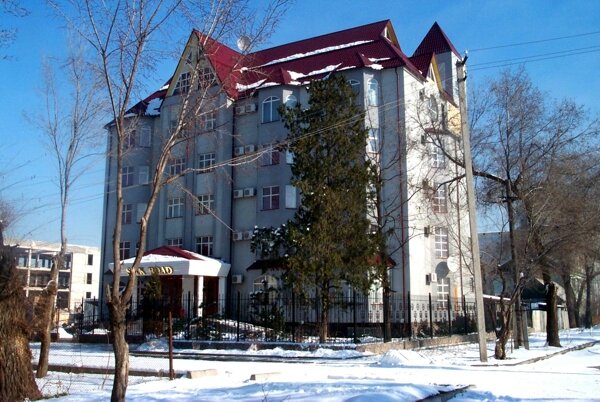





 Bishkek