Is it News?

Confused? – Is that news?
Last week I wrote a postcard about the UNESCO’s List of Intangible Cultural Heritage of Humanity …
This had been prompted by the news broke that, the ninth session of UNESCO’s Intergovernmental Committee for the Safeguarding of the Intangible Cultural Heritage had made a decision to inscribe the Kazakh and Kyrgyz yurts into the list that they administer.
This was indeed news – welcome recognition of the traditional skills that have played a considerable role in the people that have inhabited the steppes and the mountains of Central Asia.
In that postcard I mentioned that there were already several items from Kyrgyzstan on the list, (for example: The Art of Akyns, Kyrgyz epic tellers – inscribed in 2008; Ala Kiyiz and Shyrdaks, the art of traditional Kyrgyz felt carpets – inscribed in 2012; the Nooruz festival – a combined application from several of the Central Asian states – inscribed in 2009; and the Kyrgyz epic trilogy Manas, Semetei, and Seitek - inscribed in 2013).
So, imagine my surprise when I was scanning the news yesterday and came across articles on several news sites reporting that The “Manas” Epic made the list of Intangible Heritage of Humanity.
“Hey!” I thought to myself, “that’s not News, that happened last year. It’s Old News!”
I suppose that there was justification for its inclusion because the reporters were disseminating information that had been released by the press service of the Parliament.
Now, I have to be honest and say that I haven’t seen the press release, announcement or whatever that prompted these reports, so I don’t know why, or when, the Parliament’s press service decided to release the “news”. (Although I am tempted, I don’t really think that they are really a year behind the times – I realize that they are busy but I am not sure that they are that overworked.) Perhaps it was something to do with the fact that, as the reports all seemed to say, a certificate had been received commemorating the inclusion of the trilogy into the list.
However, it got me thinking … what constitutes News?
As it happens, it’s a topic that has, (ironically), been in the news quite a lot recently … with politicians claiming that journalists must bear a fair share of the blame for the ills of society – that they tarnish the image of the country by reporting “bad news” and should instead concentrate on “celebrating” the country. There have been cases of “censorship” – web sites being blocked or newspapers facing some form of pressure resulting from stories that they have run; journalists that have been attacked – and even murdered – not simply in the course of doing their job but because of stories that they have worked on and published.
My first reaction of “That’s Old News!”, seems to concentrate on the temporal factor – the implication being that it’s not news because it’s not about something that has happened recently.
Perhaps, however, this is an example of childlike niaivity – take the outbreak of World War I, for example. Is this News? No, not really, it happened a century ago. So why has it received the amount of coverage that it has this year? Because of the anniversary. The events commemorating the outbreak are recent … and therefore newsworthy.
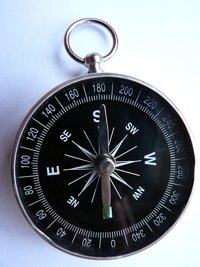
Compass
I remember that when I was at school, (and really, quite young and impressionable – and easily susceptible to childish niavity), a teacher once told the class that “News” came from all corners of the globe: North, South, East and West … and that was where the word came from – the four points of the compass.
Although I could see the logic, there seemed to be something not quite right. Now, in retrospect, I think it is fair to say that he was probably simply trying to make a point and widen our horizons – to think beyond ourselves and our immediate surroundings.
I wasn’t happy, however, with this as an explanation of the origins of the word … and felt that it was simply a plural noun – basically standing for “new information”. This unhappiness was confirmed when I started learning French, (where nouvelles translates as both both news and new), and more so later when I started learning Russian, (where novosity is “News” and noviy is new).
This suggests that essential element of News is that it is “new information” – as in “That’s News to me!” – at least, to someone in the target audience.
In that sense – the articles about Manas being included in the list of Mankind’s Intangible Cultural Heritage might well have been News … at least to some people.
On the other hand, a lot of what we see in the News, in the newspapers, on the radio (OK, OK … I know … we don’t “see” news on the radio!), on television or the internet … or whatever … is not “news” as such but “comment” and “opinion”, (which seems to belong to a different sort of platform – say a discussion or debate), or background information, (which might be better suited to documentaries or magazines).
Recently, for example, we have seen a vast amount of coverage in the media about the First World War – because of the centenary of the start of the conflict … but,is it news? The ceremonies to commemorate the anniversary seems to qualify as news … as does the discovery of a large of collection of previously unknown photographs and letters in someone’s attic, but does a feature on one of the survivors of the Siege of Leningrad count as News?
I suspect that, on it’s own and in itself, no – it’s not … but if the purpose of the story was to highlight the fate of such victims of war in today’s contemporary Kyrgyzstan – then it might be.
Please don’t misunderstand me … it was interesting … and probably worthy of wider dissemination … but as a documentary feature rather than News.
It is easy to think of this as another example of childlike naivity; thinking that news is just about “facts”, (whatever they are; after all, a lot depends on the perception and interpretation – what one person sees as News another can see as Propaganda), and events.
People try to manipulate the news in order to further their own agenda …
Now, I actually have no problem with that – so long as it is clear. If you want to persuade people then present your information, your arguments and let them read/hear what you have to say, consider it and then decide for themselves.
It was only when I went on a marketing course, (many years ago now …), that I realized that many of the stories I saw in the media were simply rewrites of press releases – and were often simply copied, verbatim.
Is that news? … or propaganda?
As a result, I find it annoying whenever I see an “advertising feature” in newspapers and magazines – or in programmes on radio and television – especially when they are not labelled as such- so that the reader is informed as to the sort of article they are reading / listening to / watching.
For example: a feature on a business – say a Hotel – included in a Special Supplement – say, on a country like Kyrgyzstan. Has this article been included because the reporter wants to highlight something in particular – or is it the result of a special arrangement? – have the paid for it, either in cash (sponsorship?), or in kind, (perhaps providing accommodation for the journalist during their visit)?
Is it news, a recommendation? … or an advert?
Hence, I prefer to see websites, newspapers and programmes with clearly defined sections – Events; Analysis; Comment – Editorials and Op-Ed (Opinion) columns; Analysis – giving background information; Vox Pop – opinion polls and reporting what the punlic is thinking and saying; Features … and so on.
It makes it easier to search and scan articles.
However, it also needs clear definitions as to what should go in each section … just as you wouldn’t expect to find a story about Kyrgyzstan in the Africa section, you shouldn’t find a Opinion article in the the News section.
It also requires an educated and sophisticated audience – ready to question what they see and hear and prepared to think and make up their minds for themselves … and not simply accept that “If it’s in the media – it must be true”.

Good advice (Credit: axiomamnesia.com)


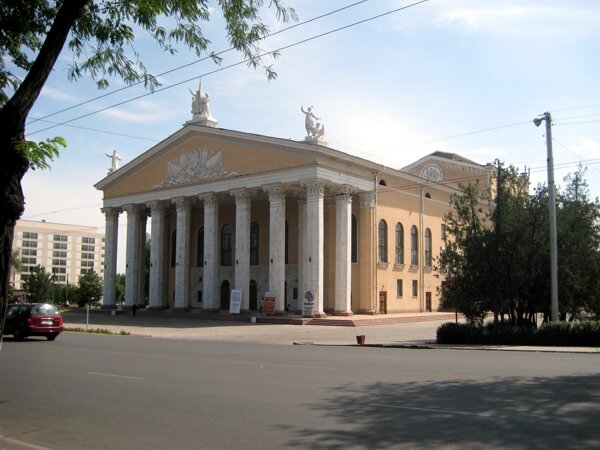
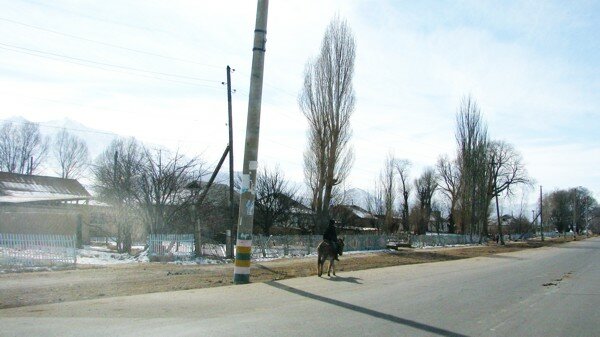
 Bishkek