Biometric
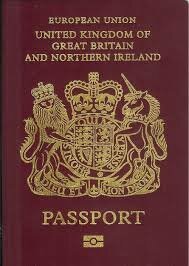
New style, ‘Biometric’ Passport
A couple of years ago, my passport expired and I had to apply for a new one. It seems amusing now but, as the time drew near, it caused me a certain amount of anxiety.
Over the years that I have been here in Bishkek, I have to apply for a new passport three times … and each time the process has been different.
The first was issued by the embassy in Almaty, (in Kazakhstan … there wasn’t an embassy here in Bishkek at that time), and it was a fairly painless process. Fill in the form, add the passport photographs, (duly endorsed by the honorary consul here in Bishkek), and send the documents together with the fee up to the embassy and a couple of weeks later the new passport was in my hands having been duly dispatched to me by courier.
By the time I had to apply for my next new passport, the system had changed was a bit more complex as the embassy had moved to Astana in Kazakhstan, but that wasn’t all … it was no longer responsible for issuing new passports; that job had been taken over by an Agency … and the office that would deal with my application was based in Germany. Actually, the application process in itself wasn’t that much different … What I needed to do was fill in the form, add the passport photographs, (duly endorsed by the honorary consul here in Bishkek), and send the documents together with the fee up to the embassy except that the paperwork had to be sent to Germany which meant that it took a little bit longer.
This time, however, I knew that it was going to be different … for example, the Agency had a new name but was now based in London – so that should have made things easier. The problem that had me c0ncerned was that the new passports were “biometric” – with a machine readable chip embedded in the cover containing the all important bio metric data which the machine could use to determine if the person presenting the passport really was me. Exactly what information, wondered: fingerprints?, retina patterns?, DNA profile? … and how was I going to get them that data – would it involve a trip back to London?
Although the prospect of a trip home had some attraction, in the end it wasn’t necessary. What I needed to do was to Fill in the form, add the passport photographs, (duly endorsed by the honorary consul here in Bishkek), and send the documents together with the fee up to the embassy.

Passport photograph sizes
The catch was that the photo had to be of a certain size and a specific standard format … failure to follow the rules would lead to the application being rejected and returned to me.
The picture had to be:
- in colour on plain white photographic paper
- taken against a plain cream or light grey background
- taken within the last month
- clear and in focus
- without any tears or creases
- unmarked on both sides (apart from the one that was countersigned to indicate it really was me)
- without any shadows in the picture
- unaltered by computer software
- show a close-up of my full head and shoulders
- with the image from the crown of the head to the chin between 29 and 34 millimeters high
- showing me
- facing forward and looking straight at the camera
- with my face in clear contrast to the background
- with a neutral expression and the mouth closed
- without anything covering my face
- without a head covering (unless it was worn for religious or medical reasons … which didn’t apply for me)
- with my eyes open, visible and free from any reflection or glare from glasses
- with the eyes not covered by sunglasses, tinted glasses, glasses frames or hair
- without any ‘red eye’ effect
The rules are so specific because it can then used with special face recognition software.
This all provided me with a little problem … I went off to a studio and had the photos taken … and everything was ready to be sent off when, for some reason – I don’t know why, I thought “Maybe I’d better check the photos … ” and I discovered that it was a little, (just a little), too small – which meant a mad dash to the studio to have a second set taken.
I also had to provide a signature in a special space on the form … then the picture and the signature would then be scanned and fed into a computer for printing in the passport.
As it happens, Kyrgyzstan has decided that it is going to introduce Biometric passports.
At the moment, here in Kyrgyzstan, passports are identity documents which are issued to people at the age of 16 and are valid for five years after which they have to renewed. These are often referred to as National Passports, or Internal Passports and take the form of a credit card sized plastic card bearing the person’s basic data (in Russian and Kyrgyz in the Cyrillic alphabet) and a photograph.
In theory, it is a compulsory document – although, apparently, there are many people who don’t have one … maybe they have lost theirs, or it expired and they never renewed it. It is sometimes given as a pledge, (for example, when taking a loan), which has not been redeemed. Apparently there are some youths who, having reached their sixteenth birthday don’t apply for a passport and drop out of the system … if they haven’t already – for example if they didn’t have a birth certificate.
Although it is called an Internal Passport, it is currently accepted for entry to a number of other countries. It has machine readable text (using the Latin alphabet) although, at the moment it doesn’t contain biometric data.
Then there is the International Passport, which takes the familiar format of a booklet with the personal data printed one page with the photograph … and lots of blank pages for visas and other endorsements. This is necessary as a travel document to most other countries
Not everyone travels abroad, so, as in the West, it’s not compulosry and people apply for one if they decide they want to travel.
That’s one of the reasons why it has been decided to introduce this new passports … international travel … as it is becoming a requirement to have such a document for travel to more and more countries around the world – in Europe, America and, as from 2015 – Saudi Arabia in order to participate in the Hajj.
It’s been decided to hold and encode fingerprints, a digital photograph and a scan of the handwritten signature.
These new passports will also voluntary – just like the International passports.
However … isn’t there always a “however” … the decision to introduce the new passports has been coupled with the ideas to create a National Population Database. It is often said that the country doesn’t actually know how many people there are … or who they are. The creation of such a database is thought to be a useful tool to assist in producing demographic statistics and the conduct of elections.
There was some controversy when one of the vice Prime Ministers made comments about the need to have a biometric passport in order to cast a vote … but that was later denied … despite the fact that the Director of the German firm responsible for providing the equipment explicitly said that this was one of the advantages of the new system,
Anyway, after discussions over several years that seemed to be leading nowhere, a decision was finally taken to implement the proposal … and a tender was held for the purchase of the necessary equipment.
That proved to be an interesting experience with a certain amount of controversy over the process … but eventually a decision was made and arrangements set in place for the collection of data from the population … (free of charge).
The campaign started in August, with the Prime Minister being one of the first to register his data. At first there were some complaints about the quality of the images of fingerprints – but that seems to have been sorted out.
At least they won’t have problems with the photographs because staff at the data collection points will take them, so they should be of the right size and format.
Every now and again statistics of the number of people who have passed biometric registration are released. At first it was quite slow, but it’s been picking up and it has now been announced that over a million people have registered their data. Indeed, although it is not compulsory, it is hoped that by the end of the year something like 70% of the population will have done so.
Needless to say, as elsewhere in the world, the process has not been universally welcomed … there has been some concern about the security of the data and the purposes to which it might be put … but it seems that most people are coming to terms with the idea.





 Bishkek