Techosmotre

The blue ‘three triangles’ logo which, in the UK, is displayed to indicate places that had been approved as an MOT Testing Station.
A few years ago I was having a discussion with a number of colleagues who worked in tourism and the conversation roamed over many different topics.
At one point, the discussion turned to bureaucracy – being “overly concerned with procedure at the expense of efficiency or common sense” … and one of the participants cited a couple of examples of what he considered to be procedures that not only inefficient and contrary to common sense, but totally unnecessary. I think that I surprised him, (and the representatives of the government who were present), by disagreeing with him.
One of those procedures was Techosmotre - the mandatory annual technical inspection of vehicle – and it is currently in the news … and all because of the Customs Union.
For the record, the compulsory inspection of vehicles to ensure they met the technical requirements for safe operation on the roads was introduced in Britain in 1960. At the time the system was administered by the Ministry of Transport and so it was called the MOT Test – a name which has survived even though the Ministry no longer exists – currently Britain has a Department of Transport.
The idea was to inspect older vehicles to confirm their roadworthiness … and the test was applied to vehicles over 10 years old. New vehicles, it was presumed,would be in a good condition as they were fresh from the factory, but the number of vehicles failing to meet the standards laid down for the test meant that the age limit was quickly reduced to seven years … and then just three years.
Originally the inspection was limited to basic systems such as the brakes, lights and steering, but over the years the list of items to be tested has increased with some covering environmental issues such as the emissions.
I remember for example, being told, the last time that I was back in the UK, (back in 2005 (!)), that the test had become much more stringent and many of the things that had earlier been taken as “minor inconveniences” were now regarded as “defects” and were considered grounds for failing the test … and had to be fixed before the vehicle was allowed back on the road. I understand that two years ago (2012) the system was subject to a comprehensive overhaul and yet even more items are subject to inspection and checking.
A list of the four stages in the test and the things that are subject to inspection can be found on the government’s information website for Northern Ireland. Failing to satisfy the criteria in just one of these areas would mean having to undertake repair work and retake the test (paying yet another fee).
The Techosmotre, (the local equivalent of the MOT Test), had been introduced in the days of the Soviet Union. It was compulsory that all vehicles over a certain age should have all their major systems inspected annually, in order to make sure that they were in proper working order.
A stamp to indicate that the vehicle had passed the requisite tests and met all the prescribed standards, was placed on the vehicle’s Tech Passport, (an identity document – or “log book” – recording the crucial information such as the make and model, colour, registration number, serial numbers and, of course, the name and address of the owner).
Whenever the GAI, (the traffic police), stopped a vehicle and asked the driver for their “documents”, this stamp was one of the things they would search for. If it wasn’t there, or was out of date and hadn’t been renewed, that meant having to pay a fine or having the vehicle impounded.
Unfortunately, many car owners couldn’t be bothered and chose to “play the system”, simply taking their documents to the testing station, paying the fee (and a little something extra) in order to get the stamp. Hence, it was often that am old and battered car was seen on the road, which seemed to defy any concept of safety.
Now, not every country or local jurisdiction requires such inspection – although most do – and a few years ago Kyrgyzstan decided to cancel the obligatory inspections … well, that is, for private vehicles – commercial vehicles and “passenger service vehicles” still had to undergo a test.
One of the reasons for abandoning the system was the fact that it was being abused in that in many cases inspectors might not even see the vehicles but were simply placing stamps on documents in exchange for a little consideration.
Not everyone was happy about the decision and every now and again some politician or official would decry the sorry state of affairs that currently exist.
Well, as part of the accession process to join the Customs Union, the current law “On Traffic” has to be amended and some deputies decided to add the provision that vehicles over seven years old would have to undergo an annual inspection once again.
As a result the whole issue has come back into the public debate and battle lines are being drawn up. There have been a series of articles in Bishkek’s largest circulation newspaper, Vecherniye Bishkek where people have been able to state their opinion, (for example here and here, here and here).
On one side there are those who argue about road safety and the incredible loss of life and damage cause by Road Traffic Accidents whilst opponents of the measure talk about the costs involved, the shortcomings of the earlier system and the potential for corruption.
Some people seem to be of the opinion that any “right minded person” would, of course, look after and maintain their vehicle … although the early experience in the UK suggests that this is not always the case – things do get overlooked or “put off until later”.
Personally, I am not too happy about bureaucracy … but I do accept that some regulation is necessary it does seem sensible to have a system of checking that vehicles are fit for purpose and roadworthy. After all, even if they are an extremely valuable and important part of modern day life, a vehicle is a potential “killing machine”. There are many technical aspects which can
The presence of an annual test does not guarantee that a vehicle will be “safe” for a whole year, but it is a “snapshot” and should be a sign that at that particular time the brakes, lights and horn , steering,shock absorbers, seat belts, windows and mirrors, body and the overall condition, etc. … are in working order and satisfy the standards laid down in the legislation for safe operation.
The problem, it seems to me, is not with the test itself – whether it is needed or not, what it should cover, and so on – but the system of operating the inspections, which needs to be controlled and monitored to ensure that it works properly and is effective.
Although it is possible to see the system as a “milk cow” involving vast sums of money it is also a vital tool in helping to ensure the safety of people on the roads – drivers, passengers, and even pedestrians and bystanders. Given that assumption, the question shouldn’t be “Do we need such a system?” but rather, “How do we make the system work?”
That seems to be a question of the chelovekiskiy factor - the Human Factor … in other words: it’s down to the individuals, be they drivers, inspectors, traffic police … or whoever. They all need to understand the importance and nature of the inspections, the details of how it operates, their obligations and responsibilities and the consequences of failing to meet the standards required of them.
And the system needs to be monitored, supervised, regulated, managed and controlled so that it works efficiently and effectively.
Although in some countries, for example, the inspections are administered by a government body – whilst in others it is “outsourced” to the private sector, where suitably qualified and experienced engineers are authorized to conduct the inspections. State or Private, the inspectors are licensed, monitored and costs for the service are strictly controlled.


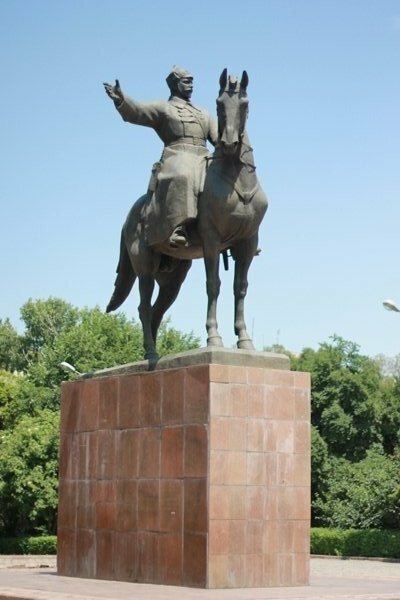


 Bishkek