Diversity Day
Today is Diversity Day, although it is is officially known as “The World Day for Cultural Diversity for Dialogue and Development“.
It was established by a resolution of the UN General Assembly in November 2001 with the intention of providing an opportunity “to help communities understand the value of cultural diversity and learn how to live together in harmony”.
Diversity is also seen as important for development - economic growth, intellectual, emotional, moral and spiritual life – hence cultural diversity is an asset that is indispensable for poverty reduction and the achievement of sustainable development.
Here in Kyrgyzstan there have been some considerable changes in the country’s demographics. The population increased from 2.1 million, (according to the 1959 census), to about four and a half million at the time of Independence in 1991, (that’s an estimate – the 1989 census recorded four and a quarter million), and about 4.8 million in the the census just before the end of the century. Twenty years of independence saw the population grow by about a million – even accounting for the large numbers of people that decided to leave the country
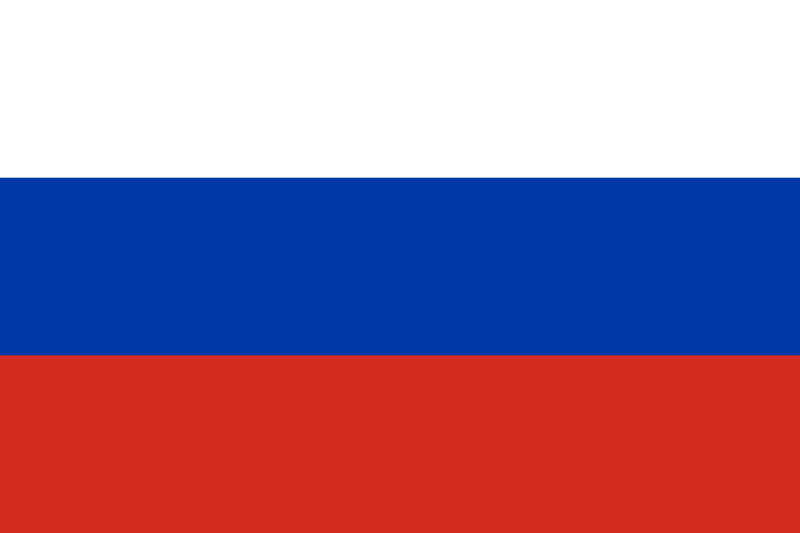
When I first came to here back in 1995, I was told that it was a multi-cultural, multi-ethnic society, with over 80 different nationalities represented in the population, In the most recent census reports, however, (2009), there were fewer listed – just 31 – although there was also the catchall “Other” category. In that census, the largest ethnic group in tre country were the Kyrgyz, which comprise 70.9% of the population. Others were the Russians, (at 9.0%), who are concentrated in the northern part of the country; the Uzbeks, (at 14.5%), mainly living in the south; Dungans, a Chinese group (at 1.9%); Uighurs (at 1.1%); Tajiks, (at 1.1%); Kazakhs (at 0.7%) and Ukrainians (at 0.5%), and that all encompassing “others” (at 1.7%).
In fact, Kyrgyzstan has undergone a pronounced change in the ethnic composition of the population since independence. The numbers of ethnic Kyrgyz, for example, increased from about half of the overall population in the 1979 census, to almost three quarters in the latest, and the percentage of European ethnic groups, (such as the Russians, Ukrainians and Germans), dropped from 35% to about 10%.
The ethnic mix in the country is the result of several historical factors – from the days of the Silk Road; migrations of peoples with whole tribes moving across Asia – not forgetting the forced migrations in the Soviet period, especially during the Second World War; military conquests and “Colonization” as one empire or another absorbs the territory.
Perhaps the biggest mix occurs in the Ferghana Valley which is currently divided between three countries: Tajikistan, Uzbekistan and, of course, Kyrgyzstan. Over the years it has been the center of much inter-ethnic conflict, some of it quite violent as in the most recent cases – notably the disturbances of June 2010 and the recent border clashes centering on the enclaves … arising out of housing problems, land rights, and water rights … not forgetting language and social issues and possibly political and religious aspirations.
.
Now, the UK may well be a multi-national, multi-cultural society … and has been ever since prehistoric times when the earliest humns probably crossed the land bridge to Europe, through invasions by the Saxons, the Celtys, the Romans, the Vikings, the Normans, … and so on … the I have to admit, however, that I grew up in a predominantly mono-cultural community. There were very few ethnic minorities represented, for example, in the school I attended … there were a handful of Poles, Czechs and other nationalities – most controversially, perhaps, the Germans – and there were virtually no Blacks or Asians.
I particularly remember the problems in pronouncing the East European names – which was probably the only thing that marked them out as different – they were treated as just another member of the class, albeit with Anglicized nicknames – and, if anything, my school friends who stressed their Scottish or Irish ancestry were often considered more exotic – also the first Chinese Restaurant opening in the town – which was considered the Best in Town and the place to go to in order “to be seen”.
In many respects, my first encounters with different cultures came when I moved to Oxford – which had a variety of different communities … not all of them elitist and/or associated with the University.
My eyes were opened, however, when I moved to North London where I encountered an incredibly wide variety of cultures … European, (French, Spanish, Greek, Turkish … and if I can consider them separately – Cypriot … and Jewish – I include them as European because they were mainly of European descent and I’ll also include Jordanian); Asian, (Chinese, Indian, Pakistani, Sri Lanka), … and also from Africa and the Americas – including the West Indies) … to mention just a few.
.
It seems to me that, on a day like today, it is important to recognize the value and contribution of diversity in society.
Although different groups have their own identity, history and culture, which it is important to celebrate and preserve, each community can bring something of value to the shared experience … enabling us all to learn from one another …
It may appear contradictory, but celebrating our differences can also help to remind us and focus our attention on our common humanity and that which is special in our own identity that is worthy of celebrating in its own right.
We are all people – individuals “precious in the sight of the Lord”, (yes, I am aware that I have taken that phrase out of context … but it seemed an easier and more direct way of making the point than, for example, retelling the story of Peter’s Vision), and equal under the Constitution … and goodness knows how many other international declarations and conventions.
For the record: Peter’s Vision: Acts 10:9-16:
“… the next day, at about midday, as they were on their journey and approaching the city, Peter went up on the roof of a building to pray. He became hungry and wanted something to eat, and while his meal was being prepared, he fell into a trance. He saw the heavens open and something like a large sheet being let down to the earth by its four corners. The sheet contained all kinds of four-footed animals, as well as reptiles and birds. Then a voice told him, “Get up, Peter. Kill and eat.”
“Surely not, Lord!”, Peter replied. “I have never eaten anything impure or unclean.”
The voice spoke to him again saying: “Do not call anything impure that God has made clean.”
This happened three times, before the sheet was taken back to heaven.”



 Bishkek