Tax Day
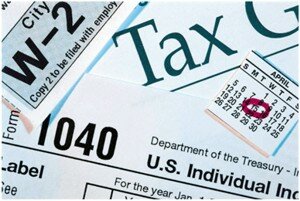
April 15th – Tax Day
In the United States, 15th April is known as Tax Day.
This is the day when tax returns have to be submitted to the Federal government … there are also local “Tax Days” for those states which have a different deadline for the submission of the forms.
For the record: The deadline was originally March 1st, but was later changed to the 15th but since 1955 it has fallen on 15th April. Sometimes there are variations when the date clashes with another holday. For example, when April 15th falls on a Friday – as in 2016 – it coincides with the movable holiday Emancipation Day, so Tax Day falls on Monday the 18th and when April 15th falls on a weekend then the deadline falls on the following Tuesday. For those living outside the United States, (and those in Puerto Rico), there’s a two month extension so they have to submit forms by 15th June.
Different countries have different Tax Days. Here in Kyrgyzstan we have several … March 1st for public officials and April 1st for companies and everyone else.
Well, not quite everyone … not yet. There’s a plan to make tax declarations a universal obligation but its implementation has been postponed in each of the last few years. It’s now planned to be a requirement next year.
Every year there is a publicity campaign in the period leading up to the deadline … and a spate of stories afterwards about the officials who haven’t submitted their forms in time (but I must admit that I haven’t seen anything about them being penalized in any way – but that could just be that the reports have simply passed me by), and an analysis of how much certain high profile officials have earned in the previous year.
Taxes in Kyrgyzstan are set by the Parliament and outlined in the Tax Code … The Tax Code was originally adopted in 1996 but was replaced, after several years of debate, in 2008 and it came into force on 1st January the following year.
The idea behind the new tax code was to develop a fair and reasonable tax system, ease the tax burden on business, simplify tax procedures, encourage saving and investment and the economic development of the country. A number of small “nuisance” taxes were abolished … and a number of measures were introduced to simplify the system of administration – but, to be honest, sometimes it seems that the system is still somewhat complicated. For example, there are several different regimes, (I have written about them before … so I won’t repeat that here), and as well as a general Sales Tax there is also a complicated VAT system.
There’s another day of the year with regard to Tax - Tax Freedom Day - the first day of the year in which a nation has theoretically earned enough income to fund its annual tax burden. In the US, Tax Freedom falls on April 21st this year … apparently that’s several days later than the previous year – according to some of the analysts a result of the additional costs of Obamacare – and if you include the expense of Federal Borrowingm Tax Freedom Day falls 15 days later, on 6th May.
That’s a national figure relating to the Federal budget, but because the US is a Federal state, each of the individual states a different Tax Freedom Day - as incomes and state & local taxes differ from state to state … ranging from March 29th (Louisiana and Mississippi ) to May 13th (Connecticut) in 2013.
In the United Kingdom, Tax Freedom Day falls sometime around 13th May … and in Hungary it isn’t until 6th August.
Based on the figures for 2011 – the tax revenue for Kyrgyzstan was 21.4% of GDP which would suggest a Tax Freedom Day of 20th March, which actually compares quite well
The whole concept of Tax Freedom Day has come in for some criticism … but as is usual with statistics, that is more to do with the way that it is used, (or aboused), than with the concept itself. It does tell us something, in the same way as an average – whether it is a mean, (the arithmetic average), median, (the middle value), or the mode, (the most common value). It’s a single statistic that gives us a measure that helps us to compare different economies … and like all the other possible measures it has advantages and disadvantages.
It doesn’t, for example, refer to individual taxpayers … the tax burden is not distributed evenly … and although the budget figure are probably accurate, those of the general level of the economy are probably understated.







 Bishkek