Corruption – Not exclusively a Kyrgyz problem
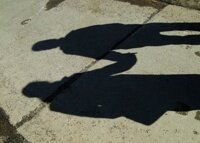
Corruption – in the shadows
A few years ago I was asked to be a visiting speaker at a class in the American University of Central Asia, (AUCA). The class was part of a course on Business Studies and was titled Business Ethics.
At first I was reluctant to agree, because I thought they’ll want to hear about bribery and corruption … but talking to the lecturer that had set up the course, it was quite clear that he had a much wider, more inclusive view of what was meant by the phrase “Business Ethics” (… the need to act responsibly, fairly and justly in relation to customers (clients), employees, partners, the community, government, society as a whole – including the contribution that one could make to help the disadvantaged, and the environment … as well as to the investors and shareholders … that, although making a profit is important, the bottom line is not “all important” …) business so, in the end, I agreed.
As a theology student, many years ago, ethics was, in my opinion, perhaps the most important part the course. The classes on Biblical texts, philosophy, the history of the church, comparative religion and so on, were all valuable in providing a background context … but it was in the classes on Ethics when the academic world intersected with the real world.
It is true that the questions of bribery and corruption did crop up, but the students obviously understood that these were just aspects of a much wider issue of behaving ethically – responsibly – in business.
As it happens, we hear a lot about bribery and corruption here in Kyrgyzstan.
Every year, since 1995, Transparency International publish a Corruption Perceptions Index and Kyrgyzstan and the country often appears near the bottom of the list: currently it is ranked as the 150th place (out of 177 countries and territories).
The President and other leading politicians often makes speeches about the need to combat Corruption and there are frequent reports of officials being arrested by the Anti-Corruption Agency complete with estimates as to how much each case has cost the country. There are, for example, a number of high profile investigations currently underway against the mayors and former mayors of Bishkek and several other cities – not to mention the ongoing dispute over the Kumtor Gold Mine.
So you can imagine my surprise when I saw a news report on the BBC website about the “breathtaking” levels of corruption – not in Kyrgyzstan, nor in Central Asia; not in the developing world but in, of all places, Europe.
The report by the European Commission examines the level of corruption in all 28 European Union countries and states that corruption is so rife that it is costing Europe about 120 billion Euros a year … and in addition to draining resources is eroding trust in democracy.
According to opinion polls, something like three quarters of Europeans considered corruption as “widespread”, more than half that it was increasing and 40% of the businesses surveyed described corruption as an obstacle to doing business in Europe. In Sweden, (which is ranked 3rd by Transparency International, and so counts as one of the world’s countries almost free of corruption), 18% of the people surveyed said that they knew someone who received a bribe …
To many people, the word “corruption” is synonymous with “bribery“, but although this is perhaps the most common, obvious and visible form of corruption, in fact it is only one aspect. Corruption can involve doing something, (or not doing something), with a view to private gain – especially using a public office to influence events in favour of one party in return for some advantage – not necessarily financial. Corruption can take several forms, of which bribery is just one … such as:
- the public official (traffic policeman, tax inspector, etc.) pretending to find an infringement of some rule (which is not necessarily that difficult given the way some laws and regulations are phrased) and then accepting a payment (bribe) to overlook the offence; … or
- the public official expecting, (demanding), and accepting payment (bribe) for signing a particular document (license, permission, etc.), or to decide a question in favour of the person making the payment;
- the official using the power and prestige of their office to obtain favours, property etc. that would not otherwise be given to them - known here as “abuse of power”; … or
- the official who uses information gathered in the course of his employment for other purposes -such as “insider trading”; … or
- a person involved in a procurement decision to a relative, friend or close personal associate, perhaps at an inflated cost; or
- the use of one’s position to allocate a relative, friend or close personal associate to a position of power, authority or influence, regardless of their ability or other personal qualities - otherwise known as nepotism;
- … and so on.
The article, and the others I have seen on the report, which seem to concentrate on four main points:
-
the existence of corruption in Europe: this seemed to come as a bit of a surprise … or maybe that was just how it struck me – after all two thirds of those in the survey considered corruption as “widespread”. I was, however, reminded of:
- a speaker in a one of the early IBC meetings – the International Business Council which represents the business community here in Kyrgyzstan – who expressed his surprise at the way that foreign businessmen seemed “surprised” when they encountered corruption here … “corruption is all over the world,” he said, “you have it home you just don’t acknowledge it until a particular case hits the headlines”.
- in a recent presentation organized by the British embassy to explain the recent changes in the legislation enacted by parliament in Westminster and how it could/should/would affect doing business here in Kyrgyzstan, how one of the Kyrgyz speakers launched into a lecture about corruption in the UK – and, in particular, Britain was harbouring the son of the previous President whose name was used in Kyrgyzstan as a synonym for and a personification of corrupt practices.
.
- the scale of the problem: the figures resulting from the survey were indeed a surprise - 12% of the people interviewed across Europe claiming to know someone who had take a bribe indicates that there is clearly a problem – but the fact that the figure for Sweden was actually 18% which raises a lot more questions … and what about the 40%, more than 50% and 75% that crop up elsewhere in the report.
.
I note that in the UK achieved the best result across the whole of Europe with the fact that only five people out of the 1115 people involved in the survey, (less than 1%), said that they had been expected to pay a bribe … even so, 64% said that they believed that corruption was widespread in the country. Personally, I was surprised that even five randomly chosen people could be found … but I have been out of the country fro a long time and … well … I suppose that things could have changed in that time.
.
There is a general impression that corruption is rife in Kyrgyzstan. An article on the subject in one of the local (government), newspapers, (Slovo Kyrgyzstana - the Word of Kyrgyzstan), ran under the headline “When was the last time you took a bribe?, … or paid one?” It is often said that court decisions can be bought, that official posts (tax and customs posts, jobs in the traffic police … even the Governors of oblasts or government Ministers) are “sold” by those in authority. It was allegations such as these, (amongst other things), which helped to bring about the two Revolutions which led to the downfall of the first two Presidents of the new country.
. - the difficulty of detection: because corruption is illegal, it is hidden and conducted in secret – in the shadows … which means that it can be difficult to detect and for us to be certain of the actual overall cost, or damage, that it represents.
.
Even though estimates for such figures exist, they are exactly that – estimates … but unlike statistics it is not possible to calculate “levels of significance” or “confidence limits” that enable us to feel any real conviction in their accuracy.In Europe, it is said there are not enough investigators or auditors employed to monitor and regulate, the situation – especially when it comes to the vast budgets of certain departments and programmes operated by the institutions of the European Commission.
.
At least here in Kyrgyzstan, we don’t seem to suffer from a lack of agencies or manpower in this respect … as there seems to be a wide variety involved in the investigation and monitoring of public bodies and finance … although one might ask questions about their efficiency and effectiveness … indeed, such questions are often raised.
.
To make matters worse, there is a semantic problem … as in, when does a mistake, (a procedural error or an error in judgement), become an example of corruption … where is the demarcation between fraud and corrupt practices … some of the examples quoted in the articles that I read could be classified differently.
. - .what to do about it: the report suggests that better controls codes of conduct and standards of integrity need to be in place – especially in regard to procurement practices and financing of political parties … in particular they recommended better enforcement of rules covering potential “conflicts of interest” and improving the variable quality of investigations and audit dealing with across the community – and a hint that additional resources needed to be allocated to support the work of the institutions that are trying to tackle the problem.
.
Some countries came in for special comment – especially Bulgaria, Italy and Romania – in particular with respect to judicial procedures and measures for dealing with organized crime.
.
One word that crops up several times is transparency – the more open everything is then the more difficult it will be for people to nefarious goings on secret.
.
Perhaps the one “one liner” that jumped off the screen was a quote from Cecilia Malmstroem, the Home Affairs Commissioner for the European Union: “The political commitment to really root out corruption seems to be missing.”
.
If we judge solely by the public statements made by politicians, then that’s not an issue here … every politician, it seems, has taken a public stance against and condemns wholeheartedly all forms of corruption … but I suppose there is a tendency to agree with Mandy Rice Davies and conclude “Well, they would say that wouldn’t they.”
.
There was a bit of a hiccup when a bill was presented to the parliament that would have abolished the statute of limitations for serious crimes – for example treason … but including corruption (although, to be honest, I haven’t seen the wording of the bill so I am not sure how they define corruption in this context). Much hyped, there was a stunned shocked silence when it was announced that the bill had been voted down … followed by telltale winks and murmured comments like “well, of course … looking after themselves …”. Fortunately, not everyone was silent and some of the deputies that had not been present during the session had had their vote recorded … against the bill when, they said, they were in favour. They called for a re-vote which eventually was granted with the result that the bill sailed through with only a single figure of votes cast against it. The cynic might well think that some people sensed the public outrage expressed in those winks and murmurs … another way of looking at it is to wonder at the scale of shenanigans represented in the original vote … but, the important thing is that the bill was passed.
.
(Incidentally, there is another issue – no that a precedent for a re-vote has been set … has this opened a floodgate for chaos so that we will see further examples in the future … one reason (and perhaps a valid one) a deputy gave for voting against a re-ballot.).
.
There is a saying, however, that “actions speak louder than words” and so, it seems to me, we have to look not at what people say, but what they do. To be fair, there are a lot more examples of people in positions of authority being brought to book for inappropriate, improper or “corrupt” actions … with some going to court and resulting in serious penalties … so maybe things are improving in that respect.
.
Perhaps, on the other hand, this is missing the point. The really crucial point is to ask what is perhaps the most powerful question of all: Why? If there is a general agreement that corruption is both wrong and harmful … the why is it so prevalent?, so “breathtakingly widespread”?.
.
Apart from the most obvious answer: Greed – there is another, more cynical, one which is probably that, simply … it works. You have, for example, a problem – well, a small “gift” … and it’s solved.
.
It strikes me that what is needed is not just a commitment from “on high” – what could be described as a “Top-Down” approach, but also “from below” – a “Bottom-Up” approach. We need to convince the population as a whole that corruption is wrong, harmful … and in order to that, we need to demonstrate how, in fact, it does not work. It may appear to resolve problems in the short term but builds up far greater problems for the future.




 Bishkek