Unwelcome guests
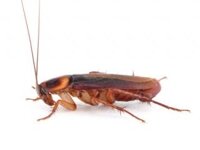
A particularly unwelcome house guest
This is perhaps not the best topic for a tour operator to address, but a news report last week had me squirming – as I expect it had made others do so, as well: “Australian man has 2cm cockroach removed from his ear“.
My first reaction when I saw the headline was to be careful… I had already been fooled recently by one hoax, (the snow falling on the pyramids), could this be another? There is something about the headline that recalls a primordial fear of little creepy crawlies inveigling their way into the human body – flying into a cavernous yawning mouth, crawling up trouser legs or into an ear – that is so loved by science fiction writers. A quick google search, however, revealed that if was a hoax then a lot of people had been taken in.
Anyway, I didn’t want to write about this particular story.. but it did act as a spur to get on with a postcard that I have been thinking about for some time .. about cockroaches – or tarakan as they are known in Russian.
For the record: Cockroaches are a form of insects that have been around for a long time .. there are fossilized cockroaches that date back some 300 million years. In that time they have evolved into a bewildering and astounding 4500, or more, different species – adapted to a wide variety of environments. The smallest cockroach for example, measures less than half a millimeter – and lives in insect nests – but I suppose that I should mention that the largest can grow up to 8 or 9cm in length.
Actually, however, only about 30 of these species are associated with human habitats and considered as pests … four of them in particular: the American Cockroach, which grows to about 30 cm in length; the German Cockroach which is about half that size; the Asian Cockroach which also grows to about 15cm,and the Oriental Cockroach which can grow up to 25cm.
Whereas some cockroaches can tolerate low temperatures, the pest species tend to prefer warm environments … which is why they . They are nearly all nocturnal so shy away from the light.
Cockroaches feed on human and pet food, and as well as leaving an offensive odor in their wake, they carry dangerous microbes on their bodies … they can be particularly troublesome for people with allergies such as asthma … and hence they are considered as pests.
Oddly enough, however, some of the earliest texts written about cockroaches encourage their use as a medicine – for example ground into a powder or boiled as a tea. Although alternative forms of medicine are growing in popularity as a reaction to our “drug culture”, I can’t see this taking off.
Controlling, prevention and eradication, an infestation can be very difficult. One of the most interesting points about them, for example, is their apparent resilience to inhospitable conditions. Although they prefer warm environments, they can tolerate extreme cold – even in a freezer. They have been known to live for several months without food and water and they are supposed to be resilient even to radiation.
Some insects have been used as natural predators and some chemicals, such as boric acid, to help control cockroach populations.
Oddly enough, there have been reports of a massive fall in the number of cockroaches in Russia and some of the other countries of the former USSR. There have been several suggestion as to what may have caused this – from the increased use of plastic bags; the decline in the use of “rubbish chutes” for garbage disposal in apartment blocks; appearance in the local markets of new and more effective chemicals that weren’t previously available as a means of control; the use of different, new, modern construction materials; the appearance of other insects which may act as predators – or as competitors; the effect of pollution; even radiation from the increased use of mobile phones and wifi connections; … or possibly it is just part of a natural cycle or climatic change … or a “perfect storm” of some or all of these factors.
In order to control and prevent an infestation, food should always be kept in sealed containers – including waste food thrown into the garbage – and the area should be cleaned thoroughly and regularly and any “holes” should be sealed to prevent access.
I remember, shortly after I first came here in 1995, writing a letter to my brother saying I had settled in and all was well … but I was a bit worried because I had inadvertently mentioned in one of my weekly phone calls to my mother, having seen a cockroach in a restaurant. The phone had gone silent for a moment or two but she quickly recovered. It occurred to me that I ought to be more careful what I said. I was quick witted enough to realize my mistake and refrain from mentioning the scale of the infestation … it was by no means a single cockroach.
On the other hand, it also occurred to me afterwards that she might not have been so worried about it as I thought she was … she grew up in a different world – in the twenties and thirties and the “squeaky clean” conditions that we have come to accept weren’t necessarily universally prevalent in her youth as it had been in mine.
At the time I was more fascinated than anything. I don’t think, for example, that I had ever seen a cockroach until I was sitting in that restaurant – and it was pointed out to me. In fact, I didn’t really know anything about them apart from the name, the fact that they installed fear and horror whenever they were mentioned and that apparently they could survive almost any environmental conditions and would one day take over the world after man’s demise.
I had read Kafka’s Metamorphosis – but had done it almost “out of duty” without really understanding anything about the sense of shock horror that the transformation was supposed to incite – but I found it a very difficult and tedious read and I didn’t enjoy it at all. I doubt that, even if I had known then what I know now about cockroaches, that it would made any difference.
Now, looking back on the incident, I am more amazed by the fact that everyone seemed to take it in their stride … it was a fact of life – it was almost Buddhist in an acceptance of, if not exactly respect for, life in whatever form it takes. To paraphrase a slogan that seems to be doing the rounds at the moment”cockroaches exist, get over it”.
I also ought to point out that the encounter took place in ONE restaurant … it was not by any means a common occurrence – but it did happen.
I suppose that I also have to admit that similar encounters have been repeated since then … but only an odd individual sighting on a rare occasion – and nothing like the infestation that I saw in the first incident so many years ago – and the sort of thing that could happen anywhere.
But then there’s the reference in the Lonely Planet guide to Central Asia on hotels in the region as a whole: “… though some are better than others… some bathrooms have long term cockroach colonies …”. Now I have met most of the authors of the Central Asia guide and I am sure that they are honestly describing scenes that have seen … just as I have described an encounter in a restaurant back in 1995.
Things have moved on a lot since those days … hoteliers and restaurants are much more aware of customer service and most hotels and restaurants do take the issue seriously and have contracts with “pest control” companies for regular treatment of their premises – we do, for example. I am fairly confident that there would be a totally different reaction these days to the one that I have described above.
After all, there are regulations and a call to sanepistanzia - the health inspection authority – would bring down an instant inspection; a closure notice with the instruction to fumigate the premises before permission would be given to reopen; a lot of bad publicity, (they do publicize incidents; partly, I suspect, to show that they are doing their job but also because there are occasional outbreaks of food poisoning that are blamed on poor hygiene practices – as, I should point out, there are all over the world), and a difficult period trying to rebuild trust in the public once the establishment does reopen for business.







 Bishkek