A puzzling time
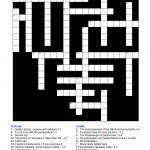
The Crossword
The other day Maxim, one of the kids, asked for help with his homework.
Now, call me mean, but I am not too keen on helping them with their homework … There’s a number of reasons for my reluctance:
- I am old-fashioned enough to think that they should do the work and if I end up doing it then where’s the benefit in it for them? but, more importantly
- it’s in Russian and, often, I haven’t the faintest idea of what they are doing …
- If I get it wrong, then I’ll blow my cover as an omniscient, omnipotent being … in other words, I’m scared I’ll expose myself as a fraud and make a mistake.
Actually, it’s more than that … I can’t help them with some of their work -
Sometimes I don’t know the language and can’t make “heads or tails” out of what they are being asked in the question. I don’t kn0w Kyrgyz, (the language), and my klnowledge of Russian sometimes leaves me floundering. Although I have learned a lot in the last eighteen years, I don’t really know enough about the history and geography, and although I studied some Biology when I was at school, I have never had a chemistry lesson in my life.
When it’s a subject that I ought to know well, (for example, Maths), I not not only have to rack my brains to see what the question is asking, I then have to look at their exercise book to see how they set out the work … it’s quite different from what we used to do, (and, I presume, still do in British classrooms). Then, having sorrted all that out, I have to find ways of trying to explain how I set about solving the problem …
On the other hand, I will have a look at their English homework read their sentences, listen to their reading … and that sort of thing.
Fortunately, Maxim’s problem wasn’t difficult to solve. His Physics teacher had given the class an exercise to create a crossword with certain words, (technical terms and units), on the subject of electricity. He had had a good stab at it and come up with a grid and was now trying to put it onto the computer. His problem was “technical” in that he had created a grid, placed the terms in the places he had allotted them, and now he wanted to get rid of the surplus squares … how did he do that?
That was easy to solve – I showed him on a couple of squares and left him to it.
While he was finishing that off, I thought to myself how often I had set a similar task.
Crosswords are quite good when it comes to introducing new vocabulary or terminology as they encourage a sort of familiarity with the word – especially it’s spelling, and reading the clues can help develop reading and analytical skills. When solving a crossword, it’s necessary to read and understand the clue, apply the knowledge gained to find right answer – possibly testing different alternatives, and then put it into the grid getting the spelling right. As well as being fun – well for some people.
Creating the puzzles can be a creative way of showing off that knowledge – especially when having to devise the clues. It’s a logical exercise in itself … and much depends on how rigourously the rules are applied. Does the grid have to be particular size? – or can it just grow in any direction, does it have to be square?, Does it have to be symmetrical – and if so, to what order … and so on.
These “educational crosswords” are usually on a given theme so the answers are usually predictable … not like the ones published in newspapers and magazines – where the clues can refer to almost anything and then involve some sort of cryptic coding. Personally, I think that devisiing the clues is half the fun … some should be relatively straight forward and easy – whilst other should make one sit back and think.
For the record: I think my favourite crossword clue of all time was “This European Capital sounds like multiplying” – 6 letters. I appreciate that there may be lot’s of people out there who instantly know the answer … but it took me ages to work it out … all the time thinking to myself, “There are only a limited number of capitals … I just have to go through them one by one … “. Even so, it took me a while – and when I got the answer I groaned at the awful pun whilst admiring how simple it was.
Anyway, I asked Maxim if it was all his own work … and, of course, it was. Then he asked me what I meant and I said, “There are computer programs that can do that …”. To be fair to him, he wasn’t interested … but I’ll wait and see if he comes back to me next time he’s asked to create a crossword.
Anyway, that got me thinking … and I went onto the internet to see if I could find a crossword compiler … and I found a few. I downloaded one, (freeware), and had a go at creating a couple of crosswords.
The program is easy to use – and I can use Cyrillic letters, (unlike the related word search program on the same site). You can give your crossword a name … set the size, (up to a 20 x 20 square), type in up to 40 words as answers – along with appropriate clues … and then just press the button “Make Crossword“. It takes 4 passes through the list trying to place the words into the grid … and tells you which ones it failed to place so that you can try replacing them. If, for some reason, you don’t like the crossword it gives you, just press the “Make Crossword” button again and you’ll get a new one. You can take out some of the words that can’t be placed and trying some new ones … even adding some manually – but that’s not so easy.
You can save the list of words and clues - BUT – you can’t save the grid, itself … and I found that frustrating. That means that you can’t go back to a half finished puzzle and try “tinkering” – you have to do it all in one sitting. But I still found it to be a fun exercise.
One of my early experiments was with place names from Kyrgyzstan … 40 names but I could never get more than 25 successfully fitted into a grid. I think that one of the reasons was that so many of the names are quite long.
Another limitation of the program was that the clues have to be quite short – like tweets – less than 50 characters.
Oh, and one more … you can’t solve the puzzles on-line, you have to print them out and then do it on paper … but, hey, the programs freeware so I think I can live with that!
Most of the fun came from trying to devise clues – making them a mix ranging from easy, such as a straight definition, (for example: Capital city – 7 = BISHKEK), to more cryptic ones which will make people think (for example, I hope: On a crossroads between China and Tajikistan – 4,4 = SARY TASH), to ones that require specific knowledge or analytical cryptic skills, (for example: A Fisherman’s tale – 8 = BALYKCHY … It’s the Kyrgyz equivalent of Ribachye which is old Russian name for the city and means Fisherman).
Here’s one my results … all of the answers are places in Kyrgyzstan and they’ve all featured on Postcards … sometime … try printing it out and have a go:

The Crossword
If you are interested, you can download the program from here - it’s freeware, but there’s a donate button.
Have a go … it’s fun!




 Bishkek
: There answers are here