Shopping
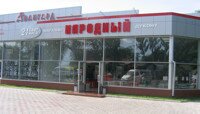
One of the Narodniy chain of supermarkets
This is a matter of personal taste … some people want to go shopping – others hate it.
Depending on what you want to buy, there are several types of outlet:
- street traders, usually selling cigarettes and confectionery, Shoro or Tan (national drinks), or fresh fruit and vegetables;
- markets … which, in the cities, often have a thematic nature (household goods, or clothing, or food);
- kiosks – on the street – most selling cigarettes, confectionery, alcohol and maybe a limited range of other produce. Others may sell newspapers or dairy produce. Often they are open for long hours – late into the night.
- shops – most shops are small, especially outside the main towns and cities;
- supermarkets – there is a growing trend of supermarkets being opened … some are small but others are quite large and carry a wide range of products;
- trade centers, or department stores – these usually rent out space to “stall holders” who then open an “otdyel“, or department, selling particular types of goods or services.
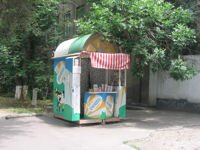
Dairy Kiosk
Prices for some commodities will be considerably cheaper than back home. Others, especially imported goods – will be similar.
Almost every town has a market which are can be colourful to wander round, but the tend to specialize in fresh food clothes or household goods for members of the local community.
In the markets it is possible to bargain – in fact, it is almost obligatory – but don’t overdo it, in many cases the discounts you can achieve are not great. In shops the prices tend to be set, but you can try asking for a discount … just don’t expect a positive answer.
The main shopping centers such as Tsum and Bishkek Park will have shops specializing in selling souvenirs … shydaks, traditional costume, trinkets etc. Occasionally, some of the market stalls pay host to a “craft fair”, an exhibition and sale of produce If there is time available, it pays to shop around as prizes may vary from place to place, but not everyone has that luxury.
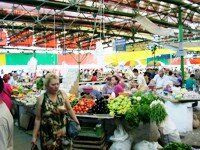
At the market
Some Supermarkets operate a security system where bags have to be deposited at a desk by the entrance where they give out a talon in exchange – and the bag is returned in exchange for the talon when leaving … or some have lockers where people can put their bags while the go shopping.
In some villages and towns, (e.g. Kochkor, Karakol …) it is possible to find shops selling local crafts. It is usually possible to buy handicrafts direct from the family that made them when attending a crafts demonstration.
There are some bookshops, especially in the cities, but you probably won’t find many books in English – or other languages.
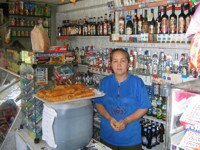
A small shop
There are postcards in Bishkek – but don’t expect them to arrive home before you do if you post them here.
There are a growing number of CDs, Videos and DVDs available about the country … and, especially in Bishkek, a wide variety of music CDs and movies, (including some of the latest releases) on tape and CD … but a lot of them are “pirate” copies, (even some with very convincing packaging).
In Bishkek, especially, there are a number of galleries, which sell antiques, paintings and sculptures. As everywhere in the world the quality and prices may vary – and don’t forget that it may necessary to obtain permission to export them – especially if they are more than 50 years old.
We sometimes get asked for advice about what we can suggest as something to take home as a memento of a visit to Kyrgyzstan … apart from memories and photographs … and I’ll turn my attention to that question in a future postcard.





 Bishkek