Apricots
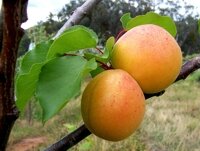
Apricot fruits
This weekend, (well, today and tomorrow), down in the village of Samarkandek in the Batken oblast, there is an Apricot festival. It was almost enough to tempt me to take a few days off to go and visit a part of Kyrgyzstan that I don’t know very well.
As well celebrating the Apricot, (a fruit which has been proposed as a trademark for the oblast), with products made from it, the “Blooming Apricot” Festival organized by the Bio-Muras Public Foundation, includes a range of activities such as:
- performances by musicians, (presumably playing the Komus – the three stringed lute associated with the nomadic Kyrgyz and traditionally made from wood from the Apricot tree),
- exhibitions of items made by local craftsmen and women,
- a chance to taste a variety of dishes from Kyrgyz national cuisine … and …
- a chance to visit various of places of interest throughout the region.
Here in Kyrgyzstan, Apricots are found from one end of the country to the other – from Batken oblast up to Issyk Kul. Indeed there is usually another Apricot Festival held in Issyk Kul, but unlike this festival which commemorates the Apricot blossom, the one held in Northern Kyrgyzstan commemorates the harvest at the end of the short growing season.
The fact that the Apricots are often grown in remote rural mountain regions of Kyrgyzstan, means that they are less prone to some of the diseases that occur elsewhere and many of the apricot growers have joined together to form cooperatives and, with help from various donors, have received certification in order to be able to market their produce as organic.
Among the problems that the farmers face are:
- in many places rainfall is relatively low and the water retention quality of the soils is low
- outdated and labour intensive methods of harvesting the fruit
- there is no plant available in the country for processing the fruit, so it has to be sold as fresh fruit for processing elsewhere
- pressure on the land for alternative uses
- limited certification and control to ensure quality – especially as an organic product which could command premium prices
- lack of marketing expertise – together with intense competition from other producers … particular the world’s leading producer, Turkey
For the record: The mission of the Bio-Muras Public Foundation is “to support local communities and custodians of traditional knowledge in the conservation, revival and distribution of biocultural heritages to management of agrobiodiversity in Kyrgyz Republic”, for example by conducting training courses and workshops … and establishing a nursery of fruit crops.
For the record: The Apricot is a species of Prunus, and is a relative of the plum. The tree on which they grow is relatively small, growing to somewhere between 8 and 12 meters tall with a trunk measuring just 40cm in diameter and topped by a dense crown or canopy. The leaves measure up to 9 cm long and 8 cm wide, with a a rounded base, pointed tip and a finely serrated edge. The flowers usually appear in the Spring before the leaves appear on the branches are a pinkish shade of white about 4 cm in diameter. The fruit has a outer fleshy part which contains a stone, or pit, which in turn contain the seed to produce the next generation, encased in a yellow or orange skin which may be tinted red on the side that has been exposed to the sun and may be either smooth or covered in short fine hairs. At just 2.5 cm in diameter, it resembles a small peach.
It is known where it originated, but it the fact that it has long been cultivated in and around Armenia since ancient times, (and from where, like the Walnut, it was supposedly introduced into Europe by Alexander the Great), have led some people to think that it comes from that region … and this is reflected in its scientific name: Prunus armeniaca. Other scholars, however, have suggested that, like the Apple and the Walnut, it may have originated elsewhere, including China or India … or even Japan.
As well as in Armenia, Apricots have long been grown in Persia, (modern day Iran), and were known in ancient Egypt.
They have also been introduced into other regions of the world from the Americas and Australia. The five largest producers are Turkey, Iran, Uzbekistan, Italy and Algeria.
Apricots can be eaten as a fruit, either fresh or dried – In ancient Egypt, dried apricots were used as a sweetener. The kernel, or stone, of the fruit – especially those grown in Central Asia, are relatively sweet and can be used as a substitute fro almonds and are the basis of the liqueur Amaretto.
However, it should be noted that the kernels contain cyanide, and although it is unlikely that anyone would die from consuming the occasional one – there is a case on record of someone suffering from their toxic effects. Despite this, kernels were widely used as an ingredient in many ancient Chinese medicaments.
Apricots have also been long thought of in Europe as an aphrodisiac and as a laxative. In more recent times, it has been suggested, (a little more controversially), that they can prevent heart disease, lower cholesterol levels and help to prevent cancer.






 Bishkek