When to travel to Kyrgyzstan
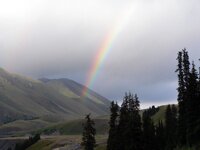
The “tourist season” in Kyrgyzstan is traditionally in the summer months – from mid-June to mid-September. This is when most people visit – especially those from the countries of the former Soviet Union who spend their holidays on the shores of Lake Issyk Kul. The days are warm – indeed they can be hot – but the nights are cool.
The climate of Kyrgyzstan is Continental – that means hot summers and cold winters. A climate of extremes – and because people often feel more uncomfortable in the extreme cold of the winter, they sometimes forget that the summers can also be extreme – hot and dry! Temperatures can vary widely even on the same day, at the same place – it is possible to experience “all four seasons” in one day – especially when travelling in the mountains – where snow can fall even in the height of summer, in July and August.
The choice of when to travel however depends very much on the purpose of the journey, for example:
- Spring flowers usually bloom in May.
- The shepherds move their their livestock to the high mountain pastures (“Jailoo”) and erect their yurts towards the end of June – and return to the lowlands again for the winter, dismantling their yurts towards the end of September.
- During these months a number of festivals are arranged.
- The At Chabysh festival – with traditional horse races and national games, is held on the first weekend in November.
- Saimaluu Tash is only really avaible in July and August.
- Most of the rain falls in the Kyrgyz Krebet, (the mountain range south of Bishkek) in May and June.
- Although snow can fall in the mountains at any time of the year – and there are fields of everlasting snow at the higher altitudes – for those interested in winter sports it is worth noting that most snowfall occurs in the early months of the year – January and February.
Some weather statistics:
- The average number of days of sunshine per year is 322 (although., for example, in 1999 Bishkek received only 247). Even in winter when there can be heavy falls of snow, the sun can shine brightly. Thaws are frequent and melted snow can refreeze overnight making a treacherous surface for both pedestrians and vehicles.
- The maximum-recorded temperature was 44°C at the Chuiskaya weather station.
- On 27th June 2000 Bishkek recorded the highest temperature in 100 years 39.2°C.
- The minimum recorded temperature was -54°C at the Ak-Sai weather station.
- The average minimal temperature across the country -24°C.
- Average Daily Temperature in the valleys
- - in July: 25-27°C
- - in January: -4°C
- Average Annual Temperature
- - in Bishkek: -1°C
- - in Osh: 0°C
- The average annual rainfall is 380 mm, mostly falling in April
- The highest recorded rainfall was at the Aktera-Gava weather station on the Western Ferghana ridges: 1090 mm
- The lowest rainfall was at Karakol, the western extremity of the Issyk-Kul basin: 144 m.





 Bishkek