Cuisine Tour
Our website about the cuisines of Central Asia
Because Kyrgyzstan straddles the Great Silk Road in the heart of Central Asia, it has an incredible mix of nationalities represented in the population. When people traveled the Silk Road they brought with them their own culture, traditions and cuisine.
In Bishkek, in particular, there is a wide variety of cuisines available for the discerning diner: European, (for example, Russian, French, Italian …), Chinese, Indian, Geoirgian, Moldavian, Mexican, Turkish and, of course, Central Asian, (Kyrgyz, Uzbek, etc.)
A few years ago, we received a request for a customized tour itinerary from a group which had obviously done their homework. The request was very detailed, not only about where the wanted to go in Kyrgyzstan, what they wanted to see and do, but also what they wanted to eat.
In Karakol, for example, they wanted to attend a cuisine festival which was run at that time in Djety Oguz by the local CBT group, (but which is not being offered this year). Elsewhere they wanted to try Dungan cuisine and in Osh they wanted to sample Plov. They also asked if it was possible not only to taste the food, but also to participate in making the dishes.
Based on their suggested itinerary we put together an itinerary which we hope will be of interest to others. It comes in two versions
- one which lasts for 9 days and involves visits to Bishkek, Cholpon Ata, Karakol. Bokonbaeva, Kochkor, Son Kul and Naryn, (all in the Notrthern and Central parts of the country), and
- the second which adds an extension visiting the Southern regions, Osh, Djalal Abad and Arslan Bob.
Day 1. Bishkek
Arrival to Bishkek. Meet the driver and guide. Transfer to a hotel. Check in. After rest- city tour. Overnight at the hotel.
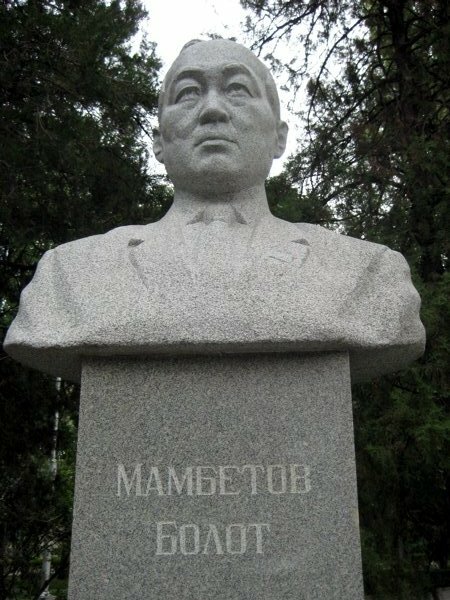
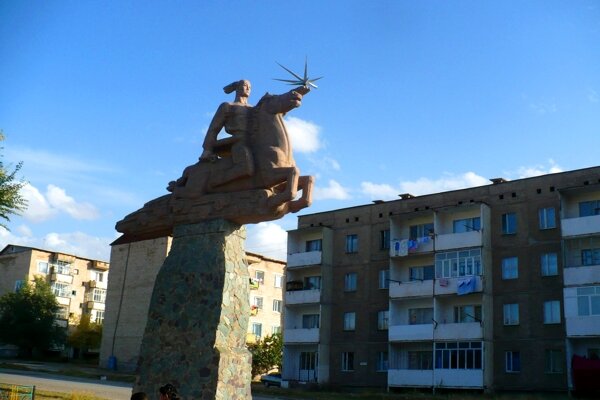
Bishkek cannot claim to be one of the major cities of the world, like London, Paris or New York. It is, however, the capital city of Kyrgyzstan and does have a number of important and interesting buildings, monuments, parks, museums, galleries, theaters and other places worth seeing or visiting.
Day 2. Bishkek- Tokmok- Cholpon-Ata
After breakfast (9.00) drive to the northern shore of Issyk-Kul lake. En route, visit the Burana Tower (10.00-11.00).
Burana tower is all that remains of the ancient city of Balasugan set at the foot of the Shamshy valley. Established in the 10th century on the site of an older settlement, the city was the birthplace of the poet Jusup Balasugyn (1015-?) who wrote an epic poem called Katadgu Bilim (=”The knowledge which brings happiness”), which has been translated into several languages – including a recent translation into English by Walter May.
Take part in preparing the national Kyrgyz dish “Shorpo” for lunch in Tokmok (11.30-13.00). Lunch (13.00-14.00)
Shorpo is one of various kinds of soup or stew found in national cuisines across the Middle East. In Kyrgyz and Kazakh respectively, shorpo may refer to any broth. A typical shorpo is made by boiling mutton with vegetables.
Continue driving to Cholpon-Ata. Visit the petroglyphs on the way. Accommodation at guest house/ resort.
Day 3. Cholpon-Ata- Karakol
After breakfast drive to the eastern end of Issyk- Kul- Karakol. City tour. Take part in preparing “Kuurdak” for dinner (16.00-18.00). Dinner 19.00.
Kuurdak is traditional Kyrgyz dish made of roast meat with onion (sometimes locals add liver, kidney, lungs for the richness, density and better flavour). Potato, carrot and pumpkin are often used in modern version of this dish.
Accommodation at a hotel or guest house.
Day 4. Karakol- Djety- Oguz- Bokonbaevo
After breakfast drive to the picturesque gorge Djety- Oguz. Explore the area. Visit one of the yurts, where you can try national drink- Kumys.
Kumys is a fermented dairy product traditionally made from mare’s milk.
Continue driving along the southern shore of Lake Issyk-Kul to Bokonbaev village. Take part in preparing “Dymlyama” for dinner (15.00-17.00). Dinner 18.00
Dymlyama is traditional dish in Kyrgyz cuisine. It consists of meat, potato, carrot, cabbage, tomato, onion, garlic and pepper. Usually it is cooked inkazan(it s a type of large cooking pot used throughoutCentral Asia).
Accommodation at a home stay.
Day 5. Bokombaevo- Kochkor
After breakfast drive to Kochkor village, which is famous for hand crafts. Demonstration of shyrdak (national felt carpet) producing. Participating in preparing “Oromo” (15.00-17.00). Dinner 18.00
Variations of Oromo, made from unleavened dough with different fillings, can be found amongst many of the world’s peoples. In Kyrgyz cuisine the filling is traditionally meat with vegetables – mostly onions, both cultivated and wild varieties. In the South of the country greenery, (spices and herbs), are used more widely, and Pumpkin, (which is used widely in pelmeni, Manty, Oromo, meat and other dishes).
Overnight at home stay.
Day 6. Kochkor- Son-Kul
After breakfast drive to Son-Kul. Take part in preparing “Kesme” (15.00-17.00). Dinner 18.00
Kesme refers to a traditional Central Asian noodle dish made by the Kazakhs or the Kyrgyz. The dough for kesme is rather simple, usually consisting of no more than flour, water, salt, and an egg. The dough is rolled out into a large thin circle, and left to dry for a while. It’s then lightly floured, folded over several times accordion-style, and sliced into strips. These strips are separated, and either boiled right away in a broth (often containing ingredients such as potatoes, meat, carrots, peppers, and tomatoes), or left to harden for storage and use later. Kesme is often made in a kazan.
Accommodation at a yurt camp.
Day 7. Son-Kul- Tash- Rabat- Naryn
Drive to Tash- Rabat. Explore the area and drive to Naryn. Participating in cooking Besh-Barmak for dinner (16.00-19.00). Dinner 19.00.
Beshbarmak is a popular dish inKyrgyzstan. The term Beshbarmak means “five fingers”, because the dish is eaten with one’s hands. The boiled meat is usually diced with knives and often mixed with boiled noodles. It is usually served in a big round dish.
Accommodation at a guest house.
Day 8. Naryn- Bishkek
After breakfast drive back to Bishkek. Accommodation at a hotel.
Day 9. Bishkek- airport
After breakfast transfer to the airport to catch the flight home.
Potential option for program extension:
Day 9. Bishkek- Osh
After breakfast drive to the airport to catch the flight to Osh. Meeting with driver and transfer to a guest house. City tour around Osh. Take part in cooking “Plov” for dinner (15.00-18.00). Dinner 18.00.
Plov is the popular Central Asian dish made of rice, onion, carrot. Meat and different spices.
Overnight at a guest house/home stay.
Day 10. Osh- Jalal-Abad- Arslanbob
After breakfast drive to Arslanbob, which is famous for walnut forest. Visit Uzgen complex and Jalal- Abad on the way.
Take part in cooking “Boorsok” for dinner (16.00-18.00). Dinner 18.00.
Doughs occupy an important place in Kyrgyz cuisine. Popular ancient ritual dish–boorsok– is cut pieces ofrolled dough deep fried in oil.This is a traditional table “decoration”. They are produced in large quantities and spread over the dastorkon (tablecloth) at every major celebration.
Overnight at home stay.
Day 11. Arslanbob- Osh- Bishkek
After breakfast return to Osh directly to the airport to catch the evening flight to Bishkek. Transfer to the hotel. Accommodation at a hotel.
Day 12. Bishkek- airport
Transfer to the airport “Manas” to catch flight home.
We are well aware that several traditional dishes are missing from this selection, perhaps most notably Manty, Samsa, Laghman … and, of course, Shashlik not to mention the varieties of Dungan and Tartar cuisine which are also quite popular here … but that’s one of the advantages of a customized tour, it can be adapted to meet specific requests.



 Bishkek