Mercury and Antimony
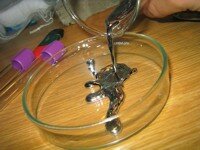
Mercury - liquid metal
There were news reports last weekend about the fifth session of the Intergovernmental Negotiating Committee, (INC5), in order to prepare a global legally binding instrument on mercury – The Minamata Convention on Mercury, (named after a city in Japan where serious health damage occurred as a result of mercury pollution in the middle of the last century) - which took place in Geneva between January 13th and 18th.
After four yours of intense negotiations, delegates from more than 140 nations met and agreed on provisions for the first legally-binding treaty to curb mercury pollution introducing measures to control the use of this highly toxic metal, (widely used in chemical production and small-scale mining), in order to limit mercury emissions.
The Convention will set controls and reductions on a range of products, processes and industries where mercury is used, released or emitted, including the use of mercury in medical equipment such as thermometers, energy-saving light bulbs, mining and the cement and coal-fired power industries. The last four of these are especially important for Kyrgyzstan.
I am not sure if representatives from Kyrgyzstan attended this conference - the full report hasn’t yet been published, although Kyrgyzstan was represented at earlier conferences.
In the run-up to the INC5 meeting, UNEP published two new reports, (Global Mercury Assessment 2013 and Mercury: Time to Act), which are available from their website.
The provisions agreed by delegates will regulate a range of areas, including:
- the supply of and trade in mercury;
- the use of mercury in products and industrial processes;
- the measures to be taken to reduce emissions from artisian and small-scale gold mining;
- the measures to be taken to reduce emissions from power plants and metals production facilities.
The delegates agreed on a range of mercury containing products whose production, export and import will be banned by 2020, including:
- Batteries, except for ‘button cell’ batteries used in implantable medical devices
- Switches and relays
- Certain types of compact fluorescent lamps (CFLs)
- Mercury in cold cathode fluorescent lamps and external electrode fluorescent lamps
- Soaps and cosmetics
- Certain kinds of non-electronic medical devices such as thermometers and blood pressure devices,
although some exceptions were agreed for
- Some large measuring devices where currently there are no mercury-free alternatives
- Vaccines where mercury is used as a preservative
- Products used in religious or traditional activities
and a phase-down was agreed on the use of dental fillings using mercury amalgam.
The booming price of gold in recent years has triggered a significant growth in small-scale mining where mercury is used to separate gold from the ore-bearing rock. Workers and their families involved in small-scale gold mining are exposed to mercury pollution in several ways including through inhalation during the smelting. Mercury is also being released into river systems from these small-scale operations where it can contaminate fish, the food chain and people downstream.
The new treaty will also control mercury emissions and releases from various large industrial facilities ranging from: coal-fired power stations, (emissions from coal-fired power stations represent the biggest source of mercury pollution world-wide), and industrial boilers to certain kinds of smelters handling for example zinc and gold; waste incineration and cement clinker facilities.
Even so, some delegates were not satisfied with the final agreement, saying it was just “a first step,” and “not tough enough to achieve its aim of reducing overall emissions.” For example, they want to see a requirement that each country create a national plan for how it will reduce mercury emissions.
A signing ceremony will be held in Japan in October and then 50 nations must ratify it before it comes into force, which is likely to take about three to four years.
For the record:
Mercury, is probably the best known of the five metals that are liquid at or near room temperature and pressure, (the others are: caesium, francium, gallium, and rubidium – although, only mercury is in its liquid state at standard conditions for temperature and pressure).
It is also called quicksilver, a name which is descriptive of its silvery appearance and fluidity but probably derives as much from its scientific name: hydrargyrum – which comes from the Latinized Greek: hydrargyrum, meaning watery or liquid silver.
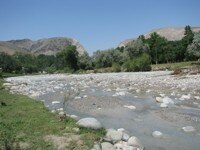
- Kadjimai
The metal was known in the ancient world where its use was thought to have therapeutic value and it was commonly used in ointments. The tomb first Chinese Emperor contained a model world, (with the famous “Terracotta Army”), had a river of mercury on which the emperor’s body was floated in a jade coffin.
Mercury is used in apparatus such as thermometers, barometers, manometers, float valves. It is harmless when in an insoluble form, but it is poisonous in soluble forms and concerns about it’s toxicity, however, have led to being replaced by alcohol-filled, digital, or thermistor-based instruments wherever possible. It still remains in use, however, in a number of other ways in scientific and scientific research applications, in the gold industry and in amalgam material for dental restoration.
Although Mercury is an extremely rare element in the Earth’s crust, mercury ores can be extraordinarily concentrated. occurs in deposits throughout the world and is mostly obtained by reduction from the mineral cinnabar. It is the second most commonly found element in the Kyrgyz Republic. Deposits are found in the form of a large belt, 5 kilometres deep, from the Leilek river in the East to the Uzengikuch River in the West – stretching over 1000 km.
Mercury and Antimony is produced at a number of mines – most notably the Khaidarken mine in the Batken oblast. Kyrgyzstan satisfies 6-10 per cent of the world’s needs in mercury. The mine is considered to be unique in that it is completely oriented to exporting its product – mainly due to the fact that it is located next to one of the largest world purchasers of mercury – China. Today, “pure” mercury is produced only in Kyrgyzstan, China, Spain and Algeria. These four countries account for about 60 per cent of the market’s needs. The remainder comes from other countries, which produce mercury as a by-product during the extraction of other natural deposits. The mine has suffered, however, from a downturn in world demand, which has also led to the closure of most of the quicksilver mines around the world.
The mine also produces Antimony, a toxic metal which is used in flame-proofing, paints, ceramics, enamels, a wide variety of alloys, electronics, and rubber, and is increasingly being used in the semiconductor industry in the production of diodes, infrared detectors, and other devices. It greatly increases lead’s hardness and mechanical strength and the most important use of antimony is probably as a hardener in lead for storage batteries.
It is used in: batteries, antifriction alloys, small arms and tracer ammunition, cable sheathing, matches, medicines (for example in antiprotozoan drugs. In the past it was used to treat Schistosomiasis, but today the drug Praziquantel is used instead), plumbing, soldering – some “lead-free” solders contain antimony, as an alloy in main and big-end bearings in internal combustion engines and in type metal (e.g. for linotype printing machines). It has even been used in cosmetics.




 Bishkek