The Tatars
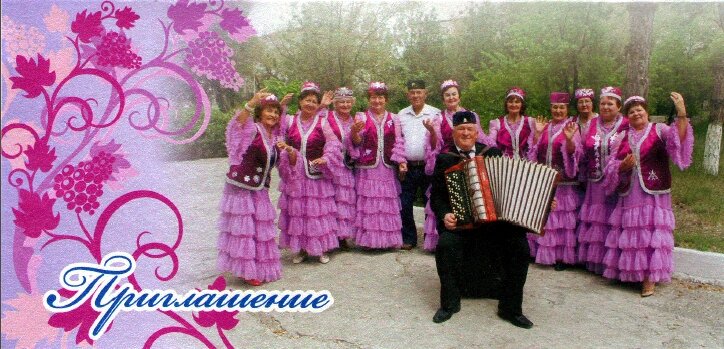
Berdemlek invitation featuring the Duslyk ensemble
A short while ago I was invited to a Concert in the Seitek Youth Center by the Tatar Folk Ensemble Duslyk - which is Tatar for “friendship” or “Commonwealth”. It’s their twentieth anniversary – and also the fifteenth anniversary of the Tatar Union “Berdemlek“, (which is Tartar for Unity).
To be honest, I knew from previous concerts that I had been to that, in some ways at least, it was going to be a bit of an ordeal … in that virtually everything would be in the Tatar language … the speeches, so I wouldn’t understand a word! – and most of the music – which, I supposed, shouldn’t be too much of a problem … after all, music is music and even if it helps if you understand the lyrics, you don’t really need to in order to appreciate a good tune and a talented performance.
Berdemlek is one of over 30 Associations of Russians here in Kyrgyzstan – at least four of them representing members of the Tatar Diaspora – two based in Bishkek, one in Osh and another in Karakol.
The Tartars are a Turkish people from the Volga region in Russia – where they have their own Autonomous Republic, centred around the capital: Kazan. Although they are descended from the Mongol Golden Horde, most resemble Russians rather than the other Turkic peoples.
There are about seven million Tatars, most of whom live in the Russian Federation, but there are a number of separate identifiable groups which stretch across Asia and into Europe, including most notably: The Crimean, Lipka and Astrakhan Tatars found in Europe and Siberian Tatars in Asia. (Actually, Crimean Tatars are also found in Central Asia, as a result of the mass deportation that took place towards the end of the Second World War.)
The Tsar had begun to encourage the Tartars to begin settling in Central Asia in the middle of the 19th century as farmers, traders and clerical workers, and also as soldiers and religious emigrants. Apparently the Russian authorities had considered deporting of the Tatar peoples from the Crimea ever since the peninsula had been annexed in 1783, but the plans were never implemented.
During the 1920′s and 1930′s there were several groups that migrated to Central Asia as part of the Industrialization programs and the Soviet Education Plan for Central Asia. More arrived in the 1948 and 1960 as part of the reconstruction programmes that followed the Ashgabat and Tashkent earthquakes.
May 18th, 1944, saw the start of the mass deportation of the Tatars from the Crimea to Central Asia, (an event known to the Crimean Tartars as Sugunlik - which means “Exile” in the their language), with some 90,000 people forced aboard special trains, to be followed by 165,000 the next day and 183,000 on May 20th.
This wasn’t the first time that According to the Stalinist regime, the justification for the measure was the alleged collaboration of the local population with the Nazi occupation of the peninsula since the German invasion of 1941.
32000 NKVD troops arrived in communities throughout the Crimea and gave the inhabitants half an hour to gather their possessions and board cattle trucks on specially arranged trains. Almost 200,000 people were forcibly removed from their homes and resettled in other parts of the USSR – three quarters of them in Uzbekistan, and the rest scattered between Kazakhstan and various regions of what is now the Russian Federation.
The process was poorly planned, with the designated destinations ignorant of the impending arrivals, and a resulting lack of planned accommodation and food for them. Apparently many of the deportees were to be put to work on the notorious GULAG prison camp system.Many people were to die as a result of the process. Depending upon whose statistics are quoted, the migrants were almost decimated in the first six months after the deportations, almost a third in the first year and a half, and almost half in in two and a half years.
As well as their own autonomous Republic in the Russian Federation, Tatars share a common culture. language, and religion, (although most would identify themselves as Sunni Muslims, there is a minority that belong to the Orthodox Church and Tatars tend to be tolerant of religious differences).
Since Independence in 1991, a large number of Tatars have emigrated to either the Crimea or Russia, although there are still about 30000 Tatars in Kyrgyzstan in Kyrgyzstan, where there are a number of Tatar Cultural Associations which organize a variety of cultural activities and especially the annual Sabantui festival .
Interestingly:
- The publisher of the first book in Kyrgyz was Karimov Husainov and Co. – a Tatar publishing company.
- The Kyrgyz author and diplomat, Chinghiz Aitmatov, was descended from a Tatar mother.
One of the internet portals in Kyrgyzstan, kloop, has an interesting series of posts: Faces of Kyrgyzstan, in which they publish a series of black and white photographs with each page focusing on one nationality … here is the page dedicated to the Tatars of Kyrgyzstan: Kyrgyzstan faces Tatars | KLOOP.KG





 Bishkek