Cruel and Unusual Taxes
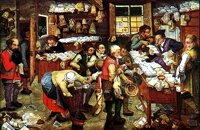
The Tax Collector, by Pieter Brueghel the Younger, 1640
Taxes are extremely unpopular but are an essential fact of life. Logic dictates that if we want the state to fulfill its functions then we have to ensure that it has the resources to do so. As the demands on the government rise, so does its need for additional resources and so many inventive initiatives are implemented to try and increase tax revenues. Some may be reasonable – others seem to be less so, (and here I am trying to be diplomatic).
As well as taxes levied on income, (both for individuals and companies), sales, (such as a sales tax, retail tax, Value Added Tax, Sales duties, special luxury taxes), we have also seen taxes on advertising, on dogs, on accommodation in hotels and health resorts, on rubbish (garbage), on dogs, on parking places, on lottery tickets, windfall profits, wealth taxes based on property and vehicles … to mention just a few. Fortunately, the straight forward Poll Tax, paid per head of the population irrespective of their income or ability to pay, seems to have been generally abandoned but there have been some pretty other strange taxes over the course of history.
Over the weekend, one of the Kyrgyz news agencies posted on their website, a summary of what they considered to be the most absurd taxes of all time.
(For the record: They were upfront front about it … they lifted the article from the Russian publication VESTI Economics, and I have to admit that when I went looked at that site I found that is was full of other fascinating articles).
I can see why the editors thought it was interesting and provide a light hearted moment for Independence Day … but, to be honest, I am not so sure it was such a good idea to publish the list … On the list were some “absurd taxes” which we actually have here ion Kyrgyzstan … and, more to the point, I wouldn’t want to give anyone any ideas which they want to follow up. The “damage”, however, has been done … so I suppose some observations and comments are not necessarily out of place.
- A tax on Playing Cards imposed by King James I of England and VI of Scotland;
I always thought that the seal on a new pack of playing cards was to show that they hadn’t been tampered with in any way – but here in Kyrgyzstan, such seals are used to show that the tax and duties due have actually been paid; you’ll see them, for example on bottles of spirits and packets of cigarettes. In fact customs duties are levied on all sorts of “luxury items” such as alcoholic drinks, cigarettes, jewelry, even tea and coffee, so it should be possible to have a separate rate to be applied to playing cards.
Although playing cards may be used for more benign purposes, they are usually associated with gambling, (and that was part of justification for this puritanical tax in the first place), so this might count as a suitable argument for imposing a separate duty on them, especially as Kyrgyzstan has banned and closed all its Casinos … but then I suppose it would have to also look at other things that encourage gambling … such as the games and sporting events on which people place bets.
Apparently the tax is still levied in the state of Alabama.
- A tax on Confectionary, introduced in Illinois as recently as in 2009;
- A tax on Athletes, (although it applies to any visiting celebrity, not just sportsmen), who are expected to pay income tax on earnings arising out of the visit to the local community;
I am going to have to look into this further, because I am not sure why this it considered strange … One of the principles of Income Tax is that it is levied on payments received for work undertaken and usually the tax is due in the jurisdiction where the work took place, (although it is sometimes applied where the payment is received – with special rules applying if and when payment is being made abroad). So, in theory, this is already covered as part of ordinary tax policy. Special visa, work permit and tax procedures are usually in place.
Interestingly, however, the Jogorku Kenesh, (the parliament), has adopted a measure to exempt prizewinners from paying tax on their prizes.
- A tax on Cowardice, called “scutage”, first levied by Henry I of England, which was levied on subjects who refused the call to arms in order to fight in Henry’s wars. Apparently King John also liked this tax, imposing it and even raising the rates in years when there were no wars – and hence no battles to fight!
Actually, there is such a “tax on cowardice” here in Kyrgyzstan now … although it is not called a tax, (and I doubt that it falls under the definition of a tax contained in Kyrgyz legislation). Military service is compulsory here but there is a form of “alternative service” where it is possible to pay fees in order not to be called up. It’s all official, they are fees which go into the budget, not bribes which go into someone’s pocket, (although I suppose it is also possible that there is some of that as well).
- A tax on Hats, which was another British invention; thank you William Pitt the Younger, for thinking up this brilliant idea. The logic was quite simple: rich people will have different hats than poor people, and so a differential rate of tax was applied to each type of hat when they were being manufactured.
I am not sure that this would go down well here in Kyrgyzstan where hats often signify which ethnic group someone belongs to … it would obviously not be very good if the tax on the Tajik tyubeteika Uzbek dopilar differed from that on Kyrgyz Kalpak or Elechek, (many of which are homemade, anyway), although I think they might raise a fair sum from baseball caps.
- A tax on Windows, yet another British innovation. The principle was similar to the tax on hats, rich people would live in properties with more windows than poor people – so it was a form of “wealth tax”. (There was also a threshold to be breached, which should have helped to protect the poor, in that the tax only kicked in when the property had more than ten windows.) The problem was that people simply bricked up their windows to avoid paying the tax.
There are no windows, of course, in a yurt, but I suppose a Kyrgyz alternative might be a tax on Tuunduks, the circular frame at the apex of the yurt through which smoke is emitted. In fact, in “olden times”, one way of measuring a man’s wealth or the size of an ayil, (village), was to count the “smokes” and, so I am told, there was a levy paid on them to the khan.
- A tax on Beards. This is attributed to Henry VIII of England, so it’s another British invention, but Peter the Great of Russia also implemented a similar measure, (incidentally on September 5th, 1705).
I cannot see this being a popular measure here in the land of the Aksakal, (white beard – a term of endearment and respect according to community elders who are valued for the wisdom of experience; something which is actually institutionalized in the form of Aksakal Courts – a form of the judiciary).
- A tax on Water Dispensers, apparently exists in Chicago … soft drinks and mineral water, (with or without Gas … still or carbonated), are taxed – apparently it also applies to bottled and canned drinks.
(Pennsylvania also has a tax on coin operated vacuum cleaners at petrol stations)
In theory, there could be some scope for this sort of tax here in Kyrgyzstan as the country is rich in the number and variety of sources of mineral water, and in addition to the commercially produced soft drinks (like Coca Cola) and a wide variety of fruit juices, there are traditional drinks such as Maksym Shoro as well as domestic, homemade, juices and Compot. However, it would be extremely difficult to administer and likely to be an extremely unpopular measure.
- A tax on Naming Children in Sweden was listed. It seems as if Sweden is one of the countries where there limits on what names can be given to children and the Tax authority is responsible for maintaining a register of names … and there is a fee (tax) for the use of the service.
- A tax on Salt. There have been several examples in history of taxes being levied on salt, for example in France, (which is cited as one of the causes of the French Revolution), China un the Tang and Mongol rulers and in British India, (where it resulted to protests led by Mahatma Gandhi and helped to bring an end to the British Raj). It is thought that words Salt and salary come from the same linguistic roots, but the reason for imposing a tax on the trade of salt is probably due to the fact that it was a valuable commodity, (relatively rare but important), so proved to be extremely lucrative – albeit unpopular … but then, what taxes aren’t.
Although there are considerable reserves of salt at various places around the republic, (a salt lake and even a salt mine), it might be difficult to organize a salt tax in the republic, and we’ve probably faced enough revolutions for the time period … so I would like to give this one a miss.
I think they actually missed a few in this summary … there’s:
- The Nose ring tax (in Bill Clinton’s Arkansas – they also operate separate pet grooming and gutter cleaning taxes);
- Wig powder tax, (another brilliant English invention);
- Britain had a Soap tax until 1835
- As well as a Window Tax, Britain also instituted a Fireplace tax; they also put a tax on Bricks,and wallpaper;
- There is a Methane tax, or Cow flatulence tax, in several EU states such as Ireland and Denmark;
- In the state of Maine there is a Blueberry tax designed to protect the fruit from being over harvested;
- The French are apparently even considering a “Google tax” levied on on-line advertisements;
- Wisconsin has an internet access tax;
- Maryland has a Flushing toilets tax, (apparently to raise funds for the preservation of Chesapeake Bay);
- In Texas and Utah there are separate, special Pole taxes (as opposed to poll taxes); taxes on naked or semi naked entertainment;
- The Roman emperor Vespasian imposed a tax on Urine … used in the tanning process
I think my favourite candidate for the Kyrgyz legislators and tax authorities to consider is the example of some American states such as Tennessee and North Carolina, which have imposed taxes on narcotics such as cocaine and marijuana, and other illegal substances such as moonshine liquor, (or samogonka, as it is known here). It may not be all that surprising that very few people actually declare their liability and pay the taxes due … but if they get caught, prosecuted and convicted, then they can expect to be served a tax demand shortly afterwards. It seems that North Carolina has raised something like eighty million dollars from this particular wheeze.




 Bishkek