Without clients there is no business
I am often asked if I worked in Tourism back in the UK, and when I say no … that I was a teacher, of computing … then the question becomes: how did I manage to get into Tourism?
That’s a good question – especially as there have been several attempts to limit the management of tour companies to: Kyrgyz citizens, with a Higher Education diploma in the subject and three years experience in the industry. The only one of those three that I would satisfy is the last … we opened the company in 1997, so have over 10 years of experience.
So how come, given my background of Theology, Psychology, Maths and Information Technology, did I end up running a tour company and two hotels? The answer, like so much in life, is that it was almost an accident – not according to some grand master plan.
Originally we were looking at various possibilities for investment here in Kyrgyzstan – and although tourism was on the list, it was not top of our list.
Amongst the various options we considered were: investing in a mine, a shoe factory, buying a Chicken Farm and opening a tour firm. My favoured option was the Chicken farm – everyone has to eat and I could see the customers. The economics looked good and of the sixteen chicken farms operating in the Republic during the Soviet period, not one was operating properly after the break up of the USSR … so we would effectively have been a monopoly. The deal fell through, however, because the president made a decision to stop the privatization of agricultural enterprises. In a way, I am grateful to him. Sometime afterwards the price of eggs and chicken meat fell drastically and I am not sure how the firms that have managed to go into this area manage to make a profit.
Tourism was the next favoured choice, although I am always anxious about one crucial point … where are the customers going to come from?. We thought that we had identified a gap in the Kyrgyz tourism market as it was then and felt that we could fill it.
However, as I say, I was concerned about the question of finding clients for the business. Without clients – there’s no business. What good is a shop with no customers? – the goods will remain on the shelf, unsold, and the shop will go out of business. What good is a factory manufacturing products, (for example: shoes), which remain unsold in the warehouse and end up having to be remaindered and sold at a loss? What good is a school with no pupils? What good is a hotel built in the middle of nowhere with no guests ever arriving? What good is a tour company with a fantastic itineraries, a full compliment of guides and drivers, contracts with hotels and performers, and so on and so forth … if there are no tourists?
We need clients, (customers, consumers, tourists, guests …), because without them there is no business. We have to attract their attention, interest them in what we have to offer, elicit a demand from them and then deliver the action to fulfill their requests – the AIDA principle.
Those customers can be “new” clients, enticed by our blandishments to sample our wares. In the case of tourism, most of our clients are “new” as most people seek out new and exciting, interesting and unusual places to explore. A tour is usually a “one-off” purchase. For example: “This year Kyrgyzstan, next year, Kenya …”. One of the biggest challenges facing us is to convert these from one-time clients into repeat, or even regular, customers. Most shops, for example, unlike a tour company, will have a catchement area of regular customers, with just the occasional new customer “dropping in” from time to time. Although some people like to return over and over again to the same destination where they find comfort in familiarity, most people want to visit somewhere new.
At the risk of labouring the point: The client is King, (or Queen), … without him, (or her), then there is no business, there is no work. The is the whole point about the “client orientated” approach – the idea of “”service”. When I first came here that was generally lacking … For example: I remember going into a shop and the shop-assistant was sitting at the far end of the room doing her manicure … I asked “Mazhno Vas?”, which means “Can I have your attention?”, or “Excuse me” … she looked up shocked as if to ask what I was doing interrupting her … got up slowly and sauntered over to the counter … I asked for what I come for and she got it throwing it down on the counter … I gave her my money and she threw the change next to the goods on the counter. There was no sense of “service” … no sense of welcome or “Thank you for your business, thank you for shopping here, thank you for choosing us, thank you for helping to give me a job and pay my salary” … Needless to say, there was no “Have a Nice Day”. Not even a “prikhodite eshor raz” – “Please come again”. It was as if the shop was there to give her something to do – not to serve customers. A bit like a school being there for the teachers, not for the pupils.
This may well be a hangover from the Soviet days when it was considered one of the major jobs of the government was to find employment for all the population. There is a saying that the central planners in Moscow had a list of villages that needed factories to provide work for the local population and a list of factories to produce goods for the economy, and they planned the placing of new factories accordingly – not thinking about things like the distances from the raw materials or the markets. If that was true then, in a way, the shop may well have been there for the shop assistant – not for the customer.
I am pleased to say that, fortunately, things have improved over the years and generally there is a much more client orientated approach and an atmosphere of service.
Tourism is a “service industry” … service is our product … it’s what we sell … it’s what we provide to our clients.
However, service is only part of the question at issue … one side of a coin … after all, for a client orientated approach to mean anything, there needs to be clients in the first place … and in the case of tourism, as I said before, that means finding new clients each year … and so Marketing is such an important aspect of our activity. We need to constantly attract new clients.
When we began the company back in 1997, most people in the West had no idea where it was. I often tell the story of how my mother telephoned me to ask: “Ian, where did you say you were going?”. The answer of “Bishkek, in Kyrgyzstan” was met by an anguished cry: “But, why can’t I find it on the map?” She was in Malvern and I was in London, (about 125 miles away – 200 kilometers), so there was no way I could pop round, there and then, with an atlas to show her … so I had to simply promise that I would show her when I next visited. On my next visit, I dutifully took with me an atlas and satisfied her curiosity, putting her mind at ease … and I found out why she couldn’t find either Bishkek nor Kyrgyzstan on the map … she was looking in an old, (very old), Pears Cyclopedia which still referred to the old names of Frunze and Khighiz S.S.R.
Another example that I quote is about Serkun, a mild mannered Turkish Cypriot that I used to teach in London. When the news broke that I was leaving the school, (albeit, at that time, for just a year), people were interested to know where I was going and what I was going to do. Now, Serkun was a a quiet, easy going pupil. He never really exerted himself at anything, and never showed any form of emotion. Never, that is, until he heard that I was going to Kyrgyzstan. He sttod up at the back of the class and astounded everyone – myself included – by shouting at me … a real tirade … “Why are you going there? … why are you going to help them? … they think that they are a separate country … but they are not … it’s a part of Turkey … they are Turkish!” The penny dropped … he thought I had said Kurdistan … they do sound similar … and he had never heard of Kyrgyzstan, anyway.
This lack of knowledge was not unusual. Hey!, to be honest, I didn’t really know anything about Kyrgyzstan before I came her either. Yes, I did know something about the Silk Road and the Mongols … but not about the Battle of Talas. Yes, I had heard of places like Samarkand, (that’s in Uzbekistan), and the Huzqa Valley, (that’s in Pakistan) … but I hadn’t heard of Bishkek, Issyk Kul, Tash Rabat or Saimaluu Tash, (they are in Kyrgyzstan). Yes, I knew something about Genghiz Khan, Tamerlane and Marco Polo… but not about Chinghiz Aimatov or Manas.
The first thing about attracting clients and persuading them to take their holidays in Kyrgyzstan is making sure that they know we exist. Then we can tell them what a fascinating place it is and how hospitable an experience awaits them here.
So, Marketing is an important, if not vital, aspect of our work. Without it, we have no clients … we have no business … I have no job, (and neither do the sixty odd people who work for the company!).
At first we tried all the usual forms of marketing activity: printing leaflets and brochures; mail shots; visits to potential clients; attending exhibitions; placing advertisements in the press and in catalogues; arranging tours for representatives of potential clients and journalists and we created a website (www.celestial.com.kg).
Back in the early days we found that we were spending more than half our time “advertising” Kyrgyzstan as a destination rather than selling our products – our services, itineraries and hotels. Spending time on the initial A and I of AIDA – (Attention, Interest, Demand and Action), instead of concentrating on the final D and A – concluding the deal and making the sale.
For example, the website started quite small – with about only 10 brief pages of information. (I know, it’s hard to imaging how I could be “brief”!) As we got asked more and more questions, we added the information into the site and it soon became a mini-encyclopedia about the country and visiting the country. When I am surfing, I am quite often amused to find some familiar text on somebody else’s and thinking: “I recognize that …”. Sometimes, to be fair, we have been asked if it is OK to quote our text and sometimes there is even a link back to the original source.
The same sort of thing happened in exhibitions and trade fairs … I would spend far more time answering questions like “Where is Kyrgyzstan?” and “What is there to see and do?” instead of selling tours.
So, you can imagine how pleased I was when the Swiss government decided that would help to fund the establishment of a “Tourism Information Board” for Kyrgyzstan – the Destination Marketing Association.
Why the Swiss taxpayer should contribute nearly two million US dollars into advertising a small and distant Central Asian country that had no few formal or traditional ties with it … I am not sure, but I am grateful that they did. It could be because the country is like Switzerland in many ways: small, landlocked, mainly mountainous. Kyrgyzstan is sometimes referred to as “The Switzerland of Central Asia”.
The DMA did undertake a number of important activities and helped to put Kyrgyzstan on the map as a tourist destination … and I always tried to support it as much as I could, serving on the Board of the Association for the first two years.
Unfortunately, however, the project proved to be controversial, for a number of reasons. It’s not necessary to go into them in detail … but one of the main ones was, of course, money. When I say that the Swiss contributed “nearly two million US Dollars”, the budget was expressed in Swiss Francs and amounted to about USD1.8 million. One of the criticisms often levied by some of the locals against the project is that most of this money didn’t actually go towards marketing activities but towards administration – establishing the Association, training, bringing in foreign consultants and so forth. I think that’s a little unfair because all of this really was necessary … but the fact remains that only a small proportion of the budget actually went towards marketing – with all the Swiss finance for the activities being met by “matched funding” from the Kyrgyz side.
Some people felt that there was no need to have a separate organization to do this – that there were already viable alternatives for implementing the project, such as the Kyrgyz Association of Tour Operators. (Although I could see the logic and advantages for such an arrangement, I didn’t agree with is – and you can see my reasoning another postcard.)
You can probably also understand how demoralized and dispirited I felt when the project came to an end – and the Association was disbanded. It was a very sad experience … Now, however, the State Agency for Tourism, (basically Kyrgyzstan’s Ministry of Tourism), undertakes the role … and is making a really good effort to promote the country. Even if though we have differences of opinion over some of their activities, (such as the identification of Kyrgyzstan as the home of Santa Clause), I have to give credit where credit is due and say that they are approaching the issue in a serious and businesslike manner.
When it came to setting up the hotels, the search for clients wasn’t such a pressing problem. Having said that, we still need clients, (that is, guests) … so we still have to go and find them, “court” them and encourage them to choose us instead of our competition. After all, we have to at least “break even” and not make a loss. It’s not a “social service” financed by the government of the day to provide employment for the local population … it’s a business … and so it needs guests/clients in order to cover it’s costs, pay its taxes and make a profit.
So if it wasn’t such a “pressing issue” … why not?, where were the guests coming from?
Well, as well as having our own tourists, whom we could accommodate in our hotels, we felt that was sufficient scope in the market for growth. At that time there weren’t, (and to certain extent still aren’t), enough hotel rooms in either Bishkek and Naryn … nor in many other places around the country. Only the resort zone around Lake Issyk Kul seemed to be sufficiently supplied with accommodation to meet the demand. That demand came from other tour companies that had to accommodate their tourists, from businessmen and consultants. Many of them would indeed be repeat guests, returning over and over again to stay with us. And so it has proved.
What’s more, that scope for growth was also an opportunity in that what accommodation was available was “old stock” – in need of renovation and designed for a different market. As well as concentrating on levels of service provided by personnel, we were able to think about, and plan for the provision of facilities and amenities. This is how we hoped to attract clients – facilities, amenities, service … all at an affordable price
Indeed, we found that a lot of locals saw what we were doing and have adopted many of the innovations which we implemented in our hotels. Nowadays there is much more competition in the hotel market in both Bishkek and Naryn … and people are often surprised when I say that I am not afraid of it, … that in fact I welcome it … because it gives the client a choice and it helps to keep us “on our toes”.
In other words, it was easier to strike the balance between the legendary 4P’s of Marketing: Product, Price, Place and Promotion – you have to have a product to sell, at the right price, which the clients are prepared to pay, and you have to tell them about it. For the hotels, I didn’t have to spend a disproportionate time outlining and explaining extraneous matters such as: where Kyrgyz was located, that the Silk Road passed through its mountainous territory, the variety of wildlife and kaleidoscope of cultures – especially the traditional nomadic culture of the Kyrgyz. Once again, we can concentrate on ourselves and our services … our product.


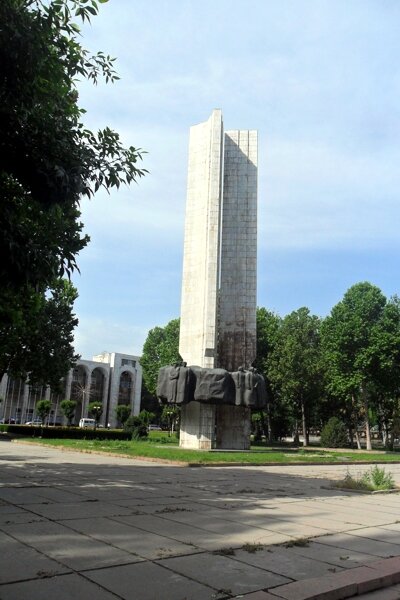

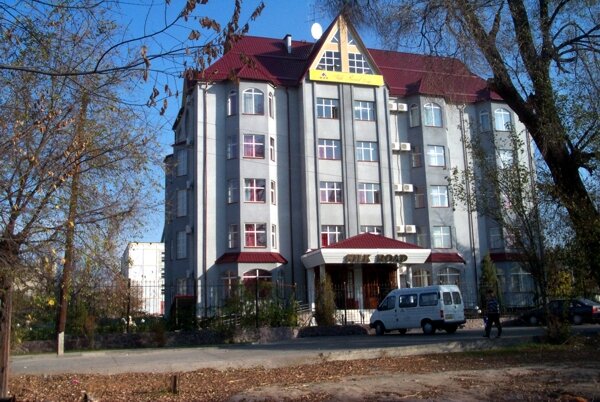
 Bishkek