Heart of Asia
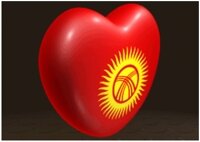
A new image for Kyrgyzstan?
It was announced last week that the government have decided on a new slogan for Kyrgyzstan: “Heart of Asia“.
At last we do seem to be seeing some action from the government on this front – we’ve seen very little progress, (although not for the lack of trying), since the last plan for the development of tourism expired in 2010 because of the atmosphere of uncertainty that has reigned in the country … If some events happen rapidly, bureaucracy takes time to run it’s full course.
One of the newspapers published a nice graphic on the report of the decision: a 3D rendition of a heart made from the Kyrgyz flag, which is a convenient shade of red. I don’t know if this is meant to be the official logo, but if it is and we end up changing the flag, (as some of the deputies want us to), then we would presumably have to think about changing it.
Part of the rationale behind the choice seems to be the idea that we are at the heart of Asia - that is in the center of the continent. Although in general terms that is true, (after all, the region in which we are located is known as Central Asia), it is not quite accurate. Even the name “Central Asia” is ambiguous as there is no clear definition of what areas, regions or countries it should cover.
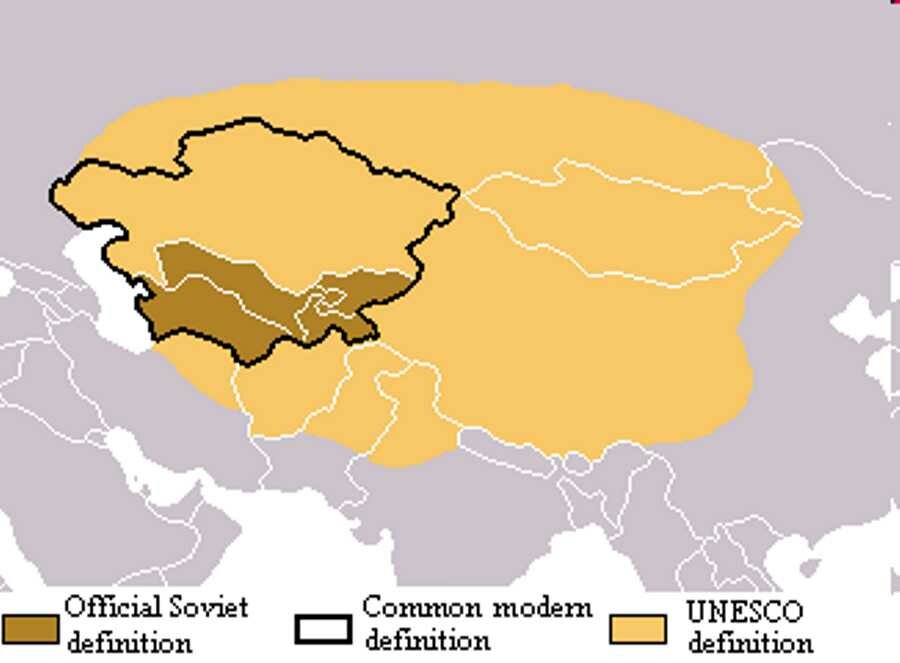
Definitions of Central Asia
The USSR defined it as comprising the constituent republics of Kyrgyzstan, Tajikistan, Turkmenistan and Uzbekistan. After the dissolution of the Soviet Union in 1991, a meeting of the “Central Asian” states decided to include Kazakhstan as well and these five “Stans” now seem to be generally accepted as the core of Central Asia.
However, the UNESCO general history of Central Asia, (written just before the collapse of the USSR), defined the region based on climate and defined the region using far larger borders – including Mongolia and parts of Afghanistan, China, Northern India, Iran, Pakistan, and Russia.
To make matters worse, several different names are also used interchangeably, as they refer to the same entity, such as Inner Asia, Middle Asia and Turkestan. (Turkestan was the name most commonly used prior to Stalin’s regime in the USSR – and Enver Pasha tried to revive it in the Basmachi revolt of the 1920′s. There are political and religious groupings who still seek to recreate a unified Islamic state of Turkestan.)
For the record, however, the geographical center of Asia is located in the Russian Republic of Tuva – some 320km North of Urumqi.

The Geographical center of Asia?
On the other hand, the word Heart has other connations apart from just being being “at the center” of something:
- a muscular organ which pumps blood around the body - the source of life and motion in any organization; the chief or vital portion;
- the central or innermost part of something – the most vital, important or essential part;
- the part most hidden and within something – a secret meaning or real intention;
- the inmost or most essential part of any body or system;
- the center of activity, or of energetic or efficient action;
- courage, courageous purpose and spirit;
- the center of a person’s total personality, especially with referenceto intuition, feeling, or emotion – especially love or compassion;
- the center of emotion, basic disposition, or character - especially when contrasted to the head as the center of the intellect – on the other hand it is also used to refer to:
-
- the seat of the intellect or imagination;
- the repository of one’s deepest and sincerest feelings and beliefs;
- the capacity for sympathy, feeling, affection, generosity, compassion, courage, resolution and fortitude – to give heart to someone means to encourage or inspire;
- vigorous and efficient activity;
- the firmness of will, or the callousness required, in order to carry out an unpleasant task or responsibility;

Turn the map of Kyrgyzstan clockwise through 90 degrees ... and what do you get?
I suppose that a case could be made out for Kyrgyzstan being a hidden and central element of the continent, but it’s hard to think of Kyrgyzstan as the organ that pumps the lifeblood through the rest of the continent; or being the core, “vital centre and source of one’s being, emotions and sensibilities” for the whole of the continent.
One use of the word refers to a particular shape, that which resembles the bodily organ - a roundish or oval figure having two lobes at the top and tapering to an obtuse point at the other end. If you look at a map of the country and turn it clockwise through 90 degrees, then it does indeed resemble the traditional image of a heart – such as that found as a suit in a pack of playing cards.
That was first pointed out to me by a Japanese client who took great pleasure in physically turning the map and tracing out the heart shape.
However, I replied that when I envisage a map of Kyrgyzstan, I don’t see a heart, I see an eagle in flight:
Lake Issyk Kul is the eye, albeit a rather large one, sitting behind a pointed beak. The Talas oblast represents the outstretched wings and Batken provides the legs pointing bakwards.
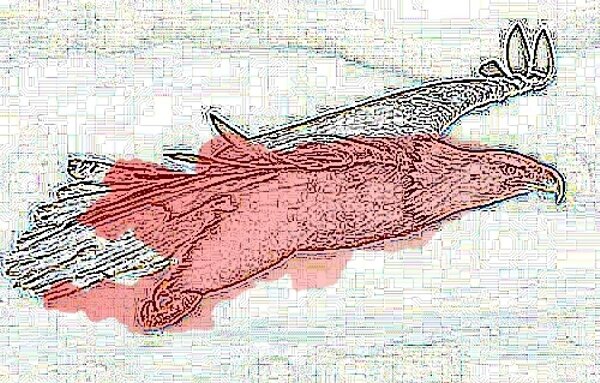
Kyrgyzstan - as an eagle in flight
On the other hand, having said all that, personally, I quite like the choice – it’s certainly a great improvement on the Country of Tourism or the Land of Santa Clause, (two of the country’s previous slogans), even if it does seem to be a bit ambitious; after all, there are many positive aspects to the image which it would be good to develop: representing love and affection, courage, resolution and fortitude …


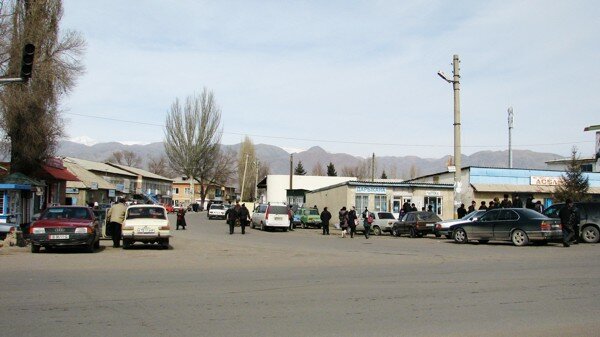


 Bishkek
I like the idea of Kyrgyzstan being the Heart of Asia. After all, the Kyrgyz people’s historical swath covered that range, technically.
But also, from my journeys — physical and literary — along the ancient Silk Road, Kyrgyzstan feels to me to be historically central. Not “center” as one tends to think of it, but center in the sense of being between everything. Between greater Russia to the north, greater India to the south, greater Iran/Persia to the southwest, greater Europe to the west, and greater China to the East, and their various historical variants over time.
To be a buffer, at some times, a mixture of many, as in Navikat (near Krasnaya Rechka), with temples of many world religions.
To be a border between ancient giant forces, such as the great Battle of Talas which defined, in a way, the limits of both East and West. And during the Great Game when it was part of the border zone between the Russian Empire to the north and the British Empire to the south.
To be buffeted, at other times, by great winds of historical change, such as the storm of Islam or the storm of Genghis Khan.
And Kyrgyzstan also contains the underappreciated Saimaluu Tash — a spiritual “center” for more than 4,000 years that is even today more inaccessible than Machu Pichu and must have been so much more so in ancient times. Not a “center” where many lived or even many ever came, but a center perhaps more holy for its inaccessibility.
The mountains south of the steppes of Kazahkstan. The mountains east of the Ferghana Valley and the deserts of Uzbekistan. The green mountain valleys north of the High Pamirs of Tajikistan.
A center that is not defined by everything it is not, such as China’s Middle Kingdom, what what is Chinese and what is Barbarian. Instead, a center that is defined by everything it is — everything it absorbs and adapts from those around it and those who move across it as they the Kyrgyz have themselves always moved.
A center that is defined not by where it is, a noun, as a place with a settled tradition might have, but a center defined by how it moves and what it does, as a people with a nomadic tradition has, a verb.
Also, consider, a heart is not defined by where it is but by what it does. (Although, of course, it is more effective if it is somewhere in the range of the body center.)
I asked a young woman, the daughter of a family with a Comm Based Tourism-KG homestay in Tamchy, what she thought of a new Silk Road developing through Kyrgyzstan, a new globalization as the former Silk Road was an early globalization. She said she thought it would be good business. Such a great answer.