An ABC of Kyrgyzstan
An “ABC” or “Alphabet book” is probably one of the first books that a person is ever given. Such books are designed to teach younger readers letters of the alphabet … often presenting each letter with words that start with that letter and/or images and sentences using the word.
The phrase “abc” is used to suggest something simple and basic … but also essential … and is used in the sense “The basics of …”, as in :
- The ABC of Rock Climbing
- The ABC of Nuclear Science
- The ABC of Yoga
- The ABC of Economics
- The ABC of Cricket
- …
I had to cheat a little with some of the letters … but here is an “ABC of Kyrgyzstan”.
Ais for: |
Altyn Arashan – probably the most visited site by foreign tourists visiting Karakol and is renowned for its beauty. The Altyn Arashan (“Golden Spa”) valley leads up from the Ak Suu valley, just South of the village of Teplokluenchka, to a Spartan “hot spring” complex. The road is not an easy one, very steep in places, and it requires special heavy-duty 4WD vehicles. It passes through pine forests, which contain many hidden springs (both hot and cold). | 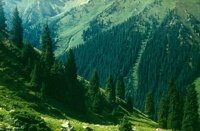 |
and also for: Abishir Sai Aigul Flower Aitmatov Ak Beshim Ak Kalpak Aksakal Alexander the Great Ala Archa Ala Kiyiz Ala Kol Lake Aravan Arslan Bob |
Bis for: |
Beshbarmak - Perhaps the most typical Kyrgyz dish. The dish is meant to be eaten with the hands, not with a knife and fork! – “Besh” means five, and “barmak”, finger. Beshbarmak is served when guests arrive and at almost any festive gathering. This meal consists of noodles, which are mixed with boiled lamb cut into tiny pieces and served with a medium spicy sauce. Bouillon is then poured over the mixture. There is a ritual associated with both serving and eating Beshbarmak. | 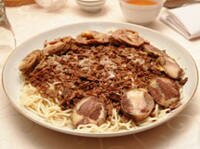 |
and also for: Babur Balbals Balasugin Bishkek Buddhism Burana |
C
|
Crafts - Kyrgyz traditional handicrafts reflect ancient traditions and nomadic lifestyle of the people, and demonstrate a practicality arising out of necessity. For example, musical instruments and other implements were fashioned out of objects found naturally in the environment – were easily crafted and transported as the family from pasture to pasture with their flocks of sheep. The people lived a subsistence existence – each family group would make items to satisfy their own needs. Occasionally goods were exchanged as presents or barter and sometimes a master, skilled in a particular craft, would emerge whose work was highly prized. Later, goods were also sold in markets and even made to specific order | 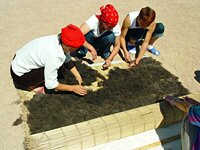 |
and also for: Caves of Chil Ustun Celestial Horses Celestial Mountains Cholpon Ata Chiy Chui Clans |
Dis for: |
Djety Oguz - About 25 km South West of Karakol is a lush valley with some striking red sandstone rock formations (the “seven Bulls” from which the valley takes its name). As you approach the valley, you pass another rock formation, which resembles a “broken heart” and legend says that this is the heart of a beautiful woman who died of a broken heart after two suitors killed each other fighting over her. These two rock formations have almost become symbols of the Issyk Kul region and are favourite images for photographs and paintings | 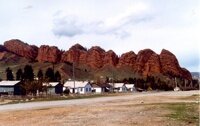 |
and also for: Dastarkan Djigit Dubcek |
Eis for: |
Eagle Hunting - Hunting with the golden eagle is an ancient tradition that dates back to the Mongol conquest of Central Asia around the 12th and 13th centuries, when a fine eagle and good horse cost the same price and both lent prestige to their owner. Although the practice is gradually disappearing in this area, hunting with birds (especially with eagles) is still practiced in certain regions of Kyrgyzstan and Kazakhstan. Westerners tend to think of this as falconry – and although hunting with hawks and falcons does take place, it is looked down upon by those who hunt with eagles as a pastime for children and dilettantes. | 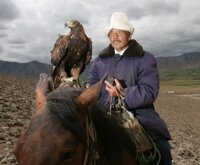 |
and also for: Edelweiss Elechek Enclaves Enilchek Erkindik |
F
|
Frunze - Mikhail Vasily Frunze is renowned as the Red Army General who “subdued” Central Asia, responsible for directing the defeat of the White Russian Army under Admiral Kolchak in Siberia and for routing another army commanded by General Wrangle in the Caucasus Mountains – retaking the Crimea for the Bolsheviks and puching Wrangle’s army out of Russia. He was also instrumental in the destruction of Nestor Makhno’s anarchist movement in Ukraine after Makhno refused to merge with the Red Army. He was supposedly born in Bishkek – which was then called Pishpek – in 1885. (“Supposedly”, because there are some suggestions that he might have actually be born in Belevodsk – a little to the West of the city. The reasoning behind this suggestion is that is where his birth was registered by his parents.) After his death, his home town was renamed Frunze in his honour. | 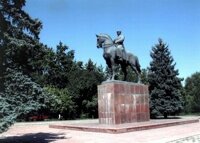 |
and also for: Ferghana Festivals Fruit |
Gis for: |
Glaciers – (8000 of them – one source says 8208), and permanent snow cover some 8100 square kilometers – about 30% of the total land area of the Kyrgyz Republic. The glaciers themselves cover about 4% of the surface area of the country. | 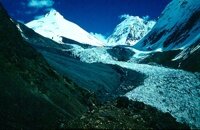 |
and also for: Genghiz Khan Gorges Grigorievka |
His for: |
Horses - which have a special place in the traditional lifestyle and culture of the Kyrgyz people as a symbol of wealth and for their practical use to a nomadic people. They are valued for their physical strength, their endurance and their stamina. Whilst the number of sheep herds exceeded that of other domesticated animals, it was the number of horses which it owned that determined the status of a household. It is said sometimes that a Kyrgyz learns to ride even before they learn to walk. | 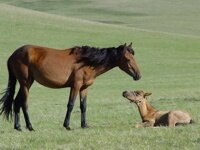 |
and also for: Herbs Historical Museum Homestays |
Iis for: |
Issyk Kul - Kyrgyzstan’s largest Lake and at about 180 km long by 70 km wide and 668 meters deep at the deepest point, (the average depth is about 300 meters), held in high regard by the Kyrgyz – it is known as the “pearl of the Tien Shan” | 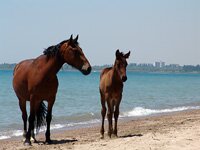 |
and also for: Irakily Irkeshtam |
Jis for: |
Jailoo - a high mountain pasture, (the lower pastures are called kyshtoo.) The Kyrgyz were basically a pastoral, nomadic people – traveling from jailoo to jailoo with their flocks in the summer months, returning to lower altitudes during the winter. Today, many shepherds continue this ages old tradition and welcome tourists to stay with them in their yurts in the jailoo, (for example around Kochkor or at Lake Son Kul). | 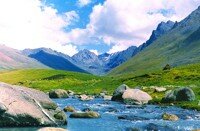 |
|
Kis for: |
Kalpak - a felt hat worn by Kyrgyz men -properly called the “Ak Kalpak” (=”white Kalpak”), is a hat usually made from four panels of white felt with traditional patterns stitched into them as decoration. It is worn by males of all ages – especially in rural Kyrgyzstan – and is a symbol of the nation. (One writer has even written that “what the baseball cap is to the Americans, the Kalpak is to the Kyrgyz”.) There are different styles of kalpak. They can all be folded flat for storage or carrying when not being worn. In some cases the brim may be turned up all the way around, and in some cases there is a cut in the brim so that a two-pointed “peak” can be formed. Plain white ones are often reserved for festivals and special occasions. Once intended for everyday use may have a black ‘velvet’ lining. The most common form of Kalpak is thought to resemble the shape of the mountain Khan Tengri. | 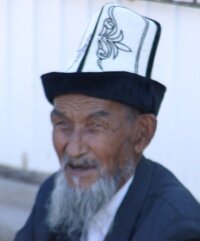 |
and also for: Kan Kan-i-Gut Karakol Karavshin Khan Tengri Kok Buro Komuz Konorchak Kumys Kyz Kumai Kyrgyz |
Lis for: |
Legends – The Kyrgyz, like all ethnic groups, have a wide variety of legends and folk tales. From ancient times the Kyrgyz have honoured the art of story telling. Folk-lore was passed from ayil to ayil (village to village), from bozoi to bozoi (yurt to yurt). Most Kyrgyz can play a musical instrument and know ballads, legends and fairy tales. Story tellers were respected and sometimes called “people’s nightingales” or jomokchu and are welcomed guests in any home. Some are folk-tales are associated with places, others with events, or aspects of nature, for example tales about animals. Some are moral tales whilst others are like fairy tales. They describe rich and silly Khans, brave hunters, poor peasants and shepherds, beautiful and brave women who give good advice. At the end of the story the poor and clever people usually come out on top. There are a series of tales about the wise man “Asankaygy” and the smart fellow “Aldar Kose”. | 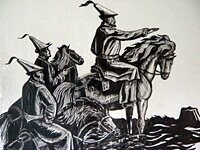 |
and also for: Lenin |
Mis for: |
Manas – legendary hero the Kyrgyz – and subject of the world’s longest epic. He was a Khan (lord or chieftain) of the Kyrgyz, reputedly born in the Talas region. The narrative of the epic revolves around his exploits in trying to carve out a homeland for his people and fighting off the opposition of neighbouring hordes; consolidating his forces; his marriage to the fair and wise Kanykei – the daughter of a Samarkand khan and the future mother of his only Semetei; the burial feast for the dead chief Koketey (whose mausoleum is supposed to be at Koshoi-Kogon – near Naryn) where the opposing forces of the heroes meet each other for the first time; the great campaign victory and mortal wounding of Manas, which is followed by a civil war; the fight for the throne; the expulsion of Kanykei and the baby Semetei and finally the destruction of everything created by Manas’ hard work and struggle. | 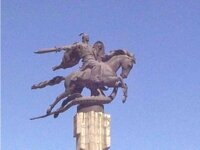 |
and also for: Marco Polo Sheep Matthew (St. Matthew) Mountains Merzbacher Lakes |
Nis for: |
Nomads - The nomadic way of life was so ingrained into the Kyrgyz psychology that even the communist system, with collectivisation, proved incapable (and eventually unwilling) to break it down. Although grateful to the Bolsheviks, on one hand for rescuing them from the worst excesses of Tsarist colonisation, the Kyrgyz never fully adopted their political philosophy. They remained the least politicised of all the Central Asian peoples. For years the local Russians dominated the Communist Party of Kyrgyzstan. Reluctant to give up their lifestyle, the Kyrgyz forfeited the right to take on a major political role in their own republic. Rather than face forced collectivisation, having first slaughtered tens of thousands of animals to avoid their handover to the communists, many Kyrgyz fled across the mountainous border into China where the Kyrgyz Autonomous Region in Xingjian Province was formed. | 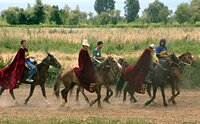 |
and also for: Naryn Nevkat Noruz |
O
|
Osh - Osh is the second largest city in Kyrgyzstan – reputedly 3000 years old. Archaeologists have found artifacts dating back to about the fifth century B.C. One claim that is often heard is that Osh is “Older than Rome”. There are several legends about the origin of the city – including claims to having been founded by Solomon or Alexander the Great. Even if such a grand personage did not establish Osh, its position at a crossroads along the ancient trading routes that became known as the Silk Road almost guaranteed that it would become a major settlement. |  |
and also for: Opera and Ballet Theater |
Pis for: |
Petroglyphs - pictures drawn or etched onto stones in ancient times. These drawings, left for us on high rocks and in deep caves can provide evidence of the way of life and the environment of times gone by when there was no system of writing. Although animals are often subjects depicted in petroglyphs, it is probably incorrect to think that ancient people only depicted the animals that they hunted. Many scholars think that the rock drawings depict mythological images and that the consciousness of ancient painters was restricted by their knowledge of the surrounding nature and society. | 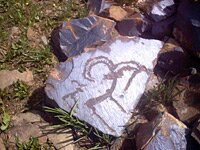 |
and also for: Pamir Peaks Pobeda Prezhevalsk |
Qis for: |
Queen of the Alai (Kurmanjan Datka) - an outstanding stateswoman of the Kyrgyz Republic. She is sometimes known as “The Tsarina of Alai”, and “Queen of the South”. The word Datka means “General” and she was awarded the title twice. | 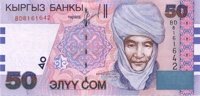 |
|
Ris for: |
Rafting - Kyrgyzstan has a wide range of rivers which provide the possibility for challenging routes for those with all skill levels, from novice to experienced. There are quiet rivers, flowing through beautiful mountain landscapes, as well as rapids of different levels of of difficulty. The level of difficulty on each river can vary depending on local conditions, such as the amount of meltwater descending from the thawing glaciers. At the height of the summer, the water level of some rivers can actually vary on a daily basis. | 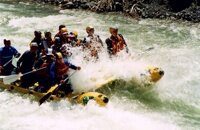 |
and also for: Red Data Book Rhubarb |
Sis for: |
Shyrdak - a traditional thick felt carpet that can be laid out in a yurt, or simply on the grass. They are often found in Kyrgyz homes, either on the floor, or sometimes on divans, or even as a wall hanging. The carpet is noticeable for the contrasting colours and large patterns. | 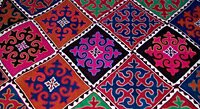 |
and also for: Saimaluu Tash Sary Chelek Semyenov Sharipov Sheep Silk Road Skaska Snow Leopard Som Son Kul Suleyman Too |
Tis for: |
Tash Rabat - About 520 km from Bishkek, 125 km (1.5 hours), from Naryn, 17 km from the end of the paved road (just after the emergency airstrip) 90 km (1.5 hours) short of the border at Torugart, and at an altitude of about 3500m above sea level is the ancient caravanserai of Tash Rabat. According to one author, this is probably the best-preserved Silk Road site you will find and “no other retains as much of its original atmosphere”. | 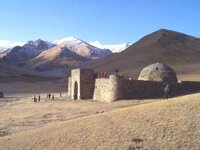 |
and also for: Taigan Talas Tamga Tash Tien Shan Toktogul Torugart Trekking Tulip Tunduk Tush Kiyiz |
Uis for: |
Uzgen Mausoleums - The ancient city of Uzgen was located on a high bank of the Kara-Darya river and consisted of three sacristans, of which only hills and ruined walls remain. However, an 11th century minaret survives and three Mausoleums dating from the 11th and 12th centuries – and are acclaimed as one of the unique architectural sites of medieval Central Asia. The complex has been recently restored and is featured on the back of the 50 som note. | 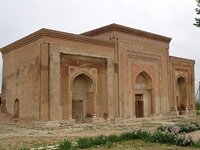 |
and also for: UFO’s Upai Urkun USSR |
Vis for: |
Victory Peak - Peak Pobeda - one of three 7000-plus meter giants in Kyrgyzstan. At 7439 metres, it is the highest mountain in the Tien Shan range which straddles Kyrgyzstan, Kazakhstan and North-western China. The mountain lies in the Kokshaal Tau subrange (= “Forbidding Mountains”) of the Tien Shan, sitting astride the border with China. The South-eastern slopes of the mountain are actually in China, the border itself running over the summit, and along the ridges spreading to the East and West. |  |
|
W
|
Wildlife - Kyrgyzstan is rich in both flora and fauna. Although it occupies only about 0.04% of the world’s surface area – about 2% of the world’s species of flora are found growing here and about 3% of the the animal kingdom is also represented. Many of the species are endangered and featured in the Red Book of Kyrgyzstan. The Tiger, which once roamed the slopes of the Tien Shan disappeared in the early part of the twentieth century and it is an open question how many other species will follow in its wake. | 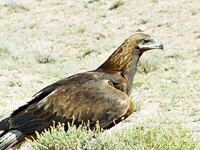 |
and also for: Walnut Forests White House Wolves Wool |
Xis for: |
X-treme Tourism - Extreme tourism is sometimes defined as involving travel to dangerous places, (mountains, jungles,deserts, caves, etc.), or participation in dangerous events or extreme sports. The main attraction, “adrenaline rush”, is caused by an element of risk. While traditional tourism requires significant investments in hotels, roads, etc., extreme tourism requires much less infrastructure. |  |
and also for: X-citement |
Yis for: |
Yurt - The yurt is the traditional dwelling of the nomadic peoples of Central Asia – including the Kyrgyz. They are found from Anatolia to Mongolia and it is not possible to say which of the ancient nomadic tribes originally developed the traditional design. However, it is clearly a very ancient device. The yurt is still in use by people throughout the region and plays an important role in the lifestyle of the Kyrgyz “chaban”, or shepherd, and although styles of architecture and city planning come and go, the yurt remains a stable and lasting link with the past. | 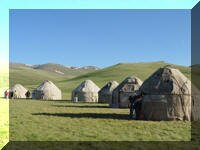 |
and also for: Yak |
Zis for: |
Zoroastrianism - A pre-Islamic religion founded by the Persian prophet Zoroaster (about 100BC – although there is some doubt about the exact dates) – still practiced by the Parsees in India. It sees the world as dualistic – Good and Evil in conflict. Archaeologists have discovered the remains of Zoroastran temples at several places throughout Kyrgyzstan – including in Bishkek, (which used to be known as Jul during the 6th to 12th centuries) and Krasnaya Rechka. Perhaps the most lasting contribution made by Zoroaster is the festival of Noruz – often claimed (incorrectly) to be a Muslim “New Year” festival. It was (is) held on the vernal equinox – March 21st. It is still celebrated in Central Asia and is a public holiday in Kyrgyzstan. |  |



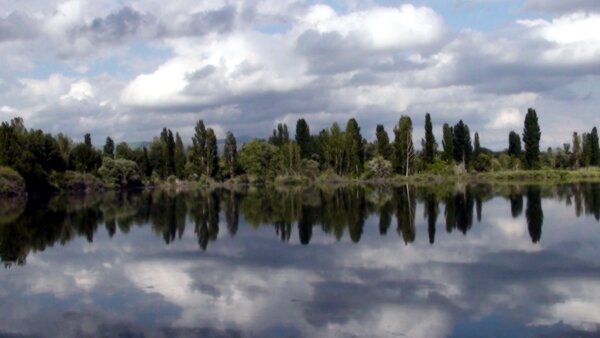

 Bishkek